|
|
| WALSH/LANGAN INTRODUCTION - HOME |
| Amusements
| |
| Music and Dance
| |
| |
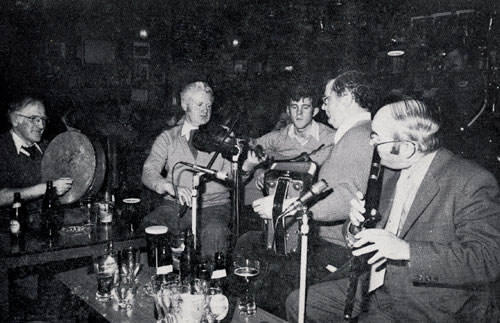
| Postcard collection of Maggie Land Blanck | |
| "Traditional Musicians"
This card is not dated and is obviously well past the time the Walsh/Langan ancestors left Ireland. It is, however, the only thing I have found so far to represent traditional music which was and is a very important part of Irish life. | |
|
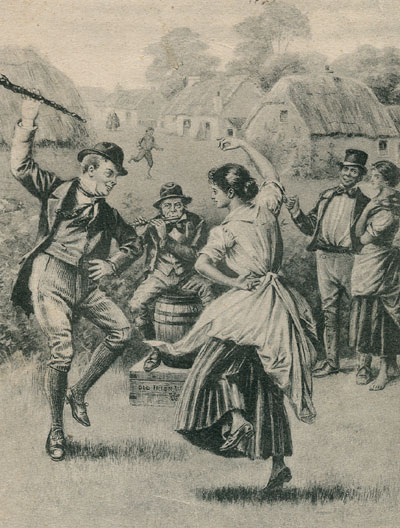
"The ould Irish jig" Post marked 1903 |
| Postcard collection of Maggie Land Blanck | |
|
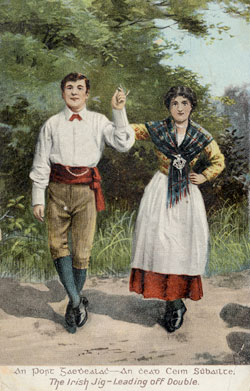
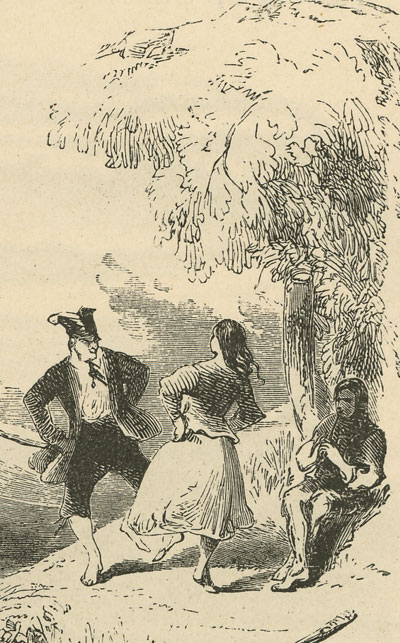
"The Irish Jig- Leading of Double"
No postmark |
| Postcard collection of Maggie Land Blanck
| |
|
|
| Print collection of Maggie Land Blanck
| |
|
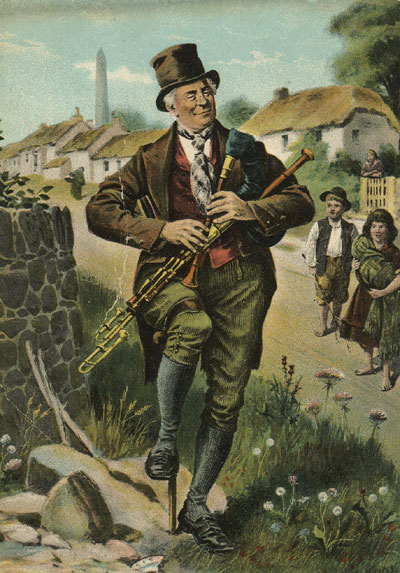
"The Irish Piper"
No postmark |
| Postcard collection of Maggie Land Blanck
| |
 | |
|
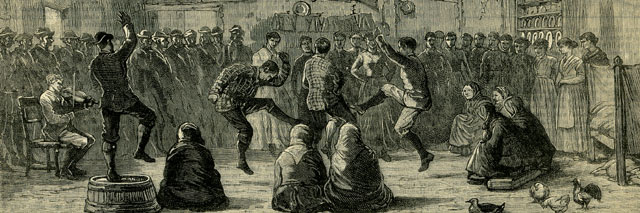
Print collection of Maggie Land Blanck
The Graphic October 4, 1884 Text is missing.
| |
 | ||
|
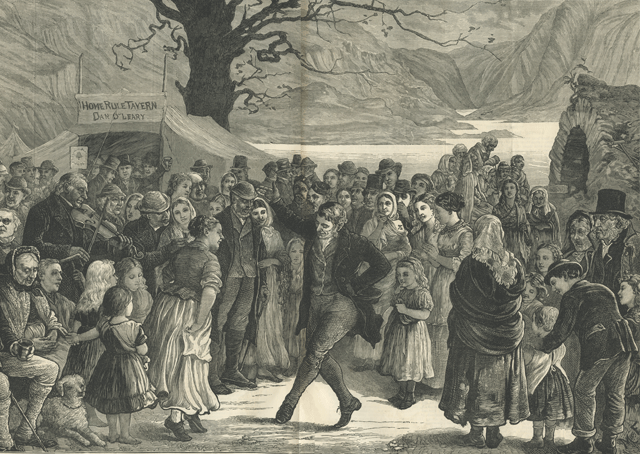
Print collection of Maggie Land Blanck Illustrated London News Dec. 6, 1879 THE STATE OF IRELAND; MAKING THE BEST OF IT Festivities at "A "pattern fair" or local Saint's day festival at a place celebrated for the mystic virtues of its "Holy Well""Pattern=Patron
See
The Fair at Muff
| ||
 | |
|
Print collection of Maggie Land Blanck
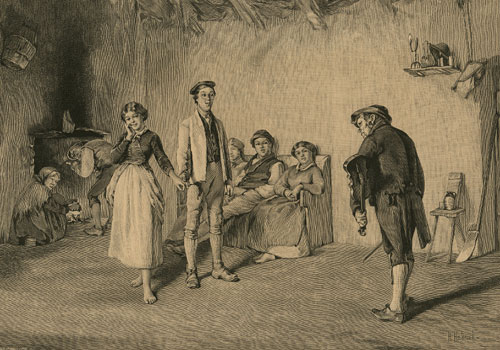
The Dancing Master painted by H. Helmick from The Magazine of Art, date unknown Howard Helmick (American 1845-1907) was born in Zaneville, Ohio and studied in Paris. In 1876 he moved to Galway, Ireland where he painted many scenes of Irish life. He returned to America in 1888. This image was also in the Bay View Magazine April 1, 1901 labeled "Arrival of the Village Fiddler"
| |
| |
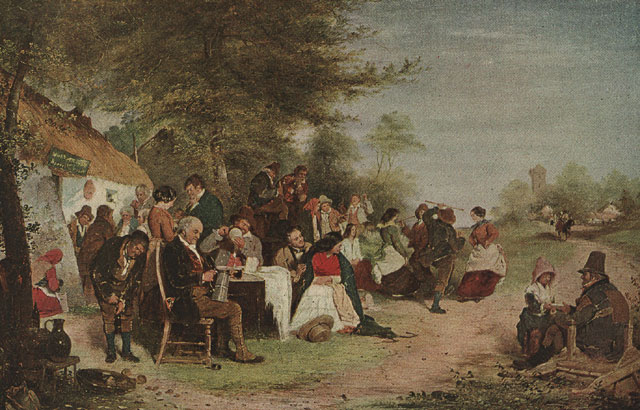
| Print from Tales of Irish Life and Character with Pictures by Erskine Nicol First Edition. Book collection of Maggie Land Blanck | |
| Irish Merrymaking | |
| |
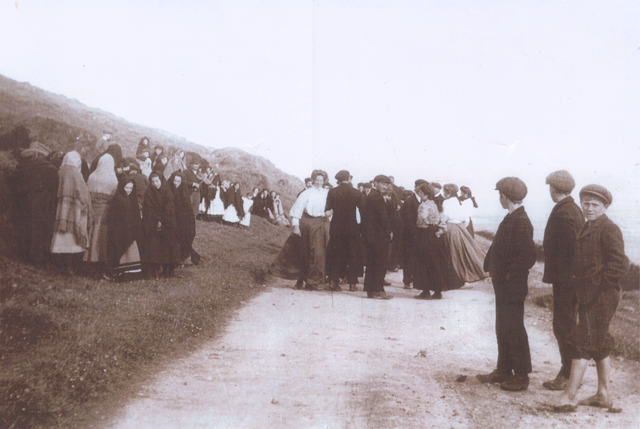
| Photo collection of Maggie Land Blanck | |
| Crossroad Dancing was a popular pastime in rural Ireland. Crossroad dances usually occurred on a Sunday evening. Parish priests disapproved of these gatherings and eventually they were banned by the church. | |
| Cards
| |
| |
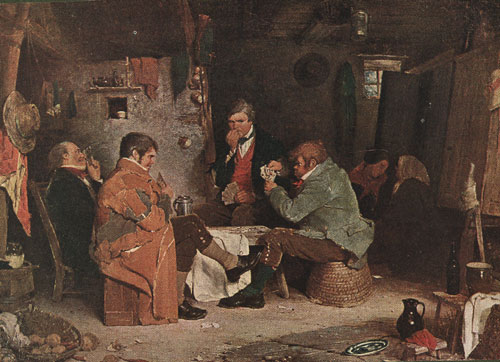
| Print from Tales of Irish Life and Character with Pictures by Erskine Nicol First Edition. Book collection of Maggie Land Blanck | |
| A Card Party | |
| Racing
| |
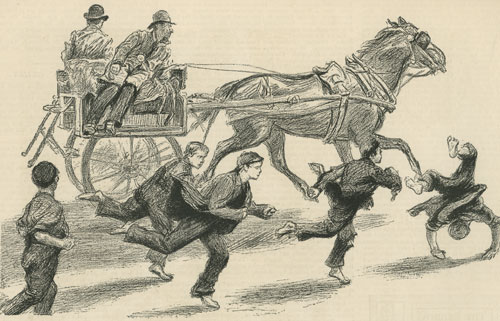
| |
| The Graphic, April 28, 1888. Print collection of
Maggie Land Blanck Horse racing was a popular "sport" in Ireland. In 1774, 1775 and 1777 LOVELY MOLLY (a bay mare foaled in 1768) won 50l at Ballinrobe. In 1852 Ballinrobe hosted a three day race on August 26th, 27th and 28th that included a 2 mile sweepstakes, a mile and a half selling stakes and a handicap sweepstake. In October 1873 Ballinrobe hosted a 3 mile Hunters' Plate over a steeple chase course. See Old Images of Ballinrobe | |
| Fortune Telling
| |
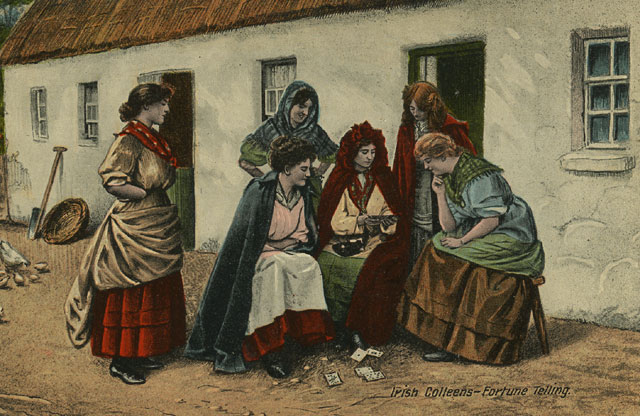
| |
| Postcard collection of
Maggie Land Blanck Irish Colleens-Fortune Telling | |
| Fighting
| |
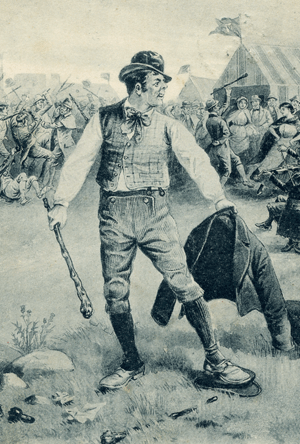 | |
| Postcard collection of Maggie Land Blanck | |
| The Pub
| |
 | |
|
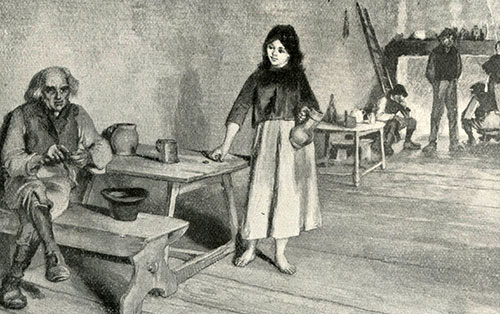
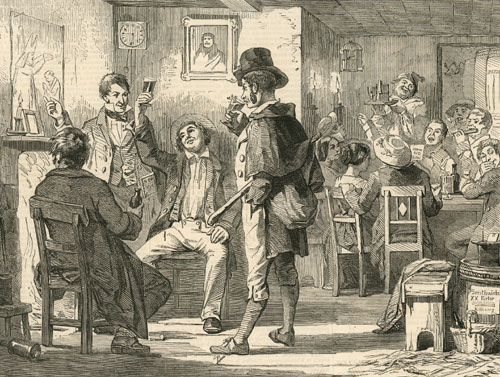
Magazine collection of Maggie Land Blanck, 2012, Bay View Magazine, April 1901
An Old County Inn (image by Mr. H. Helmick) The Pub was a place for "laboring" men to meet, have a porter, smoke a pipe and discuss politics and farming around the peat fire. | |
| Holidays
| |
 |
|
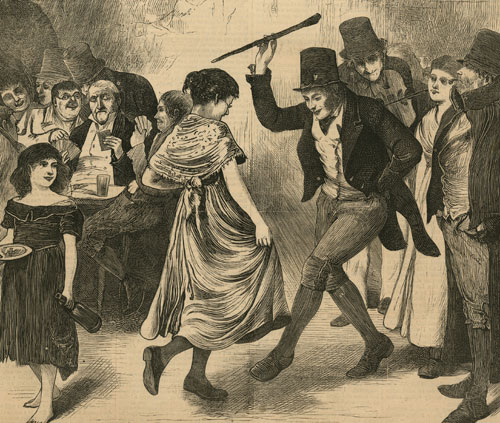
Print collection of Maggie Land Blanck
Harpers Weekly Feburay 12, 1870 NEW YEAR'S EVE IN IRELAND |
 |
|
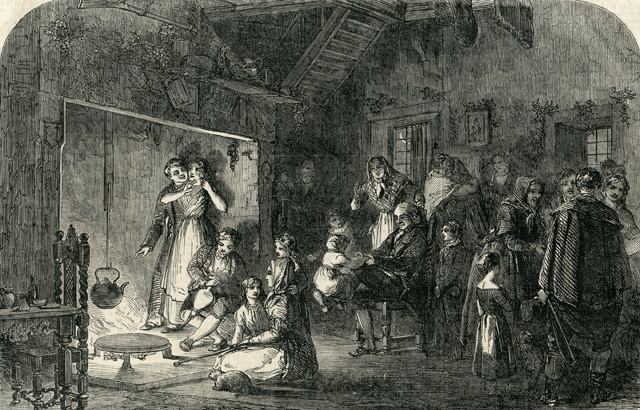
Print collection of Maggie Land Blanck
Illustrated London News, January 3, 1852
New Year's Eve — Baking the New Years Cake
|
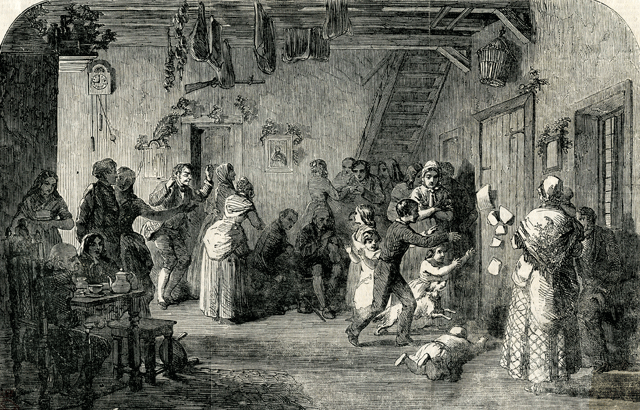 |
Print collection of Maggie Land Blanck
THE BAKING AND BREAKING OF THE NEW YEARS- EVE CAKE — A CHRISTMAS CUSTOM IN IRELAND |
 |
|
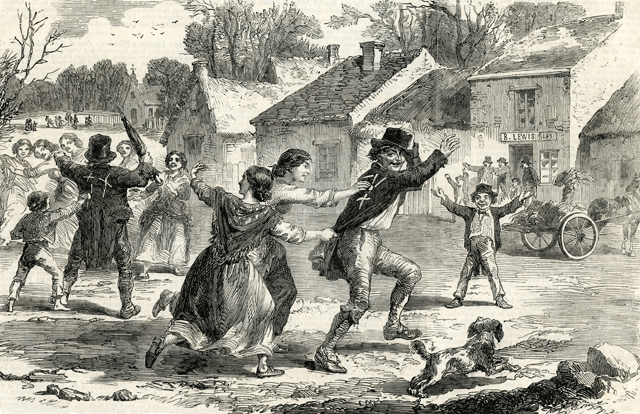
Print collection of Maggie Land Blanck
Illustrated London News, March 19, 1859
Chalk Sunday in the County of Kilkenny, Ireland
|
 | |
|
Print collection of Maggie Land Blanck
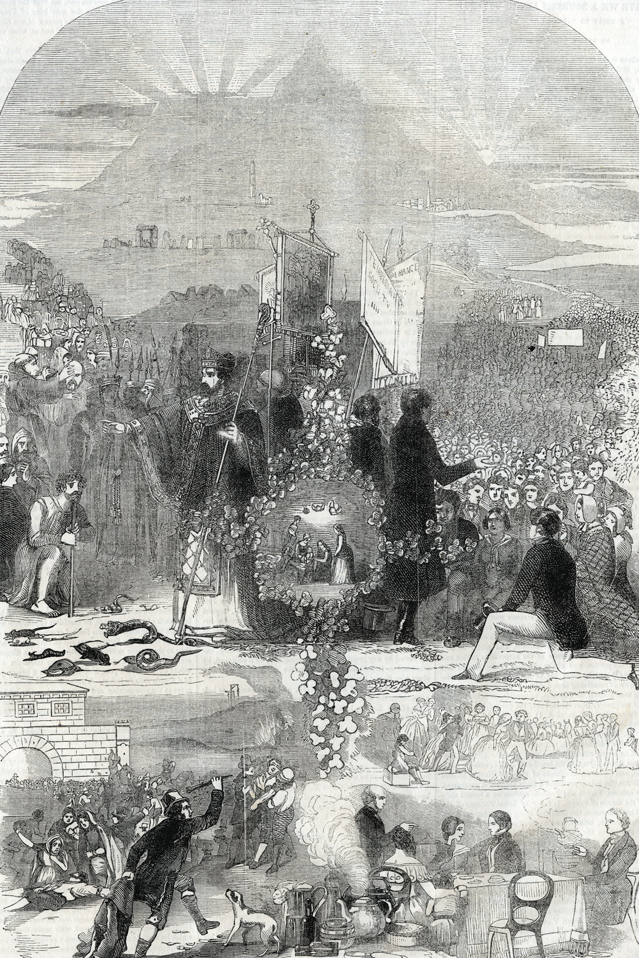
Illustrated London News, March 19, 1853 DROWNING THE SHAMROCK ON ST. PATRICK'S NIGHT | |
 | |
|
Print collection of Maggie Land Blanck AN ALLEGORICAL REPRESENTATION OF THE CLELBRATION OF ST. PATRICK'S DAY
ST PATRICK'S DAYFather Theobald Mathew, one of the greatest temperance speakers of all times, started preaching in Ireland 1834. He later preached in England, Scotland and America. | |
 | |
|
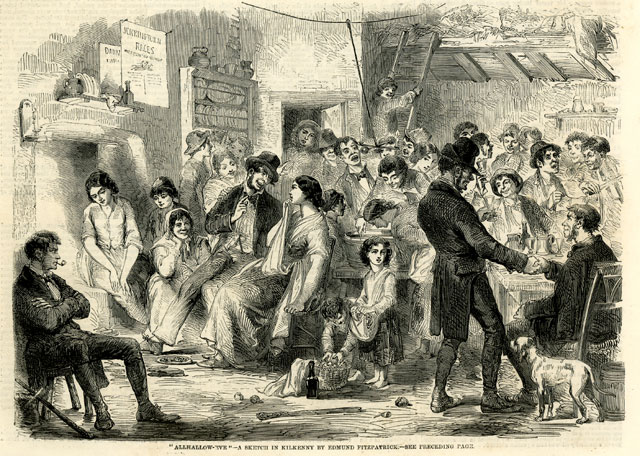
Print collection of Maggie Land Blanck Illustrated London News, November 6, 1858 Accompanying text "All Hallow Eve (1st of November) being between All Souls and All Saints Day is the night of all others on which the Irish peasantry believe that ghosts, witches, and fairies, but especially the redoubtable phoca, are so industrious in playing pranks on unwary travelers, and that supernatural events narrated by such adventurers form themes for gossip and many a cottage fireside for many a long night afterwards. It is, therefore, not surprising that this evening should be spent in a more festive manner than any other by this imaginative people, as from its associations, it had lost none of its pristine interest, whilst most other national customs seem gradually to have vanished from amongst the. On All Hallow Eve a number of the younger peasantry from the adjacent neighborhoods assemble at the house of some old farmer who in his youth had been the gay leader of every merrymaking throughout the country, and still took delight in seeing others enjoy the sports he was no longer capable of partaking. A collection being made, the merry party are soon supplied with plenty of eatables and the indispensable mountain dew in profusion, for the occasion; the scaltheen or cross sticks, being then suspended from the roof and decorated with apples and lighted candles placed alternately on its points, and, being kept twirling round, invited many a candidate to complete for the ruddy prize, but singed hair or eyelashes, together with the pleasure of being laughed at, is often the reward of this exertions. As a cooler to this amusement, diving for money in a tub of water is next resorted to, and many a fair mountain nymph forsakes her native element for a while and bears from beneath the pellucid water the shining silver between her teeth, which rival it in whiteness. Burning nuts, fortune telling, and stories are next engaged in all of which are wound up with a dance, until the time arrives (one o'clock) when the enchantment of the night is broken, and all may return, unmolested by fay or phoca, to their respective homes.Halloween customs as described in the The Graphic, November 12, 1881
HALLOWEEN IN COUNTY MAYOWhile their "fathers and mothers are smoking by the great peat fire" boys and girls "steal" cabbages from their neighbors plots. The object is to pick a cabbage with one's eyes closed. "If the plant is an almost perfect circle, with each leaf overlapping firmly round its comrade, the fortunate possessor may be certain of a handsome spouse; but if, on the other hand, it is broken crooked, or has draggling untidy leaves, a humpback, ill-favored, and bad tempered husband or wife will result. A cabbage that has been eaten by caterpillars is also very unlucky, as it foretells a small-poxed lover."The cabbage head is taken home and "placed on the dresser in the kitchen". The first person to enter the cottage the next day is said to become the spouse of the individual to whom the cabbage belongs. Another custom was for young girls to eat a whole herring, bones and all, without being observed. Around midnight the young herring eater would climb out of bed and peer into the looking glass to catch a glimpse of the young man who would be her husband before the next Lent. "But Hallowe'en has another and more weird significance for the Celt. On this night he supposes that souls of unbaptised babies, whose bodies lie in unblessed ground, come sobbing round their lost homes, praying for deliverance from the fairies who have forced them to join their bands in the raths. Many a lonely mother sitting sadly by the fire starts as a bird taps at the window, or a leaf is blown against the pane. It is her dead baby, she knows, freed for these few hours from the thraldom of the "queer people", who has come to gaze hopelessly in at the warm kitchen and the mother from whom it was so rudely torn, while it shivers and wails in the cold. Then she will make the sign of the cross and and weep, but dares not offer up a prayer for the doomed soul, which, she believes, must wander lost and hopeless for eternity." Note: The fairy rath was a mound or hill on which the fairies danced. | |
| |
|
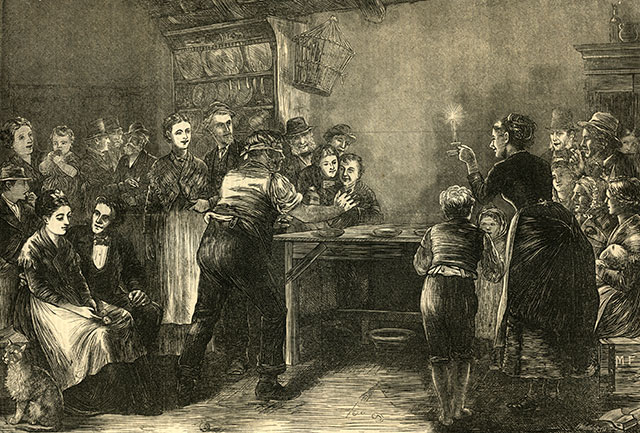
Print collection Maggie Land Blanck, 2012, Illustrated London New's Nov. 4, 1871 "NOVEMBER NIGHT" IN IRELAND November Night is celebrated in Ireland on November 1, the eve of All Souls Day. The festivities included games such as as bobbing for coins or apples, chestnut roasting, and fortune telling. The image depicts a fortune telling game. Four bowls are set on the table: one contains a ring which denotes marriage, the second contains a lump of clay wich denotes death, the third contains water which denotes emigration, and the last contains salt which indicates that the person will be spared all of the other fates during the coming year. The player is blindfolded and the bowls are shifted around. The first bowl the player touched indicates his or her fate for the next twelve months.
| |
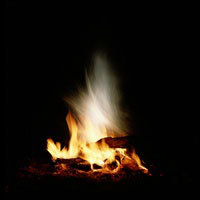
| St John's Eve Bonfires The ancient custom of lighting midsummer bonfires was wide spread throughout Europe, including Spain, Portugal, Greece and Ireland. Bonfire night in Ireland was on the eve of the feast of St John (June 23). Charlotte Elizabeth Tonna (nee Browne) (1790-1846) an English evangelist and writer lived in Ireland from 1818 to 1824. In Irish Recollection, first published in 1841, she gives a wonderful account of a bonfire in rural Ireland. Much of the rest of the book is an anti Catholic diatribe. "It is the custom at sunset on that evening to kindle numerous immense fires throughout the country, built like out bonfires, to a great height, the pile being composed of turf, bog-wood, and such other combustibles as they can gather. The turf yields a steady, substantial body of fire, the bog-wood a most brilliant flame; and the effect of these great beacons blazing on every hill, sending up volumes of smoke from every point of the horizon is very remarkable. Ours was a magnificent one being provided by the landlord as a compliment to his people, and was built on the lawn, as close beside the house as safety would admit. Early in the evening the peasants began to assemble, all habited in their best array, glowing with health, every countenance full of that sparkling animation and excess of enjoyment that characterize the enthusiastic people of the land. I had never seen anything resembling it, and was exceedingly delighted with their handsome, intelligent, merry faces; the bold bearing of the men, and the playful, but really modest deportment of the maidens; and the vivacity of the aged people, and wild glee of the children. The fire being kindled, a splendid blaze shot up, and for a while they stood contemplating it, with faces strangely disfigured by the peculiar light first emitted when bogwood is thrown on: after a short pause, the ground was cleared in front of an old blind piper, the very beau ideal of energy, drollery, and shrewdness, who seated on a low chair, with a well-plenished jug within his reach, screwed his pipes to the liveliest times and endless jig began. | |
|
To see images of the 2004 Saint John's Bonfire in Mohorra, Shrule Parish, Ireland go to
Mohorra For more information on St John's bonfires click on the image of the bonfire. | |
 Tom and I were in Oros, Brazil in June 2009 for a wedding. Part of the wedding festivities was a St John's bonfire. No one jumped over the fire but me. The Brazilian tradition was to roast corn over some of the embers to bring good fortune to the bride and groom as corn is the symbol of life and fertility in Latin America. | |
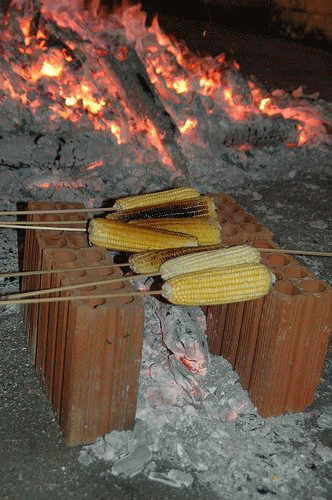 Oros, Brazil, Feast of St. John, June 2009 | |
| If you have any suggestions, corrections, information, copies of documents, or photos that you would like to share with this page, please contact me at maggie@maggieblanck.com |
| The Potato and Other Crops | |||
| Houses | |||
| Turf | Transportation | ||
| JOHN WALSH | |||
| MATHIAS LANGAN | |||
| WALSH/LANGANS INTRODUCTION | |||
| HOME | |||
| Irish Life | |||
|
Please feel free to link to this web page. You may use images on this web page provided that you give proper acknowledgement to this web page and include the same acknowledgments that I have made to the provenance of the image. Please be judicious. Please don't use all the images. You may quote up to seventy five words of my original text from this web page and use any cited quotes on this web page provided you give proper acknowledgement to this web page and include the same acknowledgments that I have made to the provenance of the information. Please do not cut and paste the whole page. You may NOT make use any of the images or information on this web page for your personal profit. You may NOT claim any content of this web page as your original idea. Thanks, Maggie |
| ©Maggie Land Blanck - Page created 2004 - Latest update May 2012 |