| German Houses Interiors | |
| HOME | |
| BLANCK INTRODUCTION | |
| GOEHLE INTRODUCTION | |
| PETERMANN INTRODUCTION | |
| Germany Introduction | |
| German House Exteriors | |
| Farm Animals | |
| Crops | |
| Attire | |
|
German Ancestors
Types of houses and furnishings depended on country or town location and on regional variation. | |
|
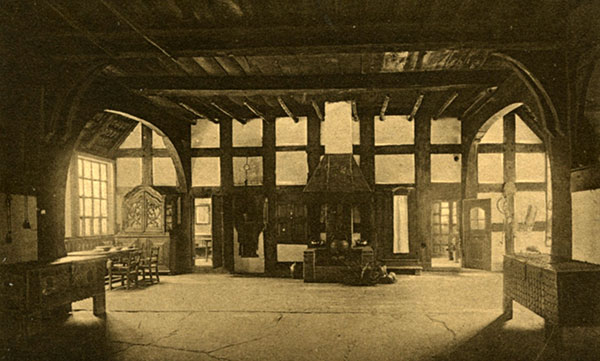
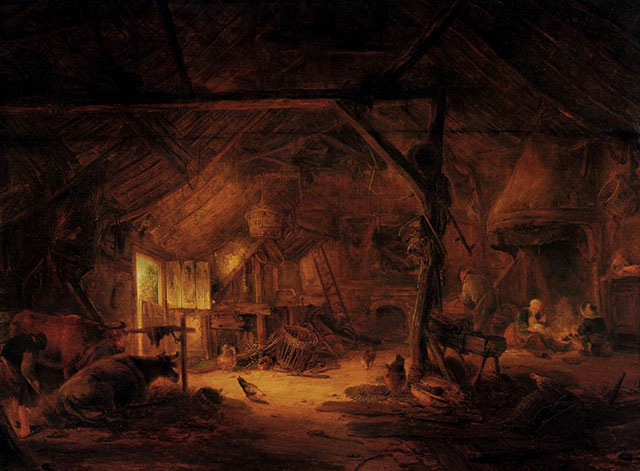
Farm Houses in Lower Saxony Julius Lindemann, Henry Blanck, the Erxmeyers and the Petermanns were all from the part of Germany known as Lower Saxony (Niedersachsen) Until the 19th and even into the 20th century German farm houses in Lower Saxony were mostly of the hall variety. One end of the large hall was used as barn with a work floor in the middle and stalls for the animals on the sides. The other end was used as the living quarters for the farmer and his family. | |
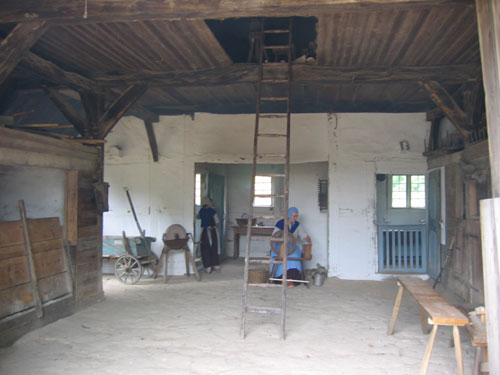
| A small house from Emsen circa 1800 This small house serves as an example of the type of arrangement of the hall house. The photo was taken from the barn end of the dwelling. The pigs are in the stalls to the left of the picture. The woman spinning is just in front of the hearth. The girl is just outside one of the small rooms used as part of the family dwelling. A "dutch" door on the right keeps animals from wandering into that room. The ladder leads to the loft above. Farming families remained very traditional and the better off farmers simply had larger versions of the same dwellings. Even the local townspeople took their example from the wealthy farmers rather than the city residents. | |
![]() |
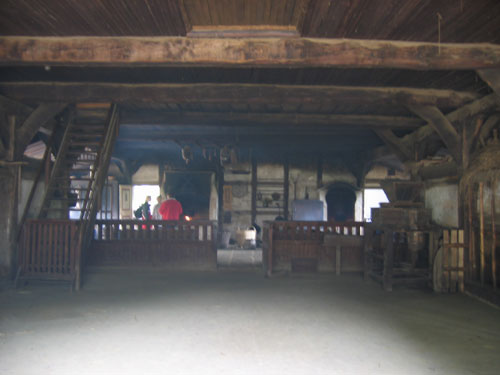
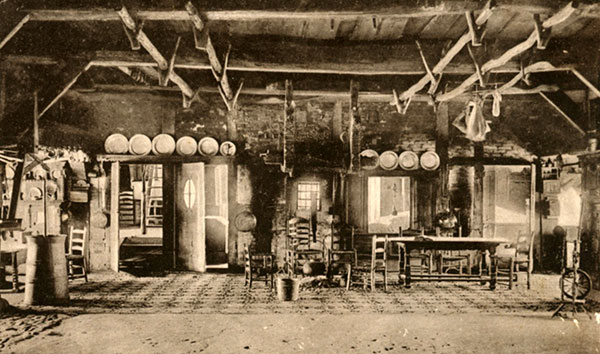
Looking from the barn end towards the family living quarters.
|
| Freilichtmuseum am Kiekeberg, Photo by Maggie Land Blanck | |
![]() |
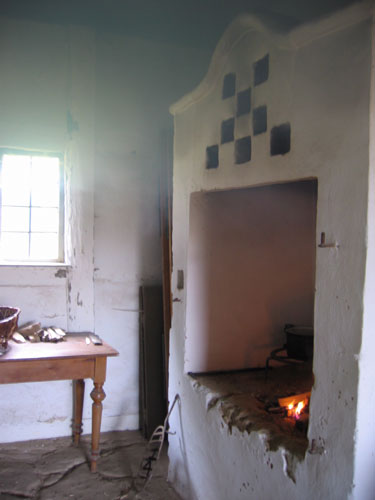
The hearth
|
| Freilichtmuseum am Kiekeberg, Photo by Maggie Land Blanck | |
![]() |
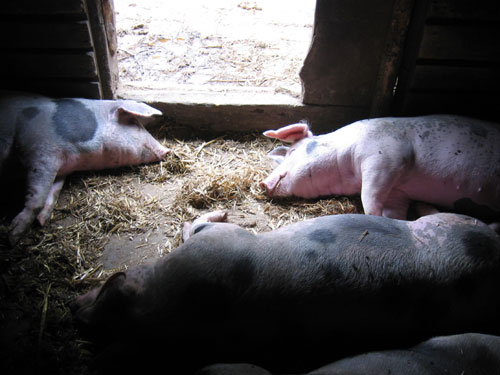
Inhabitants of the animal end of the house.
|
| Freilichtmuseum am Kiekeberg, Photo by Maggie Land Blanck | |
|
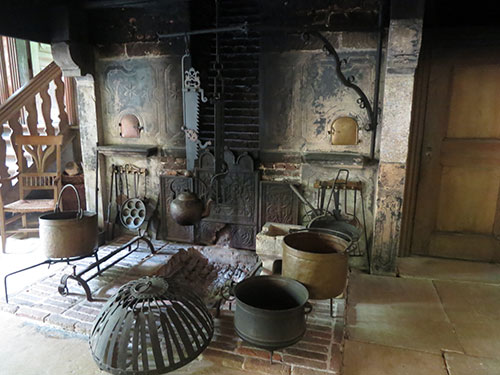
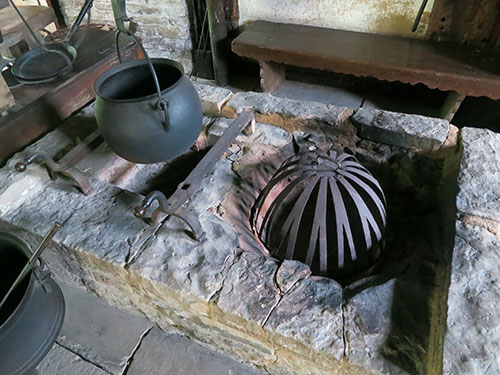
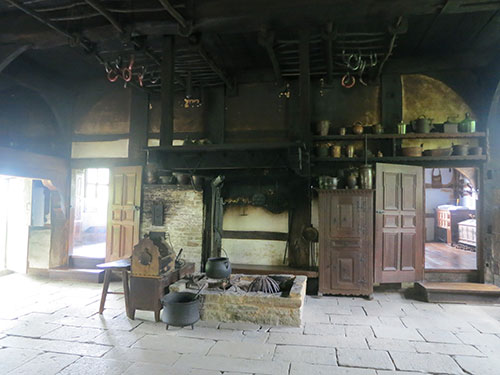
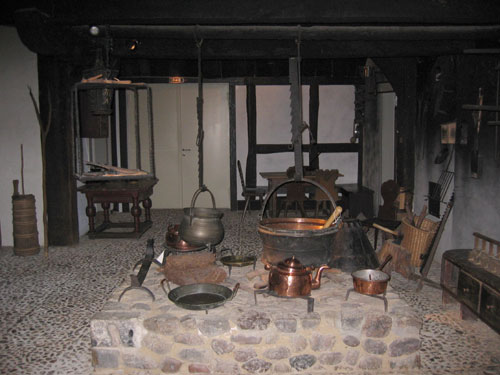
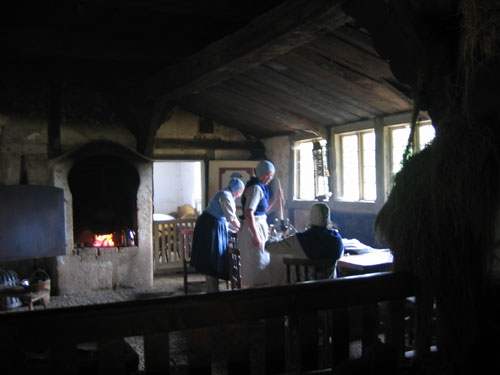
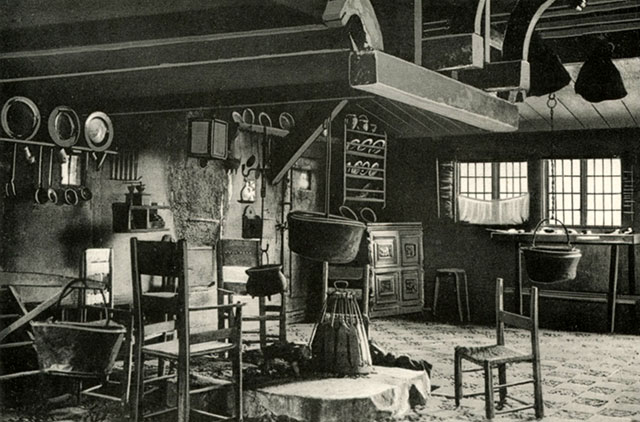
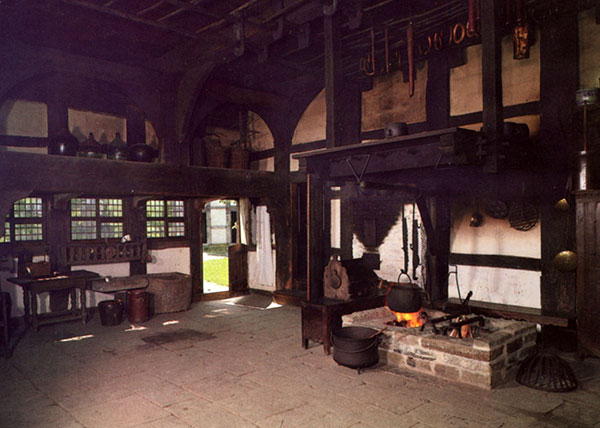
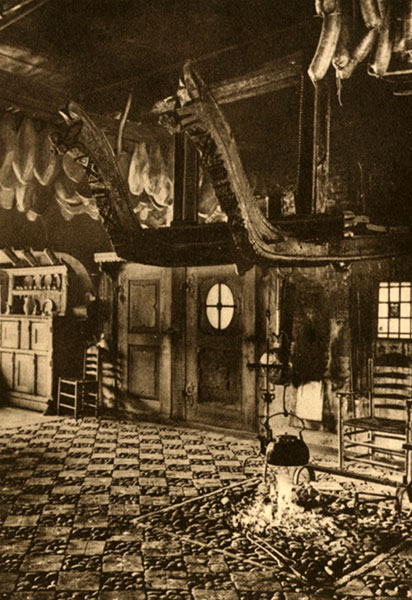
The Hearth and Other Forms Of Heating The open hearth provided a place to cook in addition to light and warmth.
| |
![]() |
|
| Celle Bomann Museum, Photo by Maggie Land Blanck | |
| The hearth was the center of the living end of the dwelling. There was no chimney and the smoke was allowed to circulate near the ceiling finding its way out eventually through the roof. The smoke had several benefits. Bacon and sausages were hung above the hearth and preserved by the swirling smoke. At the same time the grain stored in the loft kept longer because of the smoke. | |
![]() |
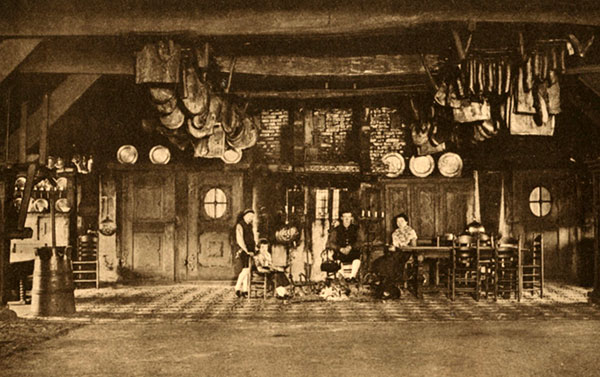
Looking from the barn section towards the family living quarters of a large half timbered farm house. The flames from the hearth are visible to the right of the man in the red shirt. Hams and sausages are hanging from the ceiling. The whole atmosphere is quite smokey. |
| Freilichtmuseum am Kiekeberg, photo by Maggie Land Blanck. |
|
The only other
means of heating in this part of the house were the animals living at the end of the building.
It was not possible to get the temperature in the house much above the outside temperature.
Portable means of heat such as foot warmers and bedwarmers provided some comfort.
| |
![]() |
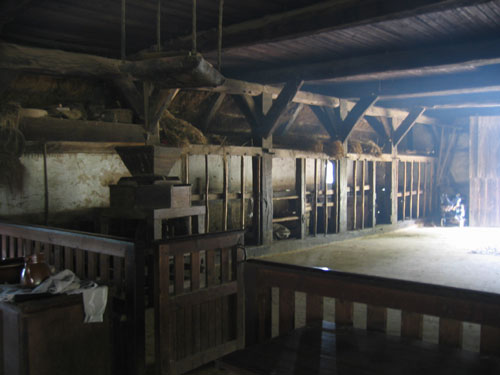
Looking towards the animals stalls there is a separation with a gate between the two sections of the building.
|
| Freilichtmuseum am Kiekeberg, Photo by Maggie Land Blanck | |
|
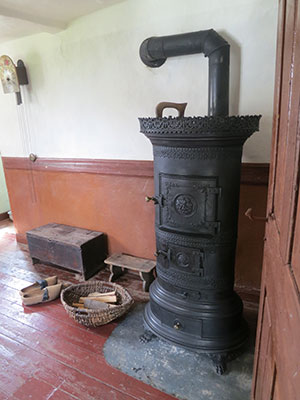
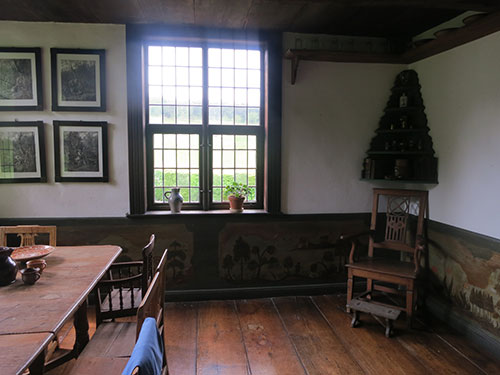
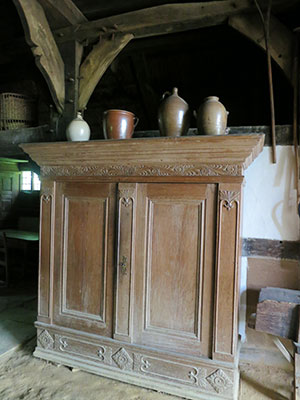
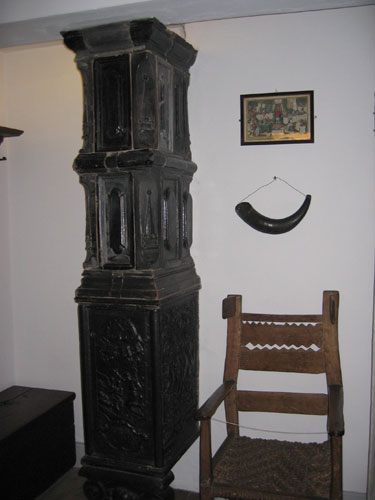
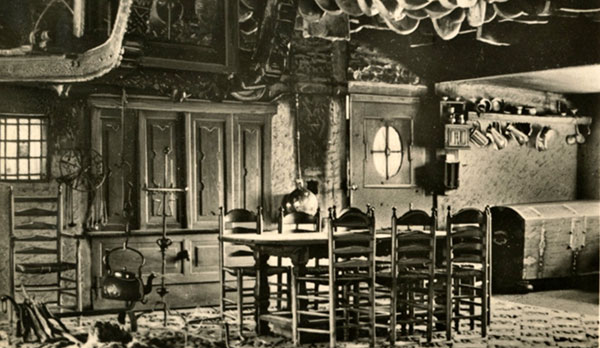
The Stube and Sleeping Areas At the living end of the house there were several small partitioned rooms with windows called "stube". The stube contained a ceramic stove heated from the back of the hearth which allowed a smokeless warmth. The ceilings were low and the small size of the rooms contributed to the coziness. The rooms were sparsely furnished and lighted by oil lamps. | |
![]() |
Looking from the animal section towards the hearth and main living area the door to a stube is visible.
|
| Freilichtmuseum am Kiekeberg, Photo by Maggie Land Blanck | |
![]() |
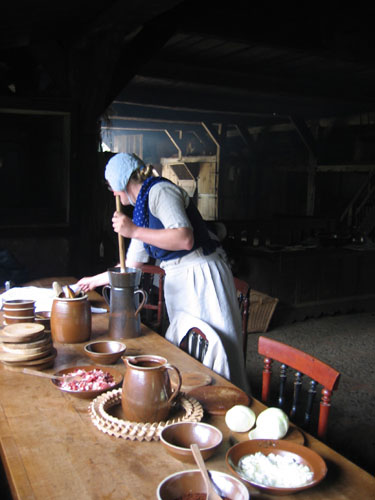
This view shows the working area of the hearth section of the house. In the background can be seen the animal stalls.
|
| Freilichtmuseum am Kiekeberg, Photo by Maggie Land Blanck | |
![]() |
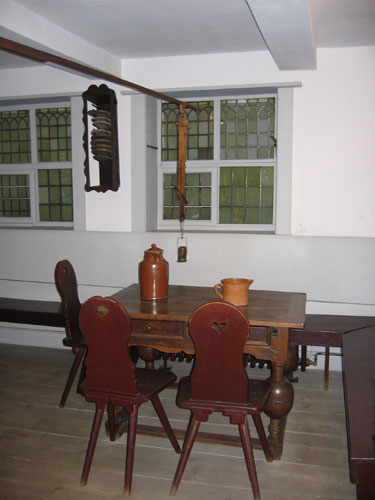
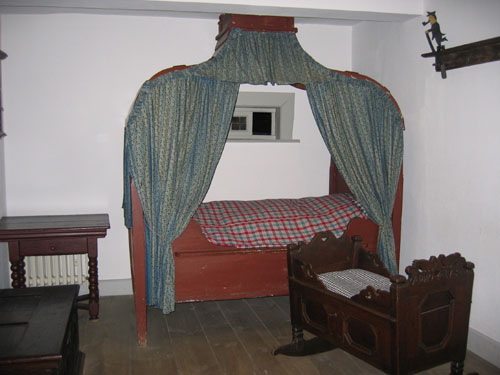
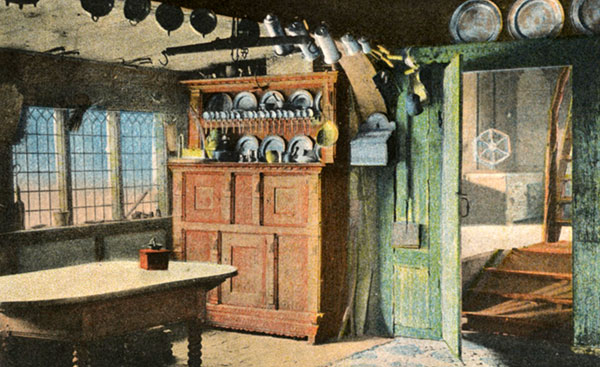
A stube could be used as a cozy living room or a bed room. Furniture tended to be minimal. |
| Celle Bomann Museum, Photo collection of Maggie Land Blanck | |
![]() |
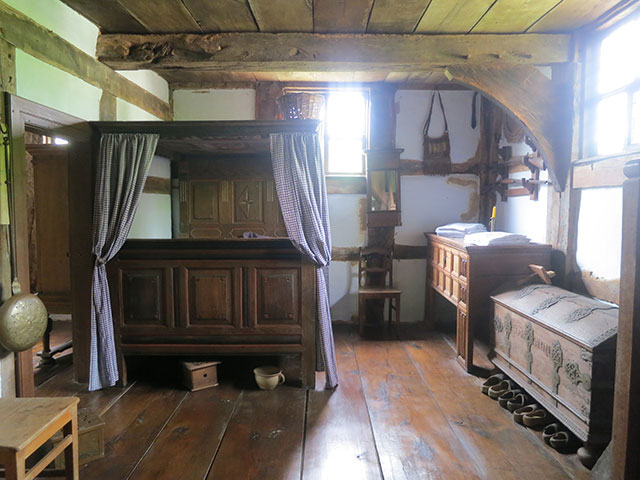
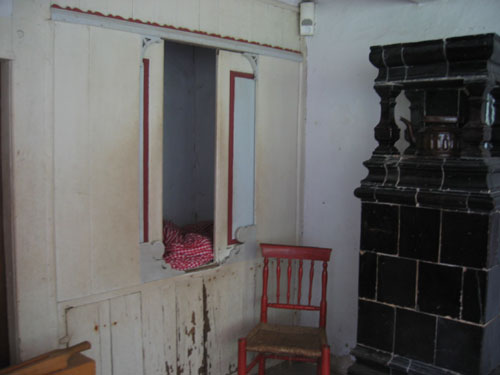
Sleeping room off the stube. Ceramic stove. |
| Freilichtmuseum am Kiekeberg, photo by Maggie Land Blanck. | |
![]() |
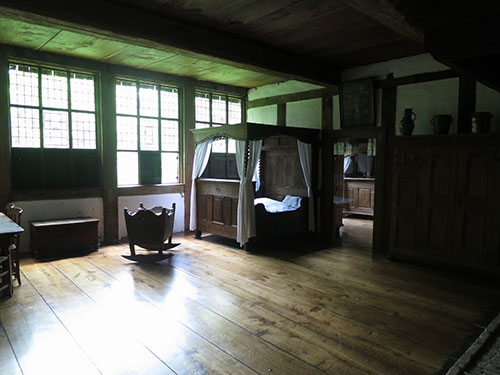
The side of the sleeping room pictured above facing the main dwelling space |
| Freilichtmuseum am Kiekeberg |
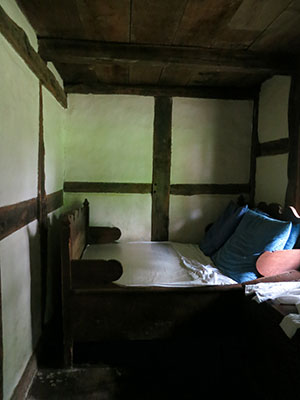
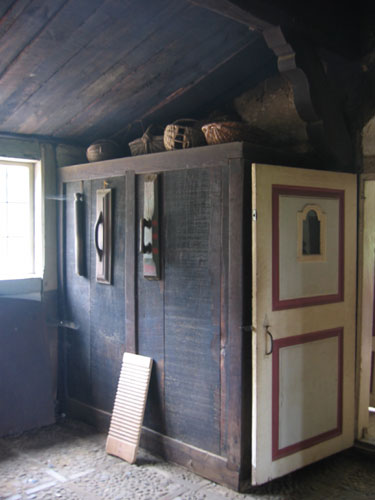
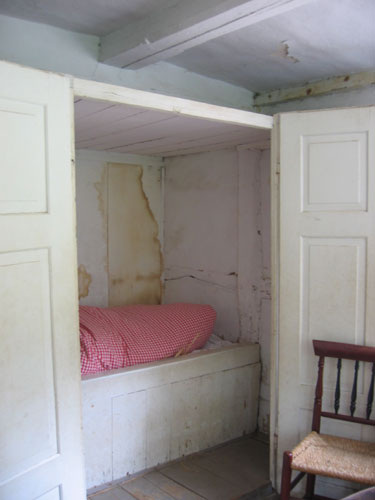
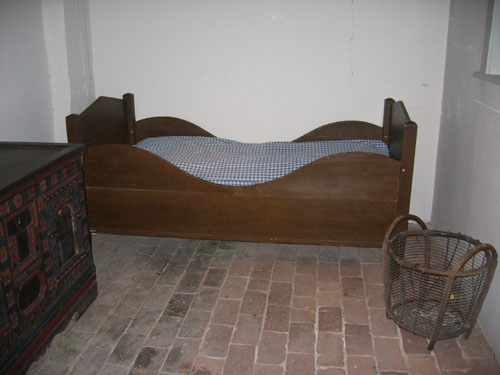
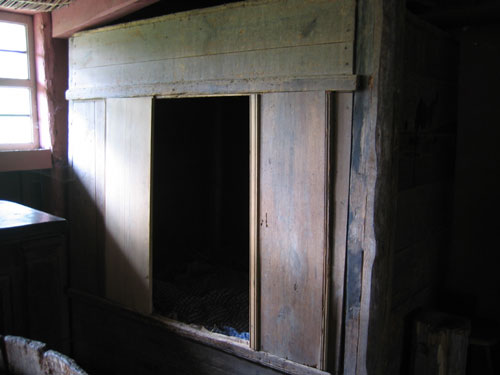
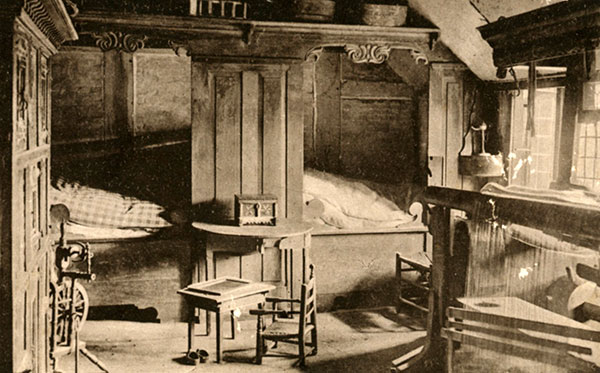
| Off the stube was a sleeping room which was not heated. Parent and children slept together for additional warmth. | |
![]() |
Another sleeping room off the stube. |
| Freilichtmuseum am Kiekeberg |
|
| |
![]() |
Stube |
| Celle Bomann Museum, Photo collection of Maggie Land Blanck | |
![]() |
Stube
|
| Celle Bomann Museum, Photo collection of Maggie Land Blanck | |
| While the family slept in the "rooms" off the stube the farm hands slept in similar "rooms" in the main part of the building. | |
![]() |
Sleeping room between the hearth area and the animal area. |
| Freilichtmuseum am Kiekeberg, photo by Maggie Land Blanck. | |
![]() |
Another example of a ceramic stove. |
| Celle Bomann Museum, Photo collection of Maggie Land Blanck | |
|
Village Houses As mentioned above, houses in villages were similar to farm houses. There must have been differences. However, I have not been able to obtain much information on the village houses. | |
|
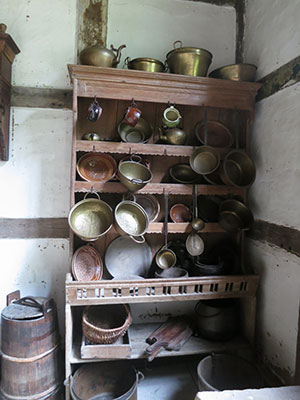
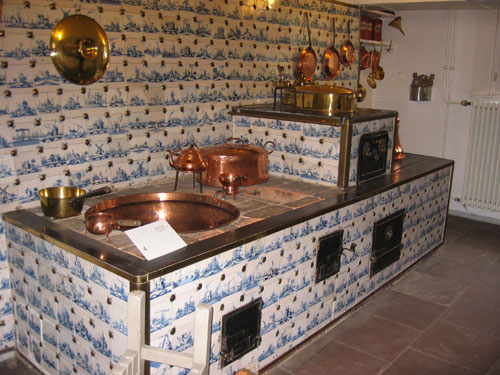
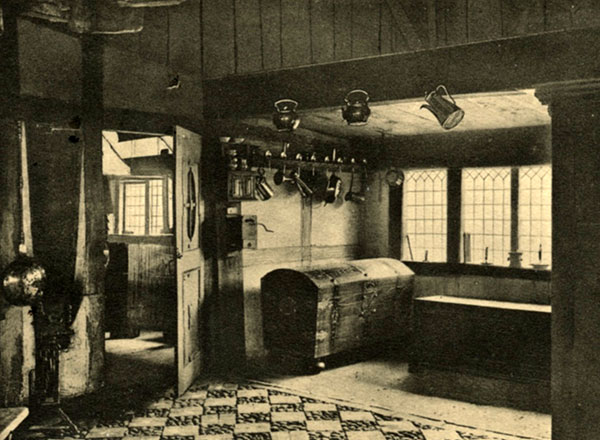
City Houses Town houses were multi-storied. Furnishings were more opulent. Ceramic stoves where also used in town houses but the designs were more fanciful and ornate. This beautiful tiled kitchen with its many shiny brass pots illustrates the level of difference between the farm house and the city house. |
![]() |
|
| Celle Bomann Museum, Photo by Maggie Land Blanck | |
| If you have any suggestions, corrections, information, copies of documents, or photos that you would like to share with this page, please contact me at maggie@maggieblanck.com |
|
Home
|