| German Houses and Barns - Exteriors | |
| HOME - BLANCK INTRODUCTION - GOEHLE INTRODUCTION - PETERMANN INTRODUCTION - German House Interiors - German Houses Introduction - Farm Animals - Crops - Attire | |
|
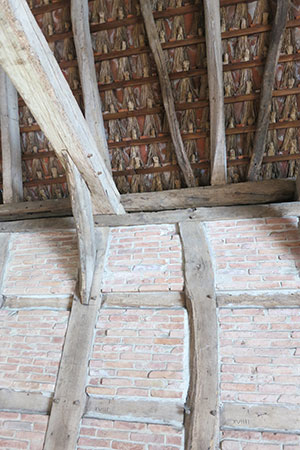
Houses Types of houses and the construction materials depended on country or town location and on regional variation. Half timber construction was very popular in both the countryside and city in Germany in the middle ages and later. The frame of the building was made of timber, usually oak. The timbers were morticed and pegged together. Triangular bracing was used to give additional support. The spaces between the timbers were filled with waddle and daub, brick, stones or plaster. The timber remained visible both inside and outside the building. Buildings were also constructed of brick and stone. Some out buildings were constructed of wood. Roofs were thatched with straw or reed, tiled or slated. A common floor plan combined the family's living quarters and the living quarters of the animals. The families rooms were at one end of the building and usually included: one or more sleeping rooms (kammer) and one or more sitting rooms (stube) depending on the size of the dwelling. An open kitchen dining area (flett) was in front of the "living" rooms and ran the with of the building. A hearth was at the center of the "flett". Smoke escaped through the roof without benefit of a chimney. The smoke dried the hay which was stored in the loft above. At the front of the building were the animals stalls and the "Deele" (or Diele). It was formed by the space between animal stalls on either side. This was the largest area in the building and was entered from the outside by large doors. The deele was used for threshing grain, breaking flax, gathering the harvest, and other labors. See Interiors
| |
|
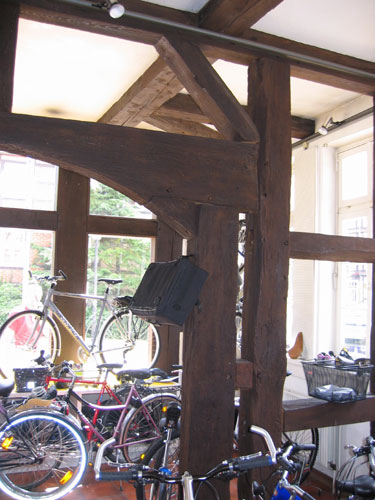
The interior of this bike shop in Celle reveals some aspects of the half timber construction.
|
| Celle, Photo by Maggie Land Blanck | |
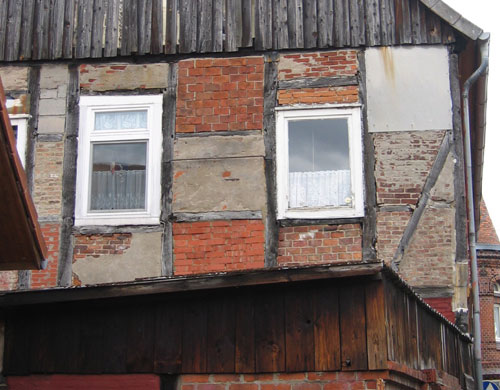 |
As long as the timbers remain sound the spacing between the timbers can be reworked when needed as shown by
this building in the town of Winsen. Here repairs have been made with various sizes and types of bricks
|
| Winsen, Photo by Maggie Land Blanck |
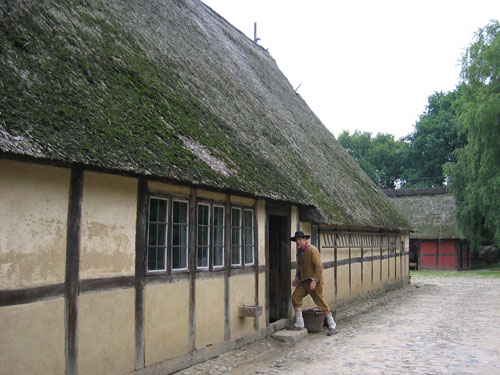 |
Half timbered farm house with thatch roof at the Freilichtmuseum am Kiekeberg pictured in
House Interiors
|
| Freilichtmuseum am Kiekeberg, Photo by Maggie Land Blanck | |
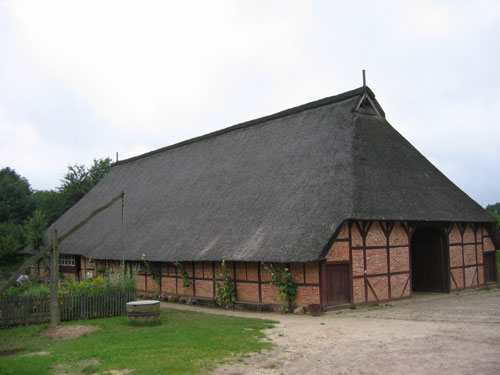 |
Half timbered farm house with thatch roof at the Freilichtmuseum am Kiekeberg
|
| Freilichtmuseum am Kiekeberg, Photo by Maggie Land Blanck | |
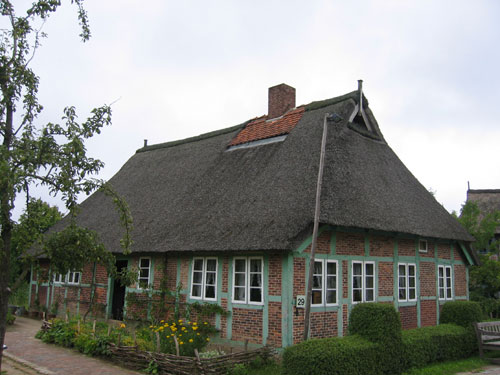 |
Half timbered fisherman's house Freilichtmuseum am Kiekeberg
|
| Freilichtmuseum am Kiekeberg, Photo by Maggie Land Blanck | |
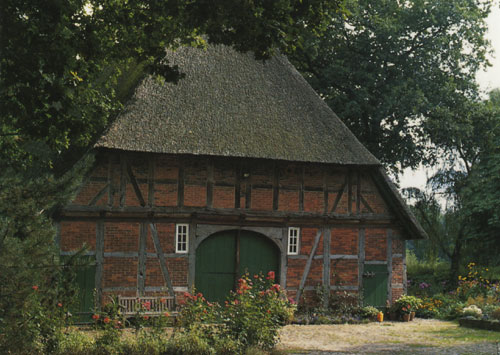 |
Bauernhause (farmhouse) in Hützel
|
| Postcard collection of Maggie Land Blanck | |
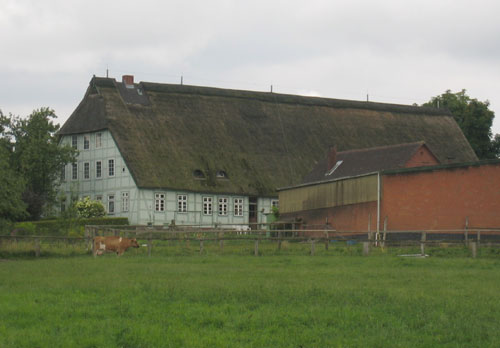 |
Huge half timbered farm house near Winsen
|
| Winsen, Photo by Maggie Land Blanck | |
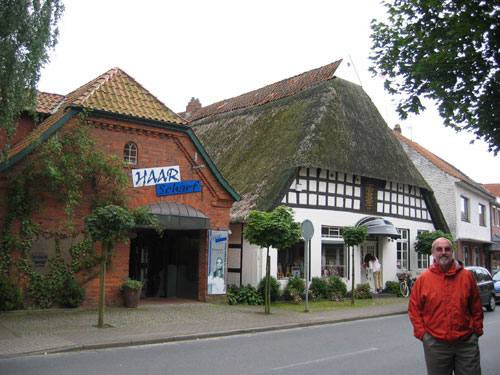 |
Half timbered town house in the village of Beverstedt
|
| Winsen, Photo by Maggie Land Blanck | |
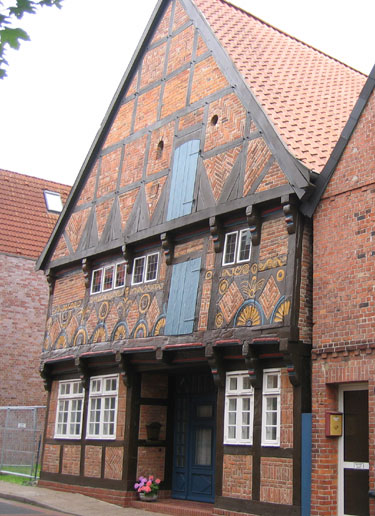 |
Half timbered town house in Winsen with cantilevered stories and tile roof
|
| Winsen, Photo by Maggie Land Blanck | |
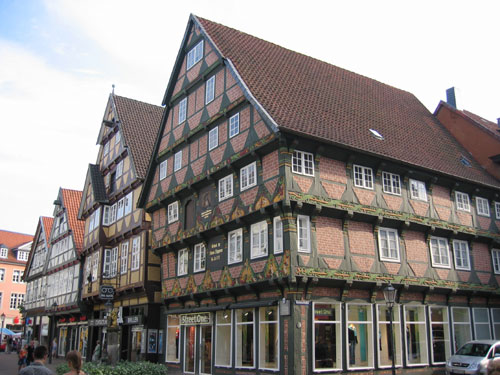 |
Half timbered town houses in Celle
|
| Celle, Photo by Maggie Land Blanck | |
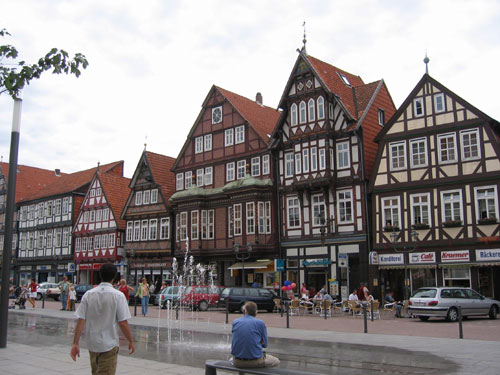 |
Half timbered town houses in Celle
|
| Celle, Photo by Maggie Land Blanck | |
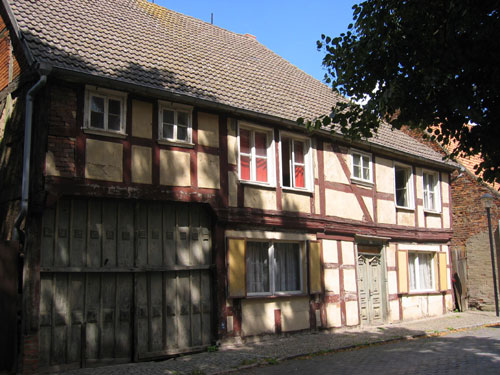 |
Half timbered town house in Seehausen Altmark
|
| Seehausen Altmark, Photo by Maggie Land Blanck | |
 |
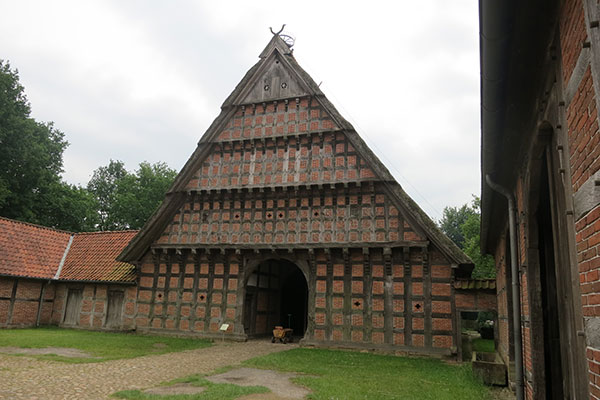
Half timbered barn Cloppenburg Open Air Museum
|
| Photo by Maggie Land Blanck, 2012 | |
 |
|
| Photo by Maggie Land Blanck, 2012 Granary and threshing barn Wehlburg Estate - half timbered and brick on stone foundation - Built in 1888 - Rebuilt at Cloppenburg Open Air Museum 1975
| |
 |
|
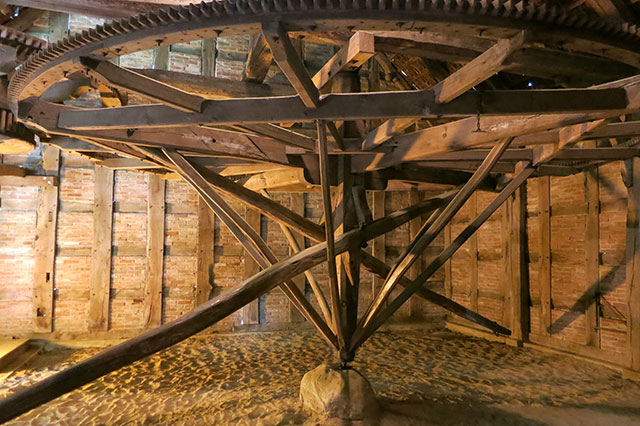
| Photo by Maggie Land Blanck, 2012 Threshing room threshing barn Cloppenburg Open Air Museum
| |
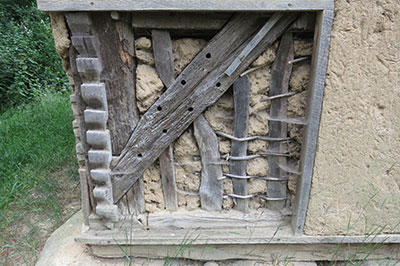 |
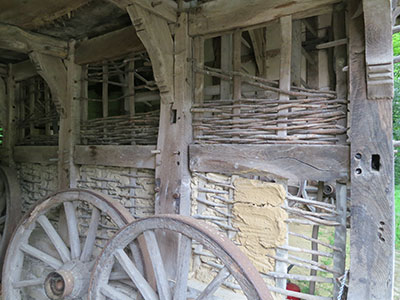
| Photo by Maggie Land Blanck, 2012 Waddle and dab in half beam construction, Cloppenburg Museum Late medieval granary Helmsmueller Estate Donstorf Diepholz circa 1480 rebuilt Cloppenburg Museum 1964
|
|
Brick Houses Bricks were used in conjunction with half-timber or by itself. All brick constructions were more popular in areas where there was a lack of timber. In town houses the brick was frequently covered over with plaster to present a smooth surface which was painted.
| |
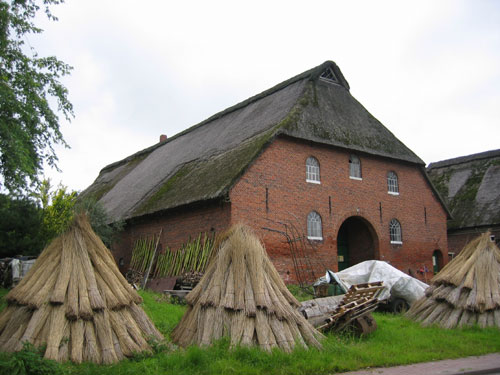 |
Brick farm house (now barn) between Sandstedt and Lehe along the Weser River.
|
| Photo by Maggie Land Blanck | |
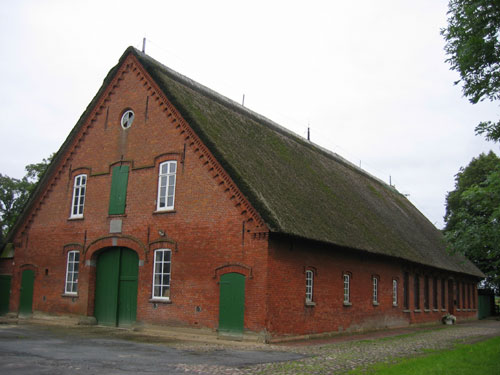 |
Brick farm house between Sandstedt and Lehe along the Weser River.
|
| Photo by Maggie Land Blanck | |
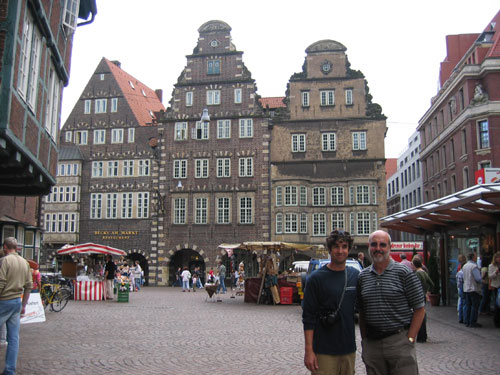 |
Brick town houses in Bremen.
|
| Photo by Maggie Land Blanck |
|
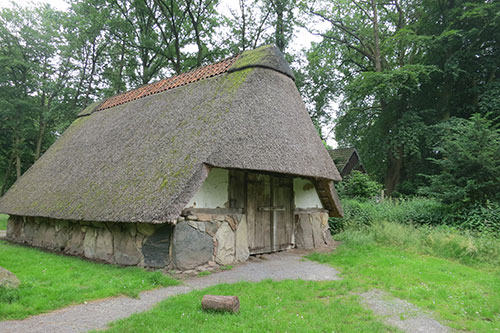
Field Stone Construction Another early method of construction was field stone. | |
 |
|
| Photo Maggie Land Blanck, 2012 Cloppenburg Open Air Museum
| |
 |
|
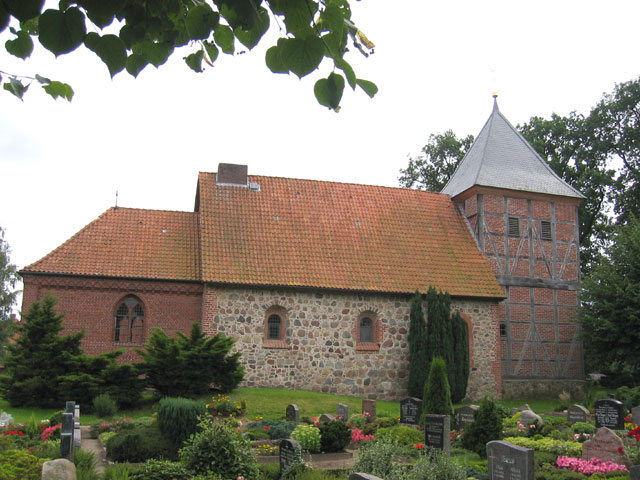
| Wichmannsburg, Photo by Maggie Land Blanck This beautiful old church of St George in Wichmannsburg shows several different types of construction. The tower is half timber, the center is field stone, and the back is brick. | |
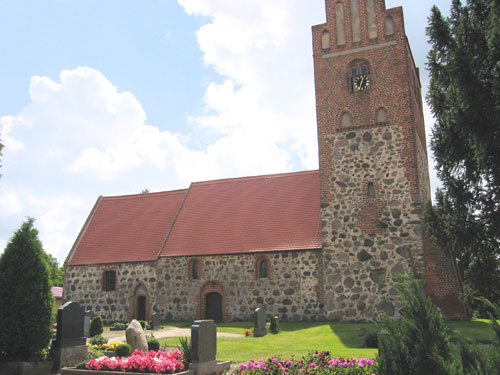 |
Field stone church in Lippen
|
| Lippen, Photo by Maggie Land Blanck |
|
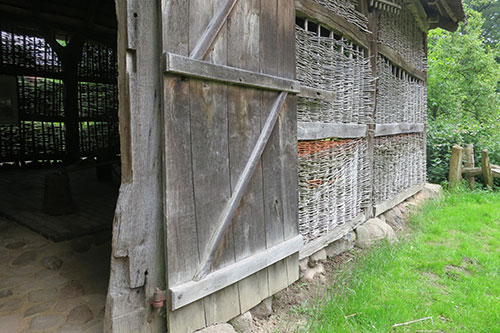
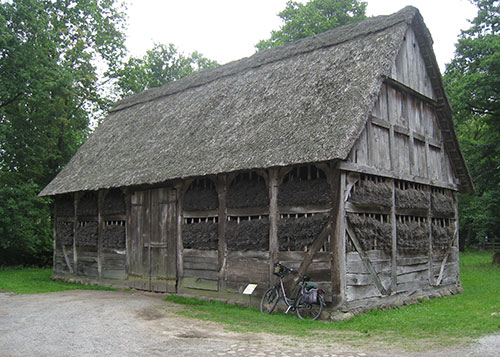
Wood Construction Where wood was plentiful some structures were made out of wood alone. | |
 |
|
| Photo Maggie Land Blanck, 2012 Cloppenburg Open Air Museum
| |
 |
|
| Photo Maggie Land Blanck, 2012 Cloppenburg Open Air Museum
| |
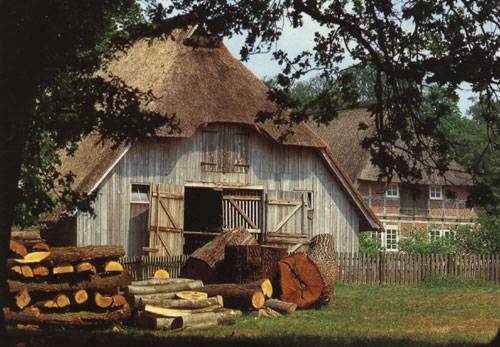 |
|
| Postcard collection of Maggie Land Blanck
| |
|
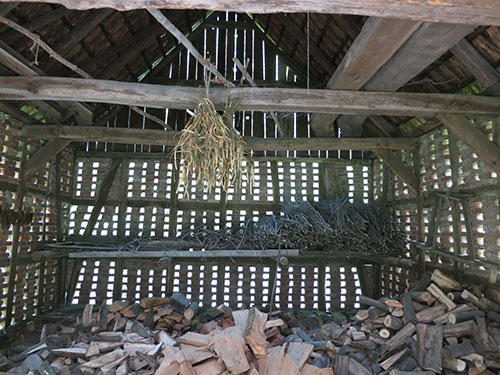
More Construction Techniques From the
Detmold Open Air Museum
| |
 |
|
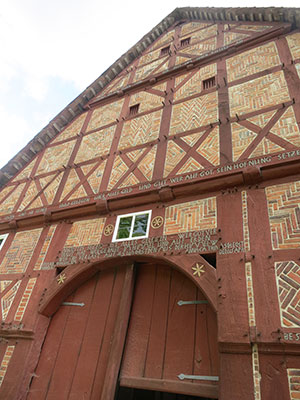
| Photo Maggie Land Blanck, 2014 Detmold Open Air Museum This kinds of barns with holes on the sides were uses for drying and storing a variety of materials. The holes allowed the air to flow through. | |
 |
|
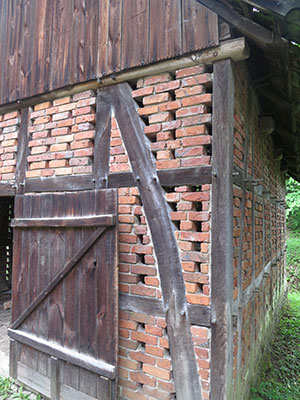
| Photo Maggie Land Blanck, 2014 Detmold Open Air Museum Woodshed built circa 1860 used to store firewood and garden tools. The bricks were staggered for optimum ventilation.
| |
 |
|
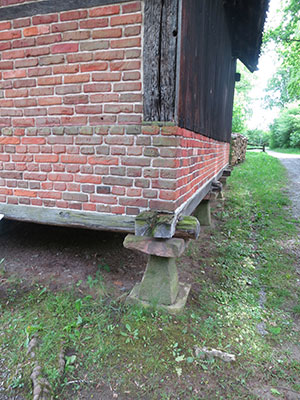
| Photo Maggie Land Blanck, 2014 Detmold Open Air Museum A 19th century oat barn used for storing grain and hay. The floor was raised to discourage rodents. | |
 |
|
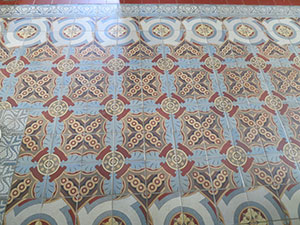
| Photo Maggie Land Blanck, 2014 Detmold Open Air Museum Floors in "fancier" houses were made of wood or tile.
| |
 |
|
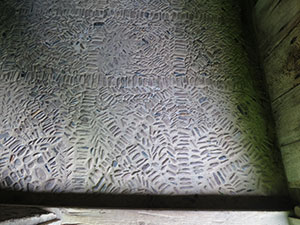
| Photo Maggie Land Blanck, 2014 Detmold Open Air Museum Stone mosaic barn floor.
| |
 |
|
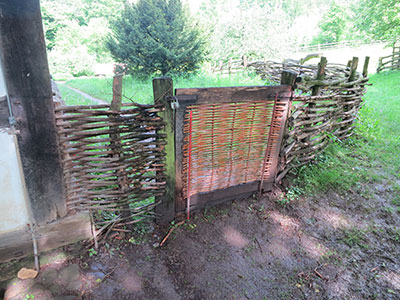
| Photo Maggie Land Blanck, 2014 Detmold Open Air Museum A woven twig fence and gate.
| |
 |
|
| Photo Maggie Land Blanck, 2014 Detmold Open Air Museum Woven wood barn walls.
| |
|
Houses and Barns from the Detmold Outdoor Musuem
| |
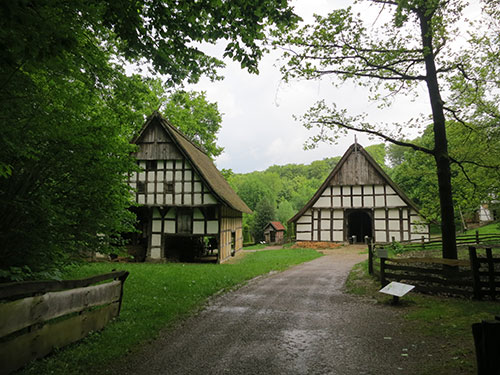 |
|
| Photo Maggie Land Blanck, 2014
| |
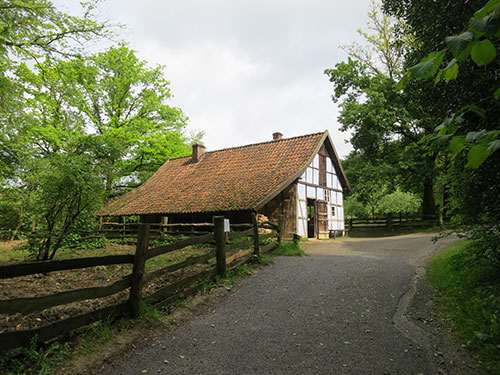 |
|
| Photo Maggie Land Blanck, 2014 This building has a tile roof.
| |
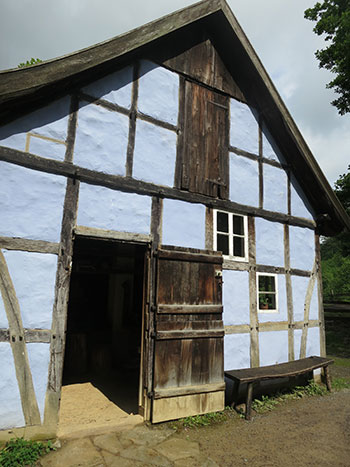 |
|
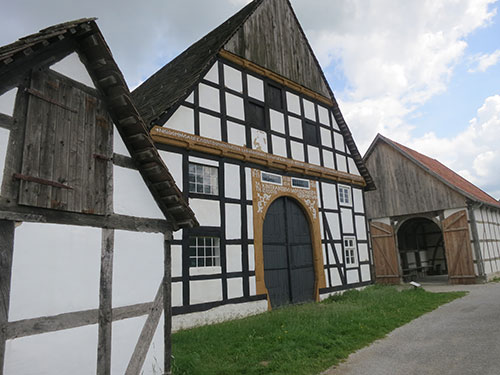
| Photo Maggie Land Blanck, 2014 Built in in 1784 this Tecklenburger cottagers dwelling was home to three generations of linen weavers. It combined living and working quarters and is shown as it was circa 1860. It contains three "kammer" (bedrooms) and a "stube" (parlor) at the back of the structure. A "flett" separates the living rooms from the barn area. In the barn area are three stalls, a kammer, a "deele" (the threshing area), a pig sty and a "webkammer". | |
|
Village Dwellings From the Detmold Outdoor Museum
| |
|
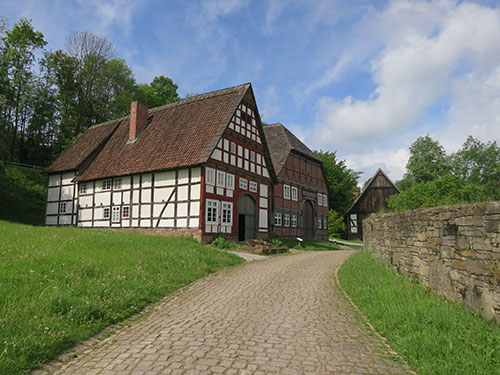
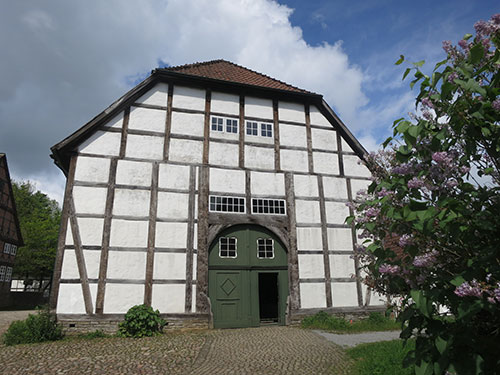
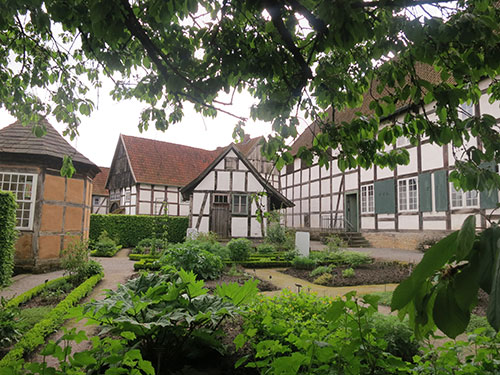
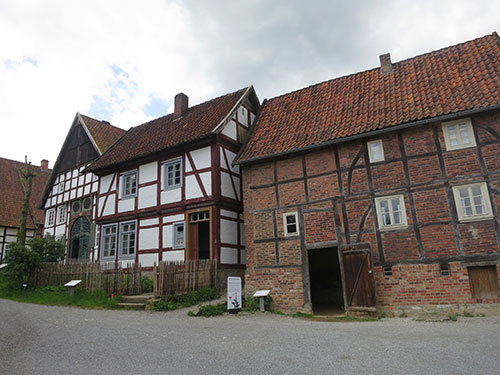
Villagers were often craftsmen who also did some farming.
| |
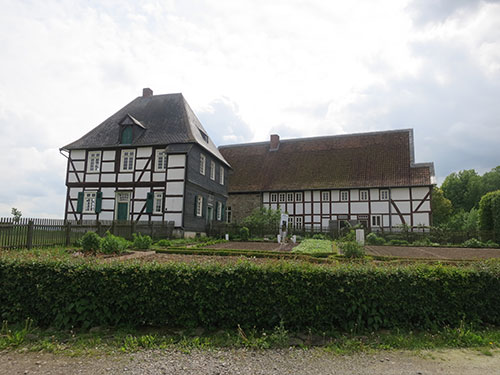 |
|
| Photo Maggie Land Blanck, 2014 The parish house of the Gemeinde Catholic Church St Johannas Baptist aus Allagen built 1734-1737 - the residence and offices of the village pastor. Pastors were also generally farmers.
| |
 |
|
| Photo Maggie Land Blanck, 2014
| |
 |
|
| Photo Maggie Land Blanck, 2014
| |
 |
|
| Photo Maggie Land Blanck, 2014
| |
 |
|
| Photo Maggie Land Blanck, 2014
| |
 |
|
| Photo Maggie Land Blanck, 2014
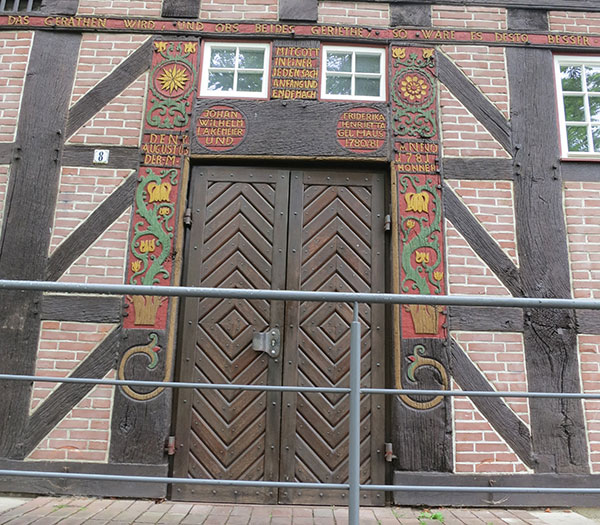
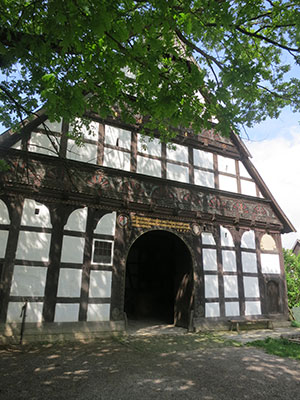
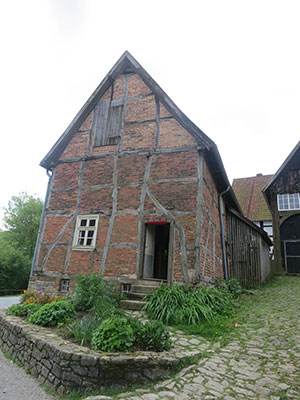
In the 17th century Germany town-farmers often had themselves and their wives immortalized in the archway above the door. In 2014 the Jederman cafe-restaurant in Detmold was housed in this old building from the nearby village of Belle. The building was transported and rebuilt as part of the Lippisches Landesmuseum. The Spieker is a half timbered house that was built in 1780/81 for Johan Wilhelm Lakemeir and Friderika Henrietta Gelhaus on their farm in Belle. Johan Wilhelm Lakemeyer was born in 1727 in Belle and baptized in Wobbel. He married Friederike Henrietta Gelhsue in 1778. He was 51 and she was 35. The building is much transformed.
| |
 |
 |
| Photo Maggie Land Blanck, 2014
| |
 |
|
| Photo Maggie Land Blanck, 2014
| |
 |
|
| Photo Maggie Land Blanck, 2014
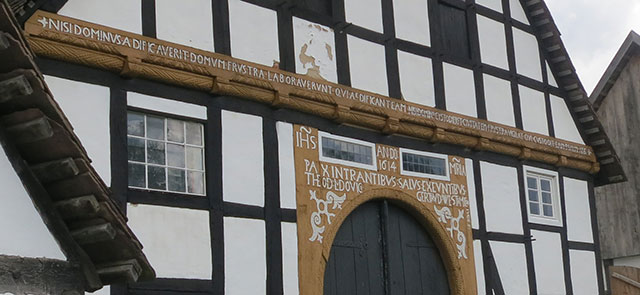
The Haus Ludovici was built 1608-1614 and renovated in 1777. The house is shown as it was around 1900 with additional rooms carved out to what was once the barn area. The elaborate gable indicates that the house was built by a high official.
| |
 |
|
| Photo Maggie Land Blanck, 2014
| |
 |
 |
| Photo Maggie Land Blanck, 2014
| |
 |
|
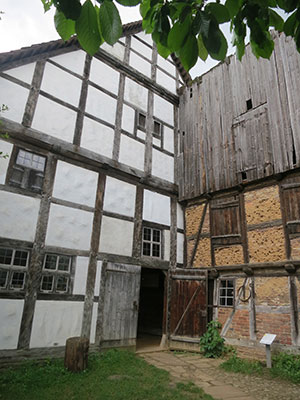
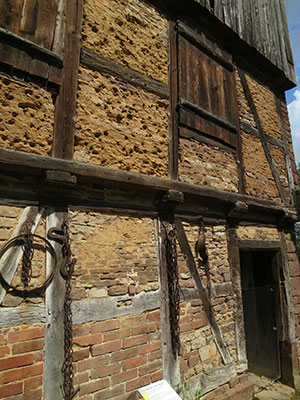
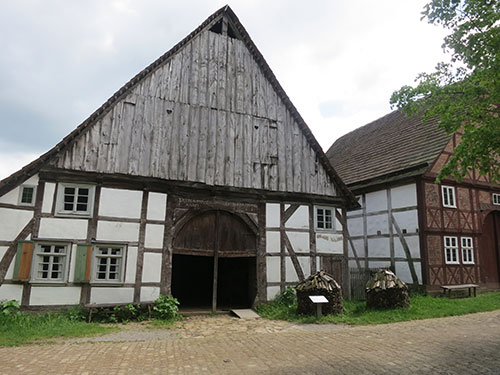
| Photo Maggie Land Blanck, 2014 A town dwelling farmer's house from Hoxter Bruchhsusen, built in 1651 and shown as it was in 1870. This house has a different floor plan than was usual. Instead of the living quarters at one end of the house an the stables on other end, in this house the living quarters are on the left side and the stables are on the right.
| |
|
Large Farms From the Detmold Outdoor Museum
| |
 |
|
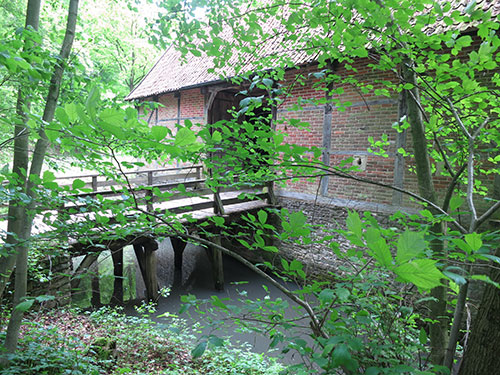
| Photo Maggie Land Blanck, 2014 Shown in this set of images is a large farm from Munsterland, North Rhine, Westphalia. Entrance to the dwelling, barns, storage areas and animal shelters was via a bridge across a moat.
| |
 |
|
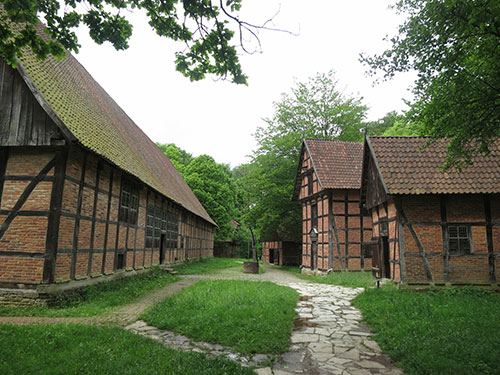
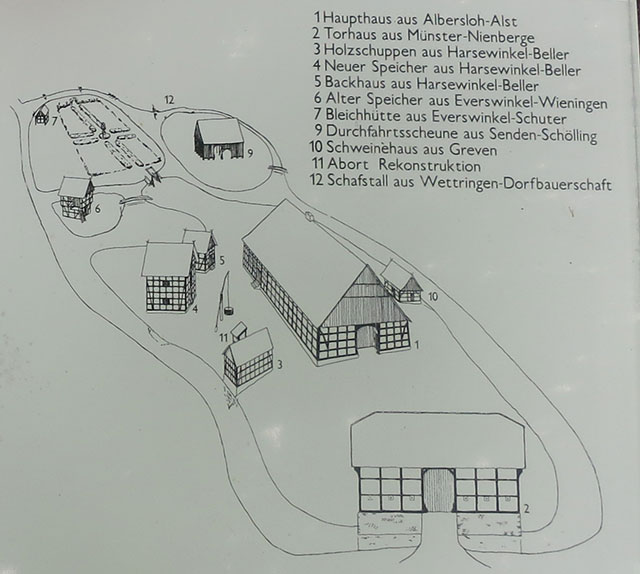
| Photo Maggie Land Blanck, 2014 The main building (farmhouse and barn) is on the left. The bakery, the new granary, and the woodshed are on the right. There is a well in the path between the buildings. The granary, built in 1711, is shown in its 19th century condition. It was used to store cereals, the most important crops on the farm. In the 19th century important cereal crops in Germany were: wheat, rye, barley and oats.
| |
 |
|
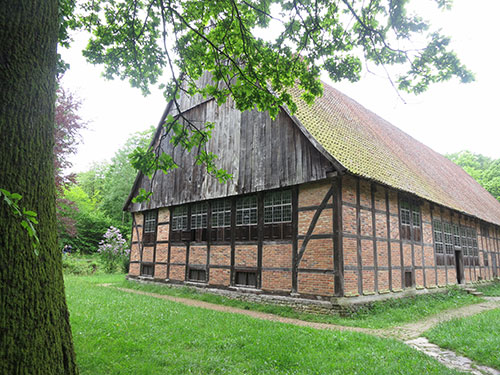
| Photo Maggie Land Blanck, 2014 The main farmhouse and barn has a stone foundation, half timer filled with brick and a wooden gable. There are a substantial number of windows.
| |
 |
|
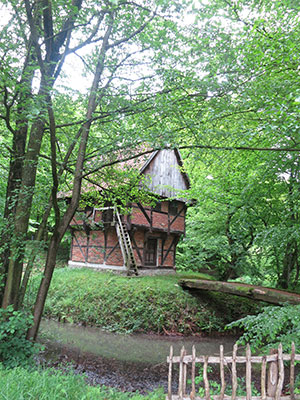
| Photo Maggie Land Blanck, 2014 The old granary originally built in 1565 is shown in its 16th century condition. In times of trouble it served as a retreat for the inhabitants of the farm and and store room for valuables. Notice on the schematic below that this building was double moated. The overhanging upper floor made the building harder to climb up.
| |
 |
|
| Photo Maggie Land Blanck, 2014 The buildings shown above are from a farm in Muster, Westfalen. The soil in Munster was very rich. The farms tended to be large and the farmers wealthy. These wealthy farmers lived in much the same style as the landed gentry and town citizens. The farm depicted above was moated for protection. The buildings were recreated as they would have looked circa 1800.
| |
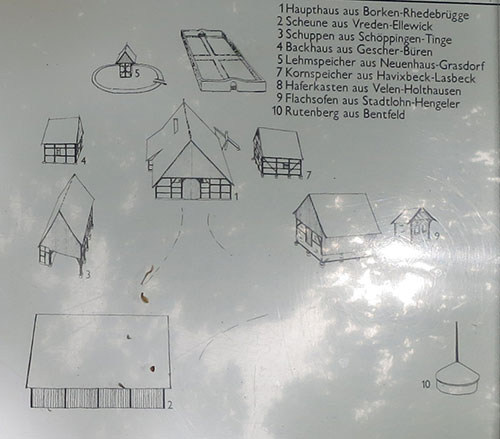
| The next three images are from a late 18th century, medium sized, pastoral farm complex from Westmusterland where scattered farm settlements were the norm. | |
 |
|
| Photo Maggie Land Blanck, 2014
The farm house/barn has a stone foundation, half timer with brick construction, and wooden gable. The building on the extreem left is the bakehouse. The yellow building in the background is the granary.To the extreem right is the oat barn. | |
 |
|
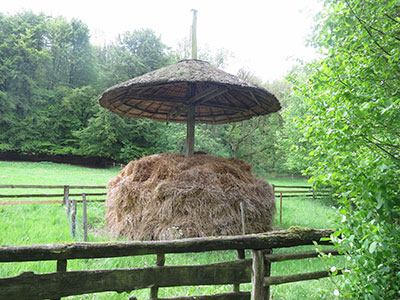
| Photo Maggie Land Blanck, 2014 Covered haystack
| |
 |
|
| Photo Maggie Land Blanck, 2014
See Germany Crops
| |
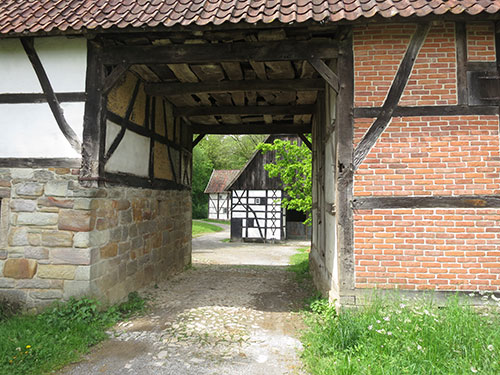
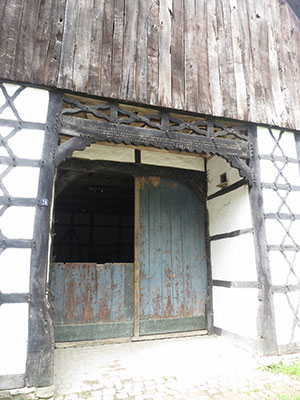
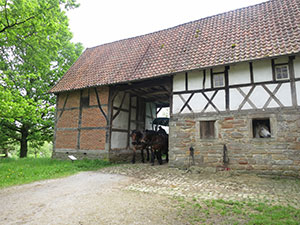
| The following images are of a medium sized Stadt Dortmund farmstead which contains a farmhouse,
a gatehouse, a granary, an apiary, a fire station and a schoolhouse.
| |
 |
|
| Photo Maggie Land Blanck, 2014 Looking through the gatehouse to the farmhouse. | |
 |
|
| Photo Maggie Land Blanck, 2014 The farmhouse build in 1793 in shown in its 1860 condition. The floor plan indicated that the building contained a kitchen, two rooms (one for sleeping), a room over the cellar, a hoses stable, a cow stall, a milk room and a "deele" (a large central area between the cow and horse stalls used for threshing).
| |
 |
|
| Photo Maggie Land Blanck, 2014 Entrance to the farmstead.
| |
|
Farmworkers and Peasant Farmers Houses
| |
| Hired laborers houses were close to the farmer's house. | |
 |
|
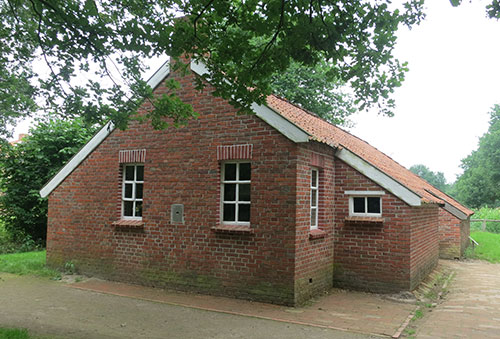
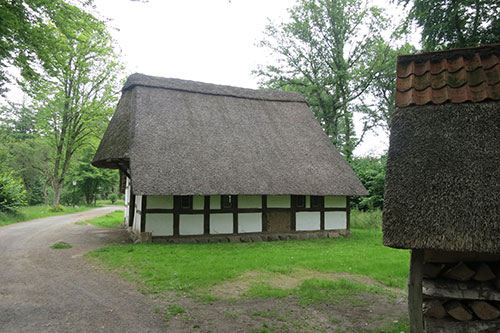
| Photo Maggie Land Blanck, 2012 Cloppenburg Open Air Museum Hinderks Farmhouse "Gulfaus" - Fresian Farmhouse Peasant's farmhouse with outbuildings - typical Frisian Famhouse built for the Hinderks family of Stapelmoorerheide district of Leer in 1850 with several later additions and modifications. Rebuilt at Cloppenburg Open Air Museum in 1979. Fritz Kettler was from Friesland. See Fritz Kettler | |
 |
|
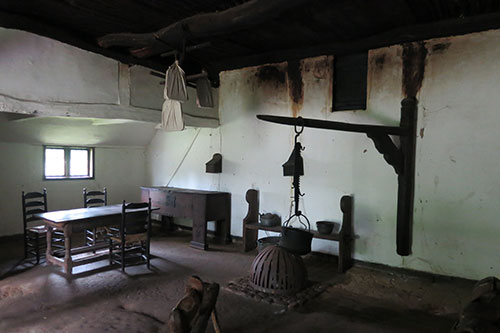
| Photo Maggie Land Blanck, 2012 Cloppenburg Open Air Museum Farmhand's House with two rows of inside pillars and no chimney. Built for Suing Estate of Astrup Visbek, District of Vechta prior to 1750 Furnishings early 19th century. Rebuilt at Cloppenburg in 1937 | |
 |
|
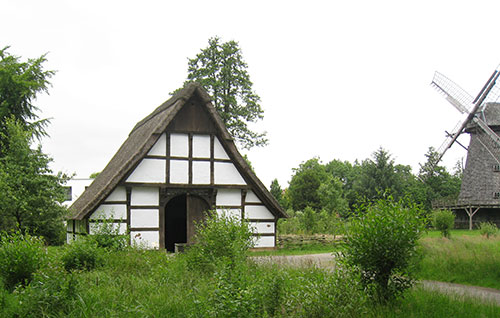
| Photo Maggie Land Blanck, 2012 Cloppenburg Open Air Museum Interior of above house. | |
 |
|
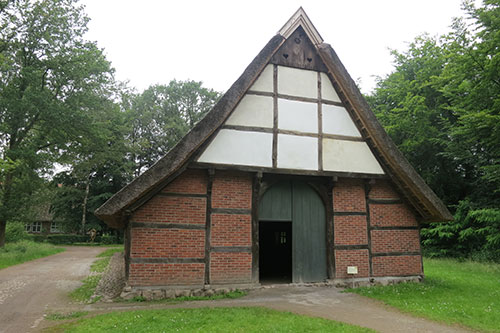
| Photo Maggie Land Blanck, 2012 Cloppenburg Open Air Museum Heuerhaus - Farmhand's house let to rural lower classes occupied by two families. Without chimney. Built for the estate of Meyer zu Repke of Buehren, Disgrict of Cloppenburg.
| |
 |
| Photo Maggie Land Blanck, 2012 Cloppenburg Open Air Museum Heuerhaus - Farmhand's house let to rural lower classes occupied by four families around 1820. Two rows of inner pillar without chimney. Built for the Vogelsand family of Damme, District of Vechta in 1771and 1811. Rebuilt at Cloppenburg in 1838.
|
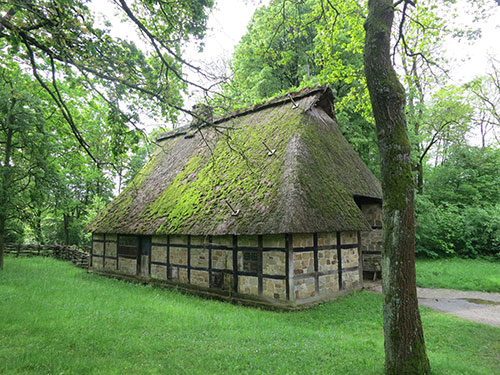 |
| Photo Maggie Land Blanck, 2014 Detmold Open Air Museum - Tecklenburger laborers house from Mettingen Hoveringhausen
|
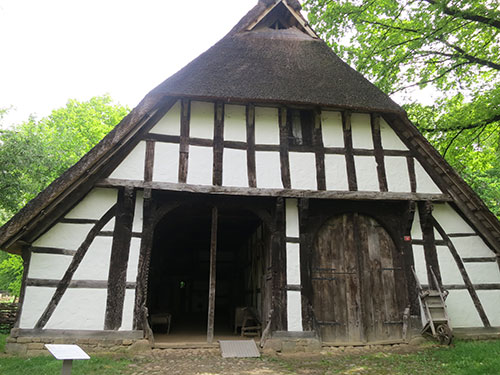 |
| Photo Maggie Land Blanck, 2014 Detmold Open Air Museum - Doppelheuerhaus (double laborers house) from Bad Essen-Husede. Each door leads into a separate dwelling. Each side contained a two bed rooms, a parlor stalls and a "delle". As well as the general space between the living rooms and the "deele". Access was though a door on the side as well as the large door at the front. These were leasehold houses - a form of land tenure whereby a person or persons buys the right to use the property for a given period of time. This dwelling was built in 1738 and shown in its 1830 condition.
|
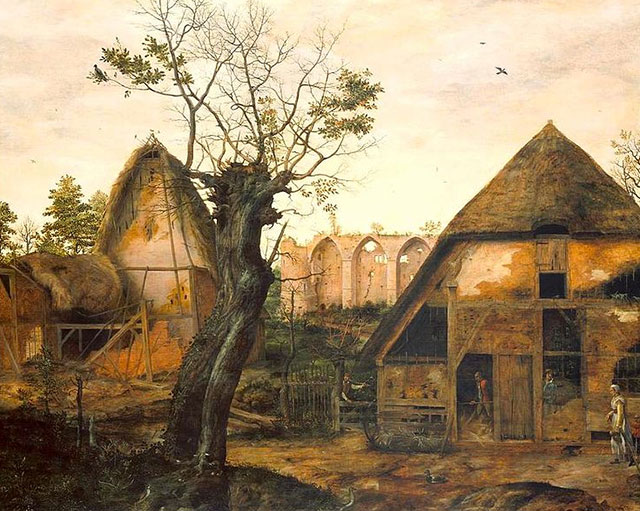
| |
|
Landscape with Farm, 1564 Cornelis van Dalem (circa 1528-1773.1576)
| |
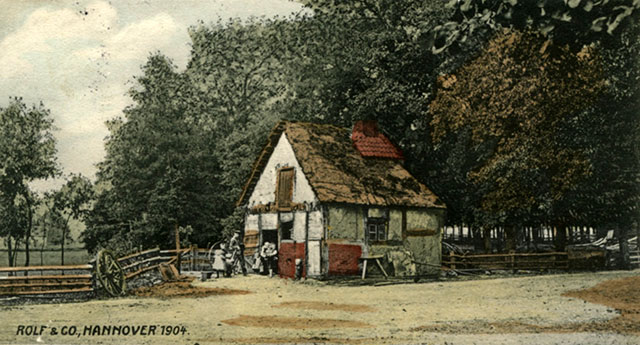
|
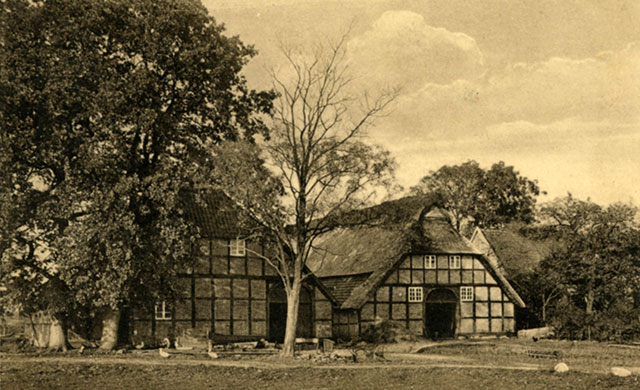
| Postcard collection of Maggie Land Blanck, 2013 Niedersachen - Dorfschmiede (Village Smithy)
|
| |
| Postcard collection of Maggie Land Blanck, 2013 Bauernhof in Rostrup (Ostfriesland)
| |
| |
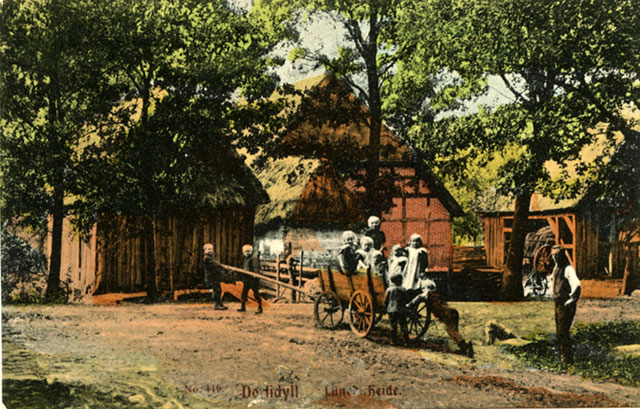
| Postcard collection of Maggie Land Blanck, 2013 Dorfidyll (Village idyll) Luneburger Heide printed in Walsrode, 1905
| |
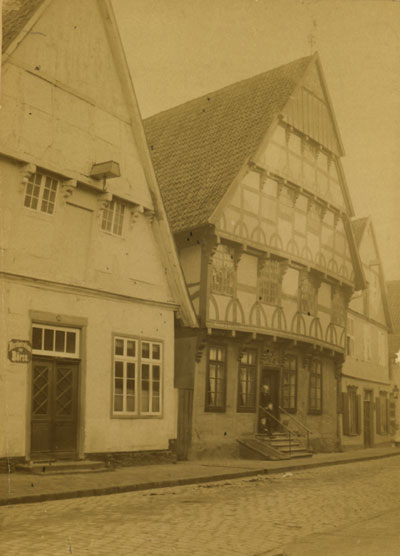 |
Altes Haus von 1662, Quakenbrück, 1899
|
| Postcard collection of Maggie Land Blanck | |
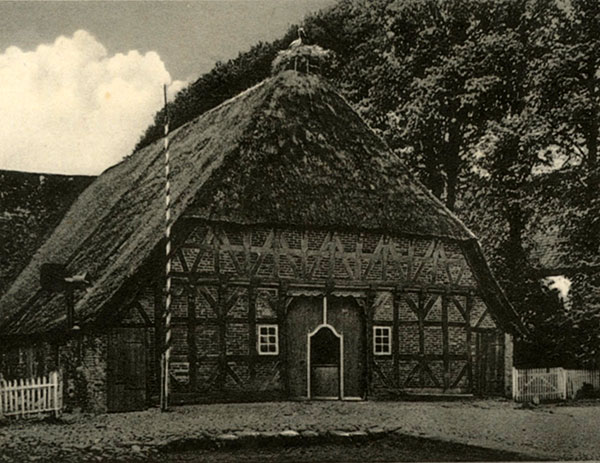 |
| Postcard collection of Maggie Land Blanck, July 2016 Altes Bauernhaus - anno 1764 - Bergenhusen (Schlesw.- Holstein) |
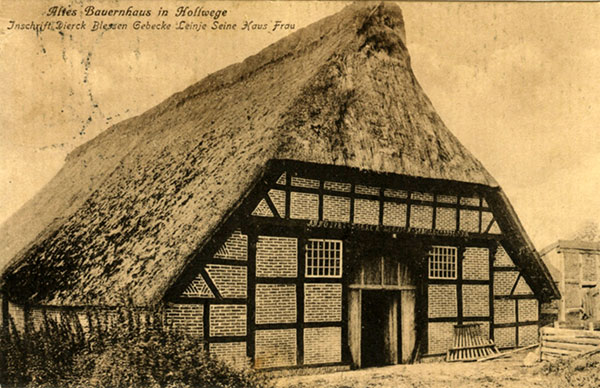 |
| Postcard collection of Maggie Land Blanck, July 2016 Altes Bauernhaus in Hollwege - Inschrift Dierck Blessen Gebecke Leinje Seine Haus Frau (Inscription over door - Dierck Blessen, Gebecke Leinje - Seine Haus Frau (his house wife) |
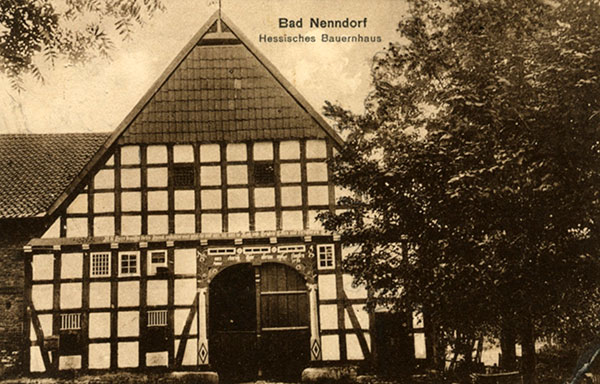 |
| Postcard collection of Maggie Land Blanck, July 2016 Bad Nenndorf - Hessisches Bauernhaus The inscription over the door is not legible.
|
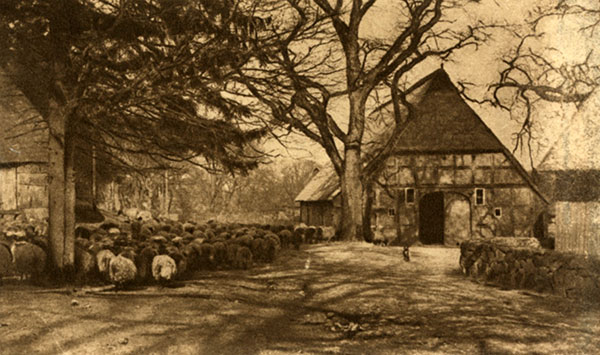 |
| Postcard collection of Maggie Land Blanck, July 2016 Heidschnuckenherde in Wilsede
|
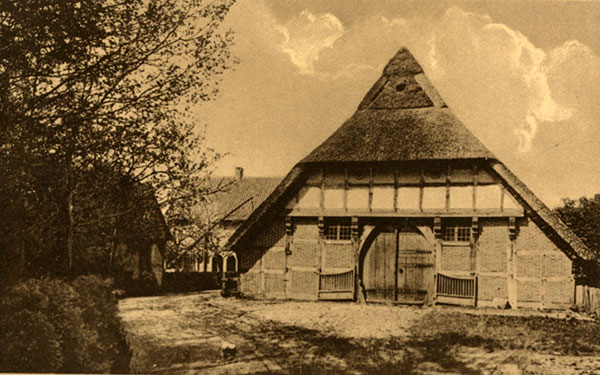 |
| Postcard collection of Maggie Land Blanck, July 2016 Bad Zwichenahn Ammerlandisches Bauernhaus
|
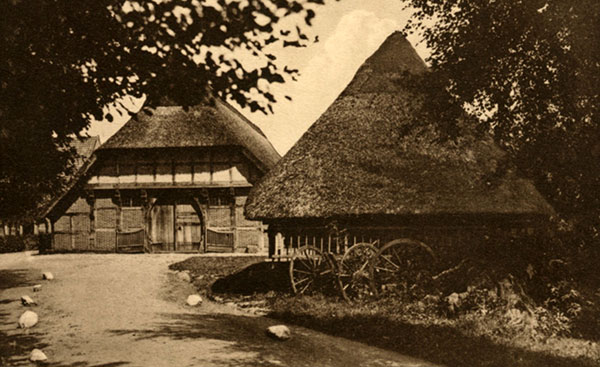 |
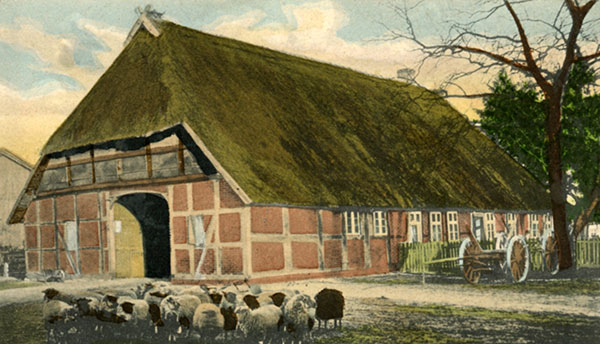
| Postcard collection of Maggie Land Blanck, July 2016 Bad Zwichenahn Ammerlandisches Bauernhaus - Freilandmuseum
|
 |
| Postcard collection of Maggie Land Blanck, July 2016 Bauernhaf mit Haidschnucken in der Luneburger Haide
|
| |
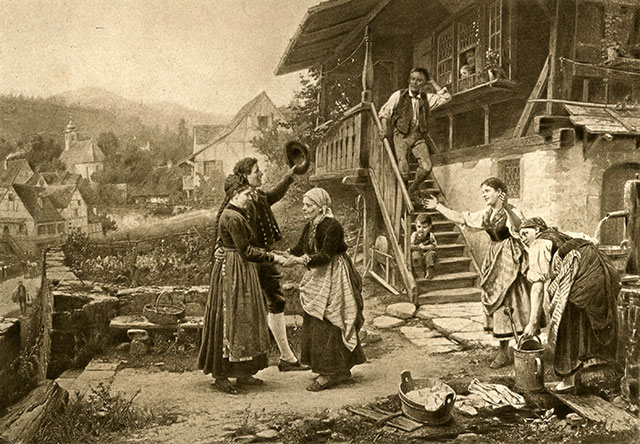
| Print collection of Maggie Land Blanck, 2013 The Welcome Home, 1886, by Benajmin Vautier (1829-1989) - Vautier a German Painter of Swiss origin.
| |
| |
| Print collection of Maggie Land Blanck
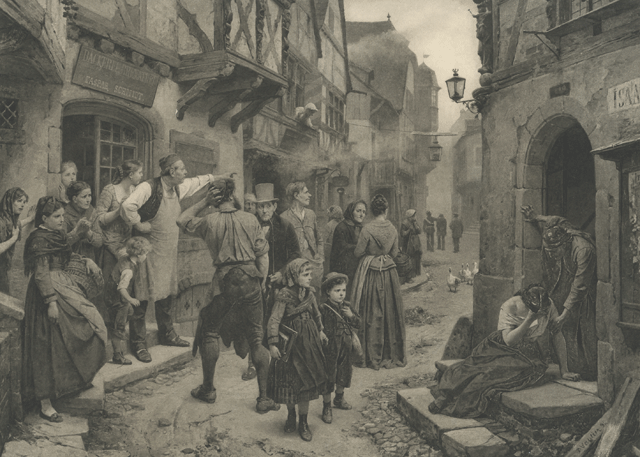
THE ARREST BY BENJAMIN VAUTIER (GERMAN 1829-1899) This scene from a German town shows the arrested man being let away by the police at the distant end of the street. The neighbors are looking with sympathy and/or curiosity as the woman of the house weeps on the doorstep. Based on their attire the man in the apron pointing toward the arrested is a baker and the man with his back to the viewer is a blacksmith.
| |
|
|
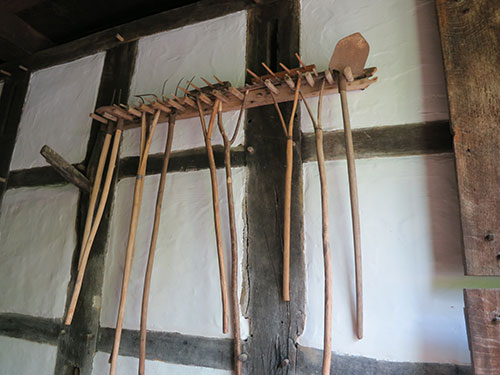
Detmold Outdoor Museum 2014 Farm implements
|
|
Cloppenburg Open Air Museum in Cloppenburg Lower Saxony is a fabulous place to view
many diverse examples of Germany farm buildings.
Museumsdorf Cloppenburg
The Freilichtmuseum am Kiekeberg also focuses on the history of Germany's farms. Their exhibits include not only the buildings but people in period costumes going about their chores. Freilichtmuseum am Kiekeberg Am Kiekeberg 1, 21224 Rosengarten, 040 790176 ext. 0, near Hamburg Freilichtmuseum Detmold - another great open air museum - the Detmold Open-air Museum is in the Ostwestfalen-Lippe region of North Rhine-Westphalia, Germany. It contains over 100 buildings. It is open from April 1 to October 31. Westfahlisches Freilichtmuseum, Krummes Haus, 32756 Detmold; phone 49 5231/ 70 60 Freilichtmuseum Detmold
| |||||||||||