Red Hook and Carroll Gardens
Brooklyn
History and Images

HOME - BLANCK INTRODUCTION - PETERMANN INTRODUCTION

Petermann, Kettler and Peters in Red Hook/Carroll Gardens in the 1880s

When my husband and I moved to Carroll Gardens in 1992 we thought we were the first members of our family to ever set foot in Brooklyn - only to find out that we both had family whose first stop in the United States was in Red Hook, Brooklyn not far from where we live.

  • My great grandparents, Johann Berend Petermann and his wife, Sophie Petermann (and their family) lived in Red Hook. Their son Christian August Petermann was born at 189 Conover Street in April 1883. Their time in Red Hook appears to have been short as they were living in Hoboken, New Jersey by the birth of their son, Wilhelm in 1884. See Johann Berend Petermann now or at the bottom of the page.

    The Petermanns were Germans from the Duchy of Oldenburg.

  • My husband's great grandparents, Fritz Kettlers and his wife, Johanna Peters, (and their family) also lived in Red Hook. Their daughter, Marie, was born in February 1886 at 206 Richard Street and their daughter, Gertrude, was born in April 1889 at 87 "Ferry" Street. By the birth of their son, Frederic in 1891 they were also living in Hoboken, New Jersey. See Fritz Kettler now or at the bottom of the page.

    Firtz Kettler was from "Friesland". Friesland is partly in Holland and partly in Germany (called Ostfriesland or East Friesland). I do not know exactly where Fritz was born. The name in Holland was Ketelaar, in Germany it was Kettler.

    Johanna Peters was born in Norway. I have not been able to determine the town. However, it was most likely a port town or city. She must have had family in the United States - most likely in Brooklyn. There was a large Norwegian community in Red Hook. See Hanna Peters now or at the bottom of the page.

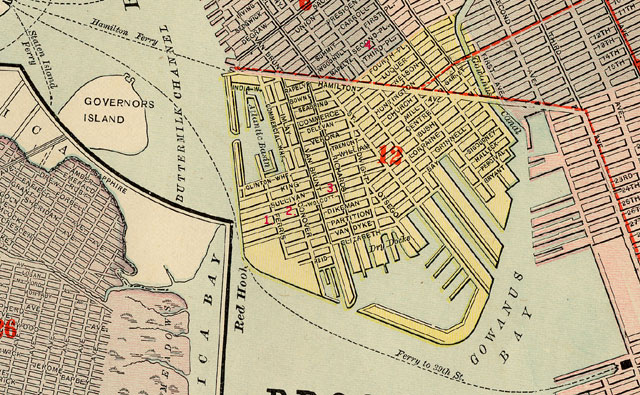
Today Red Hook is a section of Brooklyn that lies inland from the New York Harbor just south of the Gowanus Expressway and the Brooklyn Battery Tunnel. Before the Gowanus Expressway was build in the 1950s Red Hook also included the neighborhood now known as Carroll Gardens. Red Hook and Carroll Garden were in Wards 6 and 12.

The Norwegians, Germans and other northern Europeans were drawn from the shipping centers in their home countries to the growing shipping centers in Red Hook.

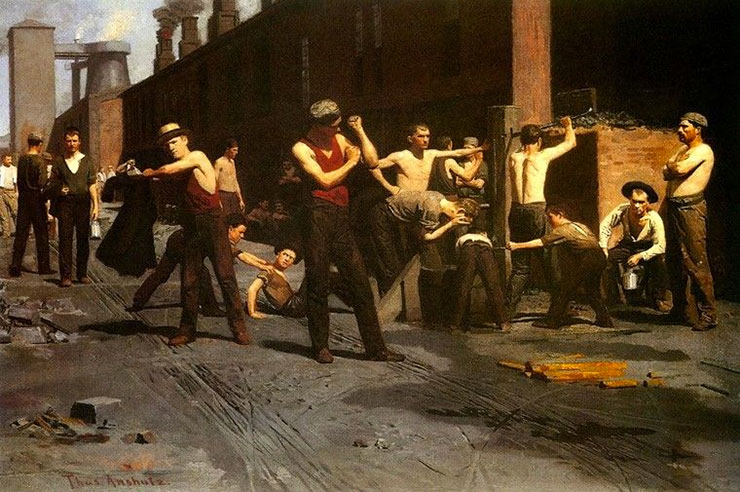
Red Hook also contained many factories; especially steel and iron works.

For more information on Red Hook go to Water Front Museum and Showboat Barge


Red Hood/Carrol Gardens in the 1850s

"The Atlantic Docks had recently been built and the Hamilton Ferry established. The streets had many of them been graded, but there were few houses. A large hill extended from Forth Place to Degraw Street, and from Columbia street nearly to Gowanas canal, which was some forty to fifty feet in height,was being removed.

History of the City of Brooklyn by Henry R Stiles, 1870

The Atlantic Basin, build in 1847 by the Atlantic Dock Company, was an enclosed safe harbor for sailing ships. The Hamilton Ferry was original started to facilitate traffic to and from Greenwood Cemetery. Both were important component in the development of the Red Hood area.


Red Hook 1880s to early 1900s

1886

An 1886 map of "part of Ward 12" shows warehouse lining the Atlantic Basin and Erie Basin. In the northern part of Ward 12 several manufacturing establishments were indicated: Eggleston Spring Co, Richardson & Boynton Stove Works, S. Brooklyn Iron Foundry and Steam Works, Hydraulic Pump Works, a glassworks, "Cheeseborough" Vaseline*, Atlantic Flour Mills, a sugar house, and a lumber yard, and Pioneer Iron Works.

Near the Eire Bssin the Brooklyn Fire Brick works.

Close to the bay at the southern end were the Manhattan Chemical works, an oil works, a lumber yard and a foundry. There was also a block marked "stores" which was actually the Lidgerwood Iron Works.

Public school No. 30 was on Wolcott between Conover and Van Brunt and P. S. 27 was between Columbia and Hicks on Nelson. There was also a catholic school near the church of the Visitation.

Churches in Ward 12 in 1886 included:

  1. Visitation Roman Catholic at Richards and Verona. This parish was established in 1854 to serve Irish and Italian dock workers. The first church was at Ewen and Van Brunt. This building was later turned into a school. A second church was build in 1878 at Richards and Verona streets. It was destroyed by fire in July 1896. "the second building was burned on the night of Sunday, July 12, 1896, just after the interior of the building had been redecorated, even before the tools of the workmen had been take away." (Brooklyn Eagle November 14, 1898) The cause of the fire was never determined. The present church was erected in 1896.

  2. P. E. (Protestant Episcopal) Chapel on Wolcott near Van Brunt - listed as Christ P. E. Chapel in the Brooklyn Daily Eagle almanac of 1897 - AKA Christ Chapel - a mission chapel of Christ Church (Clinton and Kane Streets) Christ Chapel was completed in 1868-9.

  3. The Norwegian Seaman's church on Williams (now Pioneer st.) between Richards and Van Brunt. The building still exists but it is not longer a church.

  4. St Paul's M. E. (Methodist) Church, corner of Sullivan street and Richards - celebrated its 9th anniversary. in May 1888. When it opened in May 1879 the St Paul's M. E. "mission" was located on Van Brunt between Sullivan and King Streets. The mission was originally on Williams street and known as the Williams Street mission. It was associated with the First place M. E. church "although not branch" of that church.

1892

In 1892 some Red Hook businesses were listed in a history of the Brooklyn fire department.

One of the finest water-fronts in the world was the inducement that attracted many large manufacturing firms in New York, and in fact from all over the country, to locate there. Besides that it was within five minutes' walk of Hamilton Ferry. In a short time immense factories and warehouses grew up with surprising rapidity. Now it is by far the greatest manufacturing centre in the city. Among the large industries that give employment to hundreds, who live in, and go to make up the large resident population of the region, are the stove works of the Richardson & Boynton Company, the factory of the Chesboro Vaseline Manufacturing Company, Worthington's Hydraulic Pump Works, the Pioneer Iron Works, the Lidgerwood Iron Works, the South Brooklyn Machine Company, the India Wharf Brewing Company, J. M. Williamson's Drop Forging Works, P. H. Gill's Elevator Works, Casey's Rosin Works, the South Brooklyn Fire Brick Manufactory, and many other large concerns. Besides these are the immense storehouses that line the water-front, including those of the Beard estate, the Robinson estate, the Atlantic Dock Company, the Erie Basin Stores, Findlay's Stores, and the Long Dock Stores. Added to these are the large shipbuilding concerns located along the bay, and thousands of vessels, large and small, that are continually loading and unloading their cargoes there. It is estimated that more goods are handled at the Atlantic Dock and Erie Basin than at any other similar places in the country. Recently the Inman and White Star Steamship Companies have purchased property in the district, and before long it will be the headquarters of these and other large lines of transatlantic steamship companies.

Our firemen: the official history of the Brooklyn Fire Department, By Brooklyn (New York, N.Y.). Fire Dept, 1892

The Atlantic Basin (Atlantic Docks) and the Atlantic Dock Works

See below.

Chesebrough Manufacturing Company

In 1886 The Chesebrough Manufacturig Company was located between Richards st., Dwight st. Verona and Delavan sts. Chesebrough made Vasiline, a popular home health care item.

A coal handler's strike in 1888 involving employees of Chesebrough sheds some light on the neighborhood which was described as "an exceedingly rough one, and a large crowd of striking longshoremen, coal heavers, etc. gathered and by threats and intimidations prevented the coal from being discharged." (Annual report of the Bureau of Labor Statistics of the State of ..., Volume 5 By New York (State). Bureau of Labor Statistics, 1888)

Many of the Cheseborough workers refused to work during the strike and to handle "scab" coal. The company hired new workers who were "armed and protected".

150 workers asked for reemployment and the discharge of the new employees. Employees of the firm wrote to Robert Cheseborough

Mr. Robert Cheseborough:

We, the employes of the Chesebrough Manufacturing Company, acting under instructions of, would respectfully submit to you the following statement:

  1. We are living in a ward mostly comprised of workingmen and citizens, in which your works are situated, who are in full sympathy with us in our present cause.
  2. Your employes went out for no personal grievance. We could not tolerate the responsibility to use non-union coal.
Whereas, If we remain at work the lives of ourselves and families would be made miserable and dangerous, and detrimental to your interests and ours. Therefore, you will see at a glance the position in which we are placed. In consideration, we, therefore, as a committee appointed by your employes, would respectfully ask for a conference, as we think the matter has not been placed before you in the right light. The committee now awaits an answer.

Yours respectfully.
EMPLOYES OF CHESEBROUGH COMPANY. (Annual report of the Bureau of Labor Statistics of the State of ..., Volume 5 By New York (State). Bureau of Labor Statistics, 1888)

The company refused to rehire as a group and rehired on a person to person basis.

By 1896 it would appear that employee relationships had improved somewhat.

1904 CHESEBROUGH MANUFACTURING COMPANY.

The Chesebrough Manufacturing Company, at Verona and Dwight streets, in 1896 established a lunch room and wardrobe for their female employees. The lunch room covers about 40 x 50 feet of floor space and is about 15 feet high. There are numerous windows on two sides of the room. Conveniently arranged, without crowding, are six long tables with benches. Upwards of 100 workers assemble here at noon to enjoy the dainties that are prepared for them at home.

On the side of the lunch room are 100 lockers. One locker is apportioned to two persons.

The company details a girl to look after the cleanliness of the place.

Wages are paid during illness in some cases, but it is not an established rule. Four or five male employees receive such benefit in the course of a year.

Annual report of the Commissioner of Labor, Volume 1 By New York (State). Dept. of Labor, New York (State). Board of Mediation and Arbitration, New York (State). Bureau of Industries and Immigration, New York (State). Bureau of Labor Statistics

Robert Augustus "Chesebrough" Biographical dictionary of American business leaders, Volume 1 By John N. Ingham
CHESEBROUGH, ROBERT AUGUSTUS ( January 9, 1837-September 8, 1935). Petroleum products manufacturer, Chesebrough Manufacturing Company. Born in London, England, son of Henry Augustus Chesebrough and Marion Maxwell Woodhull, both of whom were native Americans. His ancestors had come to America in 1631 founding Stonington, Connecticut. His grandfather, Robert Chesebrough, founded the Fulton Bank in New York City. Robert A. Chesebrough was educated in private schools in New York and at the Friend's Academy. In 1850 he began the refining of crude oil distilled from cannel coal in Brooklyn, New York. By 1861 he had turned his attention to the manufacture of kerosene and lubricating oils. He was the first to use crude oil under burners and stills for refining oils. In 1870, while experimenting with petroleum, he produced a petroleum jelly which he called "vaseline," registering the name as a trade-mark. In 1875, he organized the Chesebrough Manufacturing Co. of which he was president until 1908 and which began the manufacture of kerosene and lubricating oils, but after 1881 confined itself to the sole manufacture of vaseline, a toilet preparation which enjoys an extensive sale at home and abroad. In 1881 Mr. Chesbrough erected the office building known as the Chesebrough Building at 24 State Street in New York City. In the Battery district, with his son, William H. Chesebrough, he transformed plots covered by old warehouses, saloons and tenements into an important steamship and office center... He as also influential in moving the immigration center from the old Castle Gardens to a new station at Ellis Island, and got the erection of a new U. S. Customs House on the Bowling Green.

..........He married Margaret McCredy of New Rochelle in 1854. They had four children.

As stated in his bio Robert Chesebrough was "also influential in moving the immigration center from the old Castle Gardens to a new station at Ellis Island". His motives were NOT to improve the immigrant's experience, but rather to clean up the appearance of the Battery where he had made major real estate investments.
  • "He vigorously opposed the use of Castle Garden as an immigrant depot by the state, and to his continued efforts is directly traced the action of the general government in taking charge of the department and removing it to Ellis Island."

    The National cyclopaedia of American biography: being the history ..., Volume 3, 1893

  • "The removal of the immigration boats from Castle Garden to Ellis Island, also materially detracted from the Battery's advantages to the class which had found its most valuable vocation there. The first product of these several influences was the Chesebrough Building, at State and Bridge Streets. Then came the Battery Place Building at State and Whitehall. The Maritime Building at Bridge Street is another step in the modernization of the section."

    Metropolitan, Volume 21, Issue 6, 1905

  • "The removal of the immigrant station from Castle Garden to Ellis Island in the harbor grew very largely out of his vigorous efforts in that direction. The Battery Park is now no longer flooded with unattractive strangers and emigrants, as in former years."

    The City of New York page 139, Hall, Henry, America's successful men of affairs, ROBERT AUGUST CHESEBROUGH, 1895-96, Columbia University Libraries Digital Collection.

  • "More than Twenty years ago Robert A. Chesebrough purchased the block front on State Street between Bridge and Pearl Streets, then occupied as an old warehouse, which had been partially destroyed by fire. Against the advice of many friends and real estate experts in particular, he rebuild the old warehouse into offices and found the the superb outlook attracted more tenants than could be accommodated.

    In 1896* Mr. Chesebrough presented a petition to Congress asking that the immigration Bureau be removed from the Battery, and it was due chiefly to his efforts that it was removed to Ellis Island. Immediately after its removal the neighborhood was freed from the abhorrent features created by it and began to improve."

    New York Times March 12, 1913.

    Notes:

    • *A 1916 New York Times article gives the year as 1890, not 1896. This makes more sense as Ellis Island opened in 1892.
    • The original Chesebrough building was torn down and replace with the Battery Park Buildig. A new Chesebrough building was erected in 1897 at 13-19 State Street, Battery Park. That building was torn down in 1966.
    • Also spelled Cheeseborough, Cheseboro, and Cheseborough
    • Vasoline is still make by Chesebrough-Ponds
Atlantic Flour Mills later the Electric Sugar Refinery

Atlantic Flour Mills of Brooklyn sold "Smith's Crushed White Wheat Flour" in grocery stores in 1875. They also made "superlative Graham flour". The Atlantic Flour mill was located at 8, 10 and 12 in 1870 and 18, 20 & 22 Hamilton Ave. in 1875. - Messrs. F. E. Smith & co.

The mills were built in 1865 by Frederick W. Smith and later owned by his son Francis E. Smith.

"Crushed White Wheat." - In answer to many inquiries in regard to crushed white wheat, recently advertised in The Sanitarian, the article known as such is the product of the Atlantic Flour Mills, Brooklyn (Messrs. F. E. Smith & Co.), one of the most complete and perfect establishments in the country. While the proprietors of these mills turn out immense quantities of the finest grades of flour, they are notwithstanding alive to certain conditions not fulfilled by flour in its ordinary aspect; and acting upon the well-known fact that the most highly refined flour is divested of some of its most valuable nutritive elements, they determined to manufacture a coarse flour from the most choice qualities of wheat, for the special benefit, not only of dyspeptics and other invalids, to whom it is particularly well suited, but for all who "prefer to get the most for their money." The process of manufacturing the "crushed white wheal" consists in "thoroughly softening the grain in every part. The hard crust containing the gluten or nitrogeneous elements is put into proper condition to cook quickly and uniformly with the soft and crumbly portion of the centre, being the carbonaceous portion. The wheat used is of the Choicest kind, raised in the best wheat-growing sections of the United States. It is first thoroughly cleaned and purified from all extraneous admixture, by the most complete and severe mechanical contrivances, and prepared in such a manner that all of the elements of the grain are preserved. The iron and silex are preserved in the outer or true bran; in this portion of the berry also lies the greatest amount of waste, which is a natural stimulant, and greatly assists nature in keeping the bowels and digestive organs in proper and healthful action. Excepting for those who have particularly irritable digestive organs, this is certainly one of the most wholesome preparations of wheat ever produced."

The Sanitaian 1875

CRUSHED WHITE WHEAT. We question if there is a better food than tins article, manufactured by F. E. Smith & Co., at the Atlantic Flour Mills, Hamilton Avenue, Brooklyn. While the appetite not unfrequently inclines to reject the commoner kinds of "cracked wheat," it speedily comes to crave this delicate, sweet and light-colored crushed grain. We are constantly using it in our family, and can say, truthfully, that our "children cry for it." Eaten with cream and sugar it is a delicious dish. With this bruised grain as a basis, a multitude of most appetising and healthful dishes can be fabricated, as may be seen by a pamphlet issued by Messrs. Smith & Co., which they will send on application.

Hall's journal of health, Volume 20, 1873

In 1882 (at the time of his death) the Mills were listed as belonging to Richard H. Vaughn whose personal property was valued at $50,000.

By 1888 the large former flour mill and warehouse on Hamiton Avenue was deserted.

In 1889 the "Electric Sugar Refinery" occupied the old flour mill. Several articles in the Brooklyn Eagle in 1889 indicated a level of secrecy surrounding this establishments. In 1890 the "Electric Sugar Refinery" was listed at Atlantic Basin. Interestingly "Electric Sugar" refining was a fraud. The "inventor", Prof. Henry S. Friend, claimed he could refine sugar faster and cheaper than other methods. He also claimed that he could produce 100 pounds of refined sugar from 100 pounds of raw sugar - nothing lost in the process. He and his collaborators insisted on keeping their method secret indicating only that it involved electricity. After duping investors it turned out that they simply switched refined for raw and hid the evidence. Being near the river was an important component of the swindle. The raw sugar was dumped into the sewer and taken away with the tide. There were international repercussions as many of the investors were from England. The scandal and the insuring events were written up in the New York Times and trade journals of the time. There is a lot on the internet about the sugar refining fraud. It is an interesting story.

India Wharf and the India Wharf Brewing co., 36-60 Hamilton Ave

The India Wharf building was originally constructed as a sugar refinery circa 1872 by a wealthy Cuban, Miguel de Aldamam. Due to financial losses the refinery was closed and sat idle for more than ten years.

In 1884 Herman Cortes "who kept a salon on India Wharf for several years" lost his liquor license because he was open for business on Sunday. He was also accused of having attempted assault on "a pretty immigrant girl". (Brooklyn Eagle August 30, 1884). In December 1884 Mr. Cortes who "used to keep a sporting house on India Wharf" was again in trouble. He had moved to North Pier near Columbia wharf but was still involved in illegal games and the sale of liquor without a license .

As shown on the 1886 map there was a building called "India Wharf Storehouse" between nos. 50 and 60 Hamilton ave.

In 1886 Gustave Hartesch was struck by a falling brick while working on a new building at India Wharf.

In 1887 there were people living in house on what was called Inida Wharf as indicated by a Brooklyn Eagle report of the drunkeness of one James Harper and his wife. James was fined $11 and his wife was fined $5.

Leonhard Michel established the India Wharf Brewing company in 1889. (Yuengling: A History of America's Oldest Brewery By Mark A. Noon, 2007)

In March 1890 India Wharf Brewery and its associated dealers was committed to hiring only union men. While their building at Hamiton and Conover streets was being converted into a brewery, it was discovered that there were non union workers on the premises The union men went out on strike. The strike was settled almost immediately. Millwrights were given a 50 cents a day raise bringing their wage to $3.50. It was also agreed that only union workers be employed and "the union men who had not gone out on strike should be discharged" [italics mine] (Brooklyn Eagle March 11, 1890

In September 1890 India Wharf employees held their first annual picnic in celebration of the opening of the new brewery at 48 to 60 Hamilton Ave.

In 1894 the company announced that it was "engaged" in bottling and selling lager beer, porter, ale and "others beverages" under the India Wharf label.

1894, Brooklyn Citizen Almanac

An elevator in the India Wharf Brewery, Hamilton avenue, dropped from fifth story to cellar, and one passenger, John Krampert, aged 29, killed.
In 1894, Robert Bauer the cashier and bookkeeper of the India Wharf Brewing company was arrested for stealing $500 from the company.

In 1895 the building department inspector condemned a two story building a the corner of India Wharf and Atlantic dock . There were five families living in the building who were ordered to move out. A saloon on the first floor was "much frequented" by longshoremen and officers and seamen of the German lines. (Brooklyn Eagle June 25, 1895)

1899 American Brewers Review

Leonhard Michel, supt. of the India Wharf Brewing Co., of Brooklyn, and president of the brewmasters association of New York and vicinity, on the 27th ult. took passage on the steamer Friedrich der Grose, for a two months trip to Germany.
Leonhard Michel was born in Waldmichelbach, Germany September 2, 1846 the son of Sebastian Michel. For more on Leonhard Michel see The Brooklyn Growler, Leonhard Michel's Long Forgotten Brooklyn Brewery

Worthington Hydraulic Pump Works

Worthington Hydraulic Pump Works (AKA Worthington Pump Works, Henry R Worthington Co. & Brooklyn Hydraulic Works) was located between Van Brunt and Richards and Seabring and Rapelye streets. The company, which manufactured steam pumps, meters and other hydraulic machinery, was founded in 1845 by Asa Worthington and his son Henry R Worthington under the name Henry R Worthington. The partnership lasted until 1860 when Asa Worthington retired. They also had a factory in Elizabeth, New Jersey. Henry R Worthing died in 1880 on his birthday at age 63 and in 1881 was succeeded as a partner in the company by his son Charles. In 1899 the International Steam Pump Co. acquired Worthington Pump Works.

526 men were employed by the Hydraulic Pump Works on Van Brunt street in May 1886 but only 125 of them were at work. The majority of the workers were union members. Their demand was "for nine hours work with ten hours pay." The company stated that they were willing to reduce the house worked per day but would also reduce the wages. They further stated that they would only deal with the striking worker as individuals and would not negotiate with them as a group. (New York Times and Brooklyn Eagle, May 1886)

In 1894 the company employed 1,500 men in its factory and 60 in its offices. (Brooklyn Eagle, February 16, 1894).

The company moved to Harrison, New Jersey in the early 1900s.

Water and Sewage Works, Volume 30, 1906

Kent Mill Company bought out Worthington Pump Works which covered "two city Blocks in Brooklyn".

"This great property is illustrated in the accompanying photographic view from which it ill be seen to comprise some twenty model factory buildings."
Pioneer Iron Works

The Pioneer Iron works were located at 149-163 Williams Street (between Conover and Van Brunt and William and King.)

In 1876 it was noted that the Pioneer Iron works of Brooklyn did "quite an important foreign business, chiefly with Cuba, in the machinery used on sugar plantations." (Engineering and mining journal, 1876)

Alexander Bass was one of the founders of Pioneer iron works.

Mr. Alexander Bass, President of the Pioneer Iron Works, of Brooklyn, N. Y., and prominently identified with the sugar industry in the island of San Domingo, died July 12, aged 70. He was born in New Brunswick, N. J., and learned the trade of a machinist in the Mine Hill Railroad shops, at Schuylkill Haven, Pa. About 50 years ago he went to Cuba, and since that time has been engaged in the manufacture of sugar grinding machinery. About 30 years ago he established the Pioneer Iron Works, which have had a large trade in the West Indies.

Engineering news 1897

By 1903 Mr William L Bass was the proprietor of Pioneer Iron works. At that time he owned thousand of acres of land in Santo Domingo. He also was the owner and builder of sugar "centrals" on the island. Centrals were where the sugar was processed.

By 1876 the Pioneer Iron Company were manufacturing sugar machinery, portable rail roads and manufacturing steam rollers. The "portable" railroads were used on sugar plantations. One of their "steam road rollers" was on display at the Centennial Exhibition in Philadelphia.

They also made tar kettles for road construction.

In October 1881 fire destroyed the Pioneer Iron Works on Van Brunt street. The works were described as occupying almost the entire block on Williams street between Van Brunt and Conover. As a result of the fire over 100 men lost their jobs.

On 10, May 1886 200 men employed by the Pioneer Iron works walked out on strike, ignoring the threat that they would be discharged forever. They demanded 10 hours pay for 9 hours work. They were working 11 hour days.

Sixteen replacement workers were hired. When they left the building they were greeted by hisses and groans from nearly 500 women and children who had gathered nearby. A nearby saloon refused to provide dinner in the "shops" for these workers.

The strike at the Pioneer Iron Works, in South Brooklyn, was ended yesterday by the acceptance of the strikes' terms; that is, no skilled laborer is to receive less than $2.50 for a nine hours work. (New York Times, June 12, 1886)

1905 Steel and iron, Volume 76, Issue 15

The Humacao Sugar Company, which is preparing to erect a large sugar producing plant in Humacao, Porto Rioo, has purchased a large order of machinery from the Pioneer Iron Works of Brooklyn. The list includes four 125 horsepower boilers, an engine, crushers and quadruple effects.
They were still making sugar machinery and boilers in 1918.

The American engineer, Volume 8, 1884

New Steam Road Roller and Traction Engine constructed mainly of wrought iron and steel, manufactured by Pioneer Iron Brooklyn and exhibited at the American Institute Fair in New York City in 1884.

American machinist, Volume 4, 1881

A sugar evaporating machine produced by Pioneer Iron, Brooklyn.

South Brooklyn Iron Foundry and Steam Engine Works

The South Brooklyn Iron Foundry and Steam Engine Works was shown on the 1886 map between Imlay and Van Brunt Bowne and Summit Streets. It was also known as the South Brooklyn Steam Engine Works, Van Brunt and Summet Sts, Brooklyn. In 1890 they had offices on Wall Street. In 1901 the address was given as 149 Van Brunt. The company was as successor to William A Lighthall Co and was located on Van Brunt street from at least 1868 when it advertised in Scientific American.

In 1873 four iron bridge anchors, each weighing nearly 24 tons, were manufactured at the South Brooklyn Steam Engine Works for the Brooklyn Anchorage of the East River Bridge (know known as the Brooklyn Bridge). Each plate was oval in shape measuring 17 feet 6 inches by sixteen feet and three feet thick. The job of moving these plates was dangerous and difficult and took many hours.

In 1896 an explosion at the foundry severely injured two men. Both of them lost both of their legs. At that time an article in the New York Times described the foundry:

"The South Brooklyn Steam Engine Works cover almost an entire block, being bounded on three sides by Summit, Van Brunt, and Imlay streets. It does a general Iron foundry business and has the largest brass brass foundry in the Atlantic coast states - capable of turning out tens tons of brass castings per day."
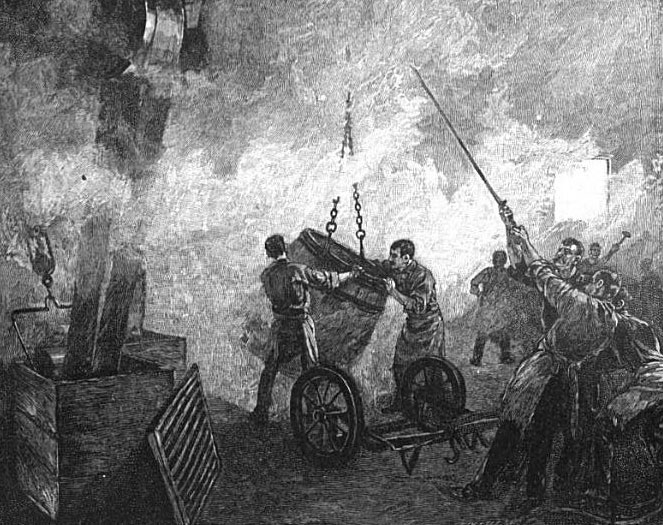
The accident was described in The Foundry, vol 9-10 1896. The victims of the accident were trying to break up scrap with sledge hammers. The danger was that some of the scrap was from old machinery and some pieces contained a closed cavity. In this case the scrap piece was an old plunger. The workers had placed the plunger in the furnace and heated it enough "to make it break easily". They drew the piece out of the fire with tongs and lay it on the floor. The metal was "hissing" which apparently indicated a"hole" (or cavity). A fellow worker warned them of the danger and told them "Don't fool with that; bore a hole in it." But the man was ignored and with the next hit of the hammer the piece blew up.
"A piece of the plunger struck the castings and broke some of them. The place was all in darkness after the explosion, on account of the dust that was raised. I found my way out, and then we sent the ambulance calls."

When the dust and steam cleared away two men were found lying unconscious on the floor. In the case of one his right leg was nearly cut off and his left leg was broken in two places. In the case of the other both legs were mangled to such an extent that they had to be amputated.

Mr. J. H. Taylor, manager of the works, is reported as saying: "The men had been warned not to use their hammers until the plunger had cooled off. The foreman of the foundry told the helpers to bore a hole in the plunger. The men were thoroughly experienced; but in spite of the oft-recorded accidents caused by heating old pistons and plungers, they seem to have thought they stood In no danger, or else chose to take the chances, and did so with the deplorable results which followed."

Site of the accident, from the Foundry, 1896

In 1891 Josiah G. Willetts shot Delphin M. Cobb, the president of the South Brooklyn Steam Engine Works at his office on Van Brunt Street. The bullet was extracted from Cobbs leg. There was a bit of to do in the papers suggesting that Mr. Cobb (who was married but not living with his wife) had boarded with Josiah Willetts and his daughter Lillie and made some sort of advances towards Lillie Willetts.

Lidgerwood Iron Works

Liderwood Iron Works was not designated on the 1886 Ward 12 map. There was no large building at this address on the 1886 map. By the 1890s Lidgerwood Manufacturing was located between Dikeman and Partition streets near Ferris street. It was show between Dikeman and Coffey (formerly Partition street) on a 1898-99 map of Ward 12.

Lidgerwood Manufacturing Co., manufacturer of steam and electric hoists, boilers and suspension cableways, was founded in 1873 in Brooklyn. The company employed 800 men in 1883 when it was planning a move to Newark, New Jersey. The move was motivated in part to obtain more space and in part because there was "too much government" in Brooklyn. (American machinist, Volume 26, 1883) They must have changed their minds because in in 1883 they had their new shops at the corner of Dikeman and Ferris " in good working order". They were working 100 men during the day and 25 at night. The United States Electric company supplied lights for the night workers.

In 1892 "the company have purchased twenty lots opposite their present works, where additional shops, storage etc will be erected. The present works in South Brooklyn cover an entire block and are conceded to be the finest of their kind in the United States".

Lidgerwood Manufacturing had a fire at their factory in Brooklyn in 1884 and lost a portion of their patterns.

In July 1886 Mr. W. V. V. Lidgerwood, a manufacturer in South Brooklyn, launched a beautiful, $20,000, steam pleasure yacht the Speedwell from the Erie Basin.

In 1889 Lidgerwood Manufacturing bought a property on Dikeman near Ferris with plans to build a one story brick building 229. x 50, to cost $20,000.

Lidgerwood agreed to a nine hour day for 10 hours wages before their workers went out on strike in 1901.

P. H. Gill & Sons Forge and Machine Works - Philip H Gill

Philip H. Gill was a grain elevator architect and builder. P. H. Gill & Sons held many patents and were noted builders of stationary grain elevators and floating grain elevators. They were located on 2 Lorraine street at Otsego Street.

In May 1887 P. H. Gill was granted permission to erect a grain elevator building on the Atlantic Docks.

In September 1902 P. H. Gill was granted permission to erect a building on the Gowanus Canal.

GILL, Philip H , Jr. Lorraine and Otsego Sts, Brooklyn and GILL, WALTER Bergen Place corner of Wakeman place were both listed as employed at P. H. Gill & Sons Forge and Machine Works in 1911.

Philip H. Gill was listed with property on Bowne Street in in 1890 and 1909.

The stationary grain elevators were substantial structures. One built by the Gill company in Blissville, Long Island was a six stories high building of brick and stone measuring 54 feet by 80 feet. The foundation was laid on 376 piers . Each floor could sustain 3,000 ponds.

The Gill company build a floating grain elevator at their facility at 9 to 17 Bowne Street in 1890. Named the Columbus it was the largest floating grain elevator to that date. Nearly 100 grain dealers took ride abroad the boat a she made her way from the Atlantic Basin around the harbor. The Columbus measured 154 feet in length and 32 feet in beam. She took two canal boats of grain in her hull - a capacity of 367 tons - and could fill 1,200 bushels of grain per hour.

Floating Grain Elevator at Fulton Market

James H. Williams, Drop Forging

Listed as "J. M. Williamsons Drop Forging" in the 1892 Fire department book, this was actually "J. H. Williams & Co."

J. H. Williams was established July 1, 1884. Number of employees 400 in 1909.

The company was located at 9 Richards street (at Richards and Bowne streets). They made a lot of different hand tools: various wrenches, clamps, metal lath tools, etc.

In 1885 the company reorganized with a partnership between J. H. Williams and William H. Brock.

The firm of J. H. Williams & Co., Manufacturers of drop forgings, 9 Richard Street, Brooklyn has been dissolved. Mr. Matthew Diamond is the retiring member, the firm from now consisting of James H Williams and William H Brock, the latter gentleman is well known in our town, he having for some time carried on business at Corona, where he was a resident. We trust that the new firm will have the success that good workmanship merits.

The Newtown Register, November 26, 1885

In August 1895 James H. Williams and William H. Brock had a falling out and the breakup of their partnership was officially announced in the Brooklyn Eagle. Subsequently William H Brock sued James H Williams. In 1896 William H. Brock also sued the Fatkin Manufacturing co. In 1899 he sued James H. Smith in a real estate deal. In 1901 William H. Brock opened a drop forge business in Queens.

During the course of his career William H. Brock had several patents for various kinds of chain and pipe wrenches.

In 1896 J. H. William & Co. erected a one story brick machine shop on Seabring Street on the north side 75 feet east of Richards street.

In 1893 J. H. Williams & co. built a bath house for their employees. The men were supplied with towels and soap. The bathing room was 50 by 19 feet and contained "twelve shower baths, consisting of small cubicles with ample room for a man to stand and move about. In each is fixed a large overhead spray connected with pipes conveying hot and cold running water.". In addition there were washing troughs with sprinklers overhead so men who did not want to take a full "bath" could partially wash themselves and shower their heads. The troughs were filled with water just before noon and again before 6'oclock. In addition clothes washing facilities were provided so the men could rinse out their dirty sweaty cloths at the end of the day. This included washing troughs, a wringer and a drying room. There was also a locker room.

In 1897 when a Brooklyn Eagle reporter visited the shops of J. H. Williams he noted the cleanliness of the premises. There was no oil on the floor. Dripping oil was caught in pans and recycled. The factory had its own fire department and every room was equipped with sprinklers, hand hoses, water pails, and fire extinguishers. Staircase and elevators were located on the outside of the building to prevent fire spread. The buildings themselves were as fireproofed as technology of the times allowed. He also described the shower baths commenting that during the hot season the men could take a cool down shower during their "dinner" hour. (Dinner was at noon - the men returning to work at 1 o'clock.) J. H. Williams also had a mutual aid society. Membership was voluntary and a weekly fee was paid. This sociality provide funds if a man was sick or there was a death in the family.

In October 1899 the J. H. Williams & Co. of South Brooklyn "manufactures of drop forging" erected a large grand stand at the corner of 92 and Riverside so their employees could watch "the great naval parade" to welcome Admiral Dewey. The company also provide lunch for it's employees at the Friday and Saturday festivities in honor of Admiral Dewey.

In 1899 J. H. Williams was manufacturing the Brock and Vulcan chain pipe wrenches.

In 1901 J. H. Williams voluntarily put their men on a nine hour day with 10 hours pay. (BE)

In 1900 J. H. Williams had an exhibit at the Worlds Fair in Paris.

The Baths at J. H. Williams

Modern baths and bath houses By William Paul Gerhard, 1908

It was the first bath facility introduced into an American factory.

Space for the new bathing-room was found at one end of the lofty forge-shop in the works of the firm. A new story was "hung on" to the roof, forming a room 50 feet in length and with an average width of 19 feet. On one side of the new room are placed 13 shower baths, consisting of small cubicles with ample room for a man to stand and move in. In each is fixed a large overhead spray connected to pipes conveying hot and cold water. The hot-water pipe is connected with the heating system in use all over the factory, and the cold with the street main. These can be regulated so as to obtain any temperature desired by the bather. A rack with soap is fixed on the wall; and the water is conveyed off by a trough at the side of the room, the asphalt floor having a double incline, which insures the ready flow of water. These bathing compartments occupy but a small floor space, being only 3 feet by 4 feet in dimensions.

It is calculated that the men will take but from three to five minutes in getting a wash-down, so that a number can bathe in rapid succession; a great feature where all wish to bathe at the same time, as would be the case in large factories. The baths would probably be most in request at the close of the day's work, when men do not care to waste their time in prolonged ablutions, and yet can afford sufficient time to get a thorough cleansing by a shower bath on this principle. The water each would use, too, would be but about one-seventh of the amount required for a tub. No attendant is necessary to fill the tubs, etc., and no cleaning up is entailed afterward, as the water runs off immediately, the cleansing being automatic.

There are other advantages in the shower-bath system also, in that no soiled water touches the body, consequently the cleansing is more thorough, and there is no danger, as in the bathtub, of communicating disease. The baths are ready, too, at all seasons and times, and there is little apparatus to get out of order. It is believed that in hot weather the men will often utilize a portion of their dinner time in getting a "refresher" in the bathroom, and will go back invigorated thereby to their afternoon's work.

The system appears to be one that would recommend itself to employers solicitous for the comfort and health of their men. It is also calculated to educate the men in habits of cleanliness and order, and is altogether a step in the right direction.

In addition to the shower baths, which unfortunately do not show in Fig. 64, for which I am indebted to the firm, the washroom is provided with numerous individual solid porcelain lavatories, in which those men can wash themselves who do not require a regular bath.

A matter which has long troubled workingmen is the disposal of their work ing clothes. These become soaked with perspiration in a place like a forge shop, and when taken off at the day's end must be either carried home to be washed, or hung up in the shop to dry and put on next day in a sour, unpleasant state. In the wash-house a large soapstone sink is provided, where the men can in a few minutes rinse out their soiled garments and pass them through a wringer attached to the side of the trough. A drying closet is placed at the corner of the room, where, by means of hot-water pipes, the clothes are thoroughly dried; and they can thus be put on next morning clean and fresh, - a great boon to men who work in the heat of a forge shop, and are constantly in a condition of sweat, which soaks the clothes in which they work.

Opposite the bathing compartments is a double line of lockers, 80 in all, in which the men can stow their clothes. These lockers are high enough for hanging garments, and are provided with hooks and a shelf for small articles.

Mr. Williams believed that the bathing and washing facilities which he gave to his men would prove a good investment in the increased returns of work done. At the same time he regards it as a still wider question, affecting the community at large. His opinion on the subject is briefly put in his own words thus: "As it is acknowledged that habitual bathing prevents disease, and promotes health and morality, baths for working people affect all classes of society. Employers are, therefore, under moral obligations to supply such facilities, and health, decency and humanity demand it, because few opportunities for personal cleanliness are afforded to any but the privileged classes!"

Social engineering: a record of things done by American industrialists By William Howe Tolman, 1909

Some of the men use them regularly, some on Saturdays only, and some not at all; others who have facilities at home prefer bathing there. They are patronized mostly in the warm season, even then not as generally as would be expected. This can be accounted for from a desire on the part of the employes to leave the premises as quickly as possible at the termination of the day's work, and also from the fact that, not having acquired the habit in early life, they are generally slow in adopting a custom of daily of frequent bathing. In addition to the shower baths, each wash trough is provided with a spray, so that the workman can thoroughly clean his head from dust and dirt. The original baths, however, are not a failure, for since then more have been erected, but, on a smaller plan, in other departments than the forging shop. In the new buildings it is the intention to include shower baths in the toilet rooms and lavatories, which they expect to make more attractive with individual washbasins, hoping to still further encourage their use.

If this firm would follow the practice of certain others, giving the men the privilege of a bath on the company's time, it might have the desired effect of a greater use of the baths time in getting a "refresher" in the bathroom, and will go back invigorated thereby to their afternoon's work.

The system appears to be one that would recommend itself to employers solicitous for the comfort and health of their men. It is also calculated to educate the men in habits of cleanliness and order, and is altogether a step in the right direction. In addition to the shower baths, the washroom is provided with numerous individual solid porcelain lavatories, in which those men can wash themselves who do not require a regular bath.

James H. Williams died in 1904.
We mentioned last week the death of J. H. Williams, founder of the drop-forging business of J. H. Williams & Co., Brooklyn. Mr. Williams died suddenly of apoplexy. He was born at Fort Plain, N. Y., fifty-nine years ago. For about ten years he was a partner with his cousin, the late E. W. Bliss, in the firm of Bliss & Williams, now the E. W. Bliss Company. He started the business which now bears his name in a small way at Flushing, L. I., in 1882, under the firm name of Williams & Diamond. The business was moved to its present site in Brooklyn in 1884, the firm name being changed to J. H. Williams & Co., the business being incorporated in 1895 and Mr. Williams becoming its president. The business has been continuously successful in a broader sense than merely financially, and its special features have several times been brought to the attention of our readers. Mr. Williams was a successful leader in industrial betterment, with a happy avoidance of all savor of paternalism. His men were treated as men, and he and they were mutually regardful of each other's rights and helpful in promoting each other's well being.

American machinist 1904.

According to the New York Times James H. Williams resided at 6 Pierrepont Street, Brooklyn. He left a widow, two sons and a daughter. He was buried in Ft. Plain, New York. His wife was the former Harriett Amelia Trumbull. They had three children: Frances born c 1879, James Harvey Williams born March 22, 1882, and Earl Trubull born 1888. In the 1900 Census James H Williams was listed on 293 Henry Street as a steel manufacturer. Listed with him was his wife, Harriett, born 1850, daughter, Frances, born 1879, son, James H, born 1882 and son, Earl, born 1888, plus his sister, Sarah, born 1867 and three servants.

James Harvey Williams graduated Yale class of '04. In 1911 he was not married and was listed as follows:

Williams is vice-president and a director of J. H. Williams & Company, manufacturers of drop forgings, in Brooklyn, N. Y. He became associated with this concern in October, 1904, but had been working but a few days when he was obliged to leave on account of ill health. He spent the next year in outdoor life, returning to business with the same company on October 2, 1905. He is also a director of the Williams & Tanner Company, wholesale hardware dealers of Fort Plain, N. Y., and is a member of the Hamilton Club, the Dyker Meadow Golf Club, and the Heights Casino, all of Brooklyn, and of the New York Yale Club.

Earl Trumbull Williams class of '10 died May 7, 1918. See Old Yale

Engineering Review, January 15, 1898

Vulcan Chain Pipe Wrench manufactured by J. H. Williams & Co. 9 Richards street, Brooklyn

Modern baths and Bath houses, by William Paul Gerhard, 1908

View of Workmens' Lavatories and Shower Bath Rooms in Factory of J. H. William & Co., in Brooklyn

Richardson and Boynton Co.

Richardson and Boynton Co. makers of stoves and heaters was founded in Brooklyn in 1837. Their factory was located 186-226 Van Brunt (between Imlay and Van Brunt and Bowne and Commerce). They also had offices at 232 Water Street in Manhattan. In 1896 they employed 450 people at the Brooklyn factory. They moved the factory to Dover, New Jersey in 1896 because of lack of space at the Brooklyn facility.

Eggleston Spring Co

The Eggleston Spring Co was located on Imlay street near Verona on the 1886 map. A 1888 Brooklyn Eagle articles lists it along with several other "steel businesses" in Brooklyn. I cannot find anything else on Eggleston Spring Co.

American machinist - Google Books Result 1883

William Taylor & Sons Brooklyn, NY, are working day and night on cotton seed oil machinery, mostly for the Southern States. The demand for this kind of machinery appears to be The demand for this kind of machinery appears to be particularly urgent, and is a healthy indication of prosperity in that growing industry. "
In 1887 William Taylor and Sons manufacturers of hydraulic presses and general machinery owned the Columbia Iron Works in Brooklyn (no address).

From 1888 to 1899 the NcNeil brothers had a boiler making concern called Columbia Iron Works and/or Columbia Engineering Works at 15 Imlay Street between William and Verona.

In 1902 the Columbia Iron Works at Imlay and Williams street "retubed" the boilers and engines of the British Steamship Queensland. (BE). In 1902 the Columbian Engineering Company at Williams and Imlay made repairs and alterations on the Steamship Venus. (BE)

William Taylor had twelve children. His eldest, James, was born in Brooklyn in 1834. James entered the family business at age 16. A firm, Taylor, Campbell & co was formed in 1856. In 1861 James Taylor withdrew from this company and formed the firm of William Taylor and sons. James Taylor died in 1889 and was succeeded by his sons, James and William. In 1893 it employed about 200 men. (The Eagle and Brooklyn, Volume 2 edited by Henry Ward Beecher Howard, Arthur N. Jervis, 1893)

The business began in 1844 grew to mammoth proportions, and in the course of years the plant was increased by the erection of one building after another until the ground covered comprised thirteen full city lots. The Columbian Iron Works are the eldest existing iron manufacturing plant in Brooklyn, and are second to none in the extent of output. One of the specialties of the company's manufacture is hydraulic presses of all sorts for the expression of the oil from cotton seed and linseed, and another is the building of refrigerating machines. The firm of William Taylor & Sons furnished employment to several hundred workmen and the volume of trade constantly increased under the careful guidance of James A. Taylor, who at his father's death became the head of the enterprise, the scope of which he extended in keeping with the advancement continually being made in connection with the great productive industries of the country.

A history of Long Island: from its earliest settlement to the ..., Volume 3 By Peter Ross, William Smith Pelletreau, 1905

Casey's Rosin works - Casey's Rosin Oil Factory - Pitch and Rosin Refinery

On April 23, 1886 a fire at the rosin factory of John Casey at Commerce and Richards streets was caused by an explosion of a kettle of varnish. Damage to the factory $3,000. Insurance unknown. Thomas McGowan, age 26, who was in charge of the kettle when it exploded died of burns leaving his wife and three small children "in destitute circumstances".

In March 1888 there was a fire in a shed at Casey's rosin oil factory.

On November 20, 1888 a fire in the pitch and rosin refinery of John A. Casey at 10:30 in the morning "occasioned considerable excitement in South Brooklyn." A workman inserting a hot poker in one of the pipes that conveyed the resin caused an explosion. Two alarms went out. Six engines and two hook and ladder responded. The building was completely lost. There was no insurance.

In August 1892 John A. Casey's rosin works was destroyed by fire. The one story brick building was located between Commerce and Seabring near Richards street. The material in the building was very flammable and it did not take long for the fire to spread out of control. "A first and second alarm brought seven engines and three trucks"." There was little to be done with the Casey building so the efforts of the firemen were directed to protecting nearby buildings. There was no insurance on the building.

In April 1898 Casey's rosin factory was again in flames. The factory was then located at Delevan and Richards street. The fire was confined to one building.

Rosin is a pitch obtained from plants - mostly pine trees. Rosin oil has little smell at room temperature but has a strong odor of resin when heated. When aflame it causes a very smoky fire. One can only imagine the discomfort these fires caused the workers and residents in Red Hook.

Rosin oil is a viscous liquid which has/had many uses. It was uses as a lubricant, especially for machinery. It is also used in varnishes and printing ink.

John A Casey's Rosin Works were not the only ones to go up in flames:

  • In December 1886 a fire occurred at Edward Smiths' rosin and oil Works at Ferris and Wolcott streets. The building was completely destroyed. Damage $5,000 insurance $2,000.

  • In June 1867 a fire broke out at the rosin works of Messrs. Blossom and Haines at the corner of Ferris and Dikeman streets when the still overheated. The flames caught barrels of rosin and oils and "in a few minutes dense volumes of smoke rose and rolled away over the river". The fire completely destroyed the establishment. It also destroyed the neighboring Leavitt and Smiths turpentine works. Damage to both concerns $12,000. Insurance NONE. (BE) The N. Y. Times also reported this story saying that "Blossman Haynes, was a frame structure on the corner of Dikeman and Ferris. Spreading to the brick edifier of Messrs. Leavitt and Smith the fire totally destroyed that building as well. Two men were scalded in the explosion of one of the boilers at the Haynes shop. A little boy was "run over" by one of the fire-engines but was not seriously hurt.

  • In 1867 fire destroyed the rosin oil works of Messrs. Luckney and Fisher at the corner of Richards and Delevan Streets. Loss of the stock was not insured. Loss of the building $6,000. Insurance $2,400.

  • The same factory suffered a fire in February 1870 - Cause - "boiling over of a tank of molten rosin". Damages $8,000. Insurance NONE. A neighboring building belonging to Edward Murtha was damaged to $500 - no insurance

Glass Works at Delevan and Van Brunt

In March 1870 there was a strike at the Constitution Glass Works at Thiery and Co. on Delevan street near Van Brunt.

In 1875 a "bursting pot of metal" caused damage at Thiery and Co. glass works on Delevan and Van Brunt.

June 15, 1876 a fire destroyed the A. De La Basue glass works at Delevan and Van Brunts streets. The fire was caused by an explosion in a small oil tank. The building was 180 feet by 100 feet and constructed of brick. Everything was destroyed and the fire department was hard pressed to keep adjoining buildings from catching fire.

Toughened Glass Making in Brooklyn. - A reporter of the New York World has lately visited the works in Brooklyn where the manufacture of La Bastie toughened glass is now in active progress. The manufacturer states that, in June last, his factory was destroyed by fire, and the introduction of the glass into our markets has for that reason been delayed. Only one kind of goods, lamp chimneys, are now made, and the process is as follows: A workman, having in his hand a pole about eight feet long, with a knob on the end of the size of a lamp burner, fits a chimney on the knob and plunges it into the flame of a furnace. He withdraws it twice or thrice that it may not heat too quickly, turning the pole rapidly the while, and when the glass reaches a red heat quickly shoots it into one of a dozen small baths fixed on a revolving table, and seizes another chimney. A boy keeps the revolving table always in position, and as the chimneys come around to him, having been the proper time in the bath, he takes them out to be dried, sorted, cleaned, and packed. The bath has to be of just the right temperature, as, if it be too hot or too cold, the chimneys are liable to explode. In either case the process of annealing is imperfect. By working the tables at a certain rate, the baths are kept at the right temperature by the immersion of the red-hot glass. Oil or tallow is used in the bath. Any greasy substance will do, though tallow has proved most satisfactory. M. De la Chapelle, the manufacturer, states that he has already sold $ 150,000 worth of the chimneys. The toughened chimneys are about sixty per cent, dearer than those of ordinary glass.

Potter's American monthly, Volumes 8-9, 1877 and other publications

Dela Chappelle E. & Co, Glass Manufactures listed at Van Brunt cor "Delaware" St. J.A. Berly's British, American and continental electrical directory and ... By Jules Albert Berly, 1883 and 1884 La Bastic Works cor Delevan and Van Brunt, glass Manufactures, American and continental electrical directory and ... By Jules Albert Berly, 1883 and 1884

Messrs. E. De la Chapelle of Brooklyn manufactured glass using the Bastie system. (Report on the manufacture of glass By Joseph Dame Weeks, 1884) E. De la Chapelle brought the Bastie patent with him from France. Mr. A. Thiery also from France worked with Mr. de la Chapelle. They had employed 200 to 250 skilled workmen. In 1883 they moved their business to Ottawa, Ill. (ILLUSTRATED NEW YORK: THE METROPOLIS OF TO-DAY (1888))

There was still a glass works on the 1886 map, but I have not yet figured out who was on the premises at that time.

South Brooklyn Fire Bricks AKA Brooklyn Clay Retort and Fire Brick Works and J. K Brick & co.

Brooklyn Fire Brick Works at 88 Van Dyke Street was established 1854. It was located near a land entrance to the Erie Basin. According to their ads they were "manufacturers of high grade refractories, fire brick and special shapes for power plants and the metallurgical, chemical and enameling industries" as well as manufactures of "clay retorts, Fire Brick and Tile and dealers in Ground fire clay, ground fire brick, fire mortar, Kaolin, Fire sand etc." and "MANUFACTURERS OF Fire Brick, Tile, Stove and Range Linings, Cupola Blocks and Clay Retorts".

Their fire bricks were used to line industrial furnaces: brick and pottery kilns, lime kilns, cement kilns, smelting furnaces and rolling mills. The bricks were made from "fire clay" which was found in local deposits. The fire "works" were located at Van dyke, Elizabeth and Richards Streets.

1900 Fire in a Brick Factory

There was a fire at the Brooklyn Fire Brick works on February 9, 1900 around 9 o'clock at night.
Police Captain Cullen of the Hamilton avenue station sent twenty-five men from his command to control the crowds. There were some interesting features in connection with the fire. The Elizabeth street dock was blocked in such a way that it seemed impossible for any craft to land there, but notwithstanding this the two fire boats, Seth Low and New Yorker, crowned on steam in a race for the slip. But when they reached that point there was considerable delay in trying to clear the blockade.
The Seth Low managed to "get the first steam on the fire".
The fire extended to the three story frame dwelling at 115 Van Dyke owned by Lizzie Marrion of 19 Oakland Street, driving out all tenants.
The loss to Brooklyn Fire Brick was estimated at $100,000. This included damage to the building, damage to machinery and loss of patterns. The company was insured. The fire was gotten under control by midnight. Two hundred and fifty "persons" were thrown out of work by the fire, there was loss of personal property and furniture by several uninsured tenants of 115 Van Dyke.

Brooklyn Eagle and New York Times February 10, 1900.

1903, Sanitary and heating age

The Brooklyn Fire Brick Works, 88 Van Dyke street, Brooklyn, N. Y., are manufacturers of Stove and Range Linings of all kinds as well as Fire Brick. Cupola and Brass Furnace Blocks. The concern also make a specialty of Muffles for enameling works.

A Brooklyn Fire Brick warehouse build in 1859 still stands on Van Dyke street.
"J. K. Brick & Company was founded by Joseph K Brick in 1854 to manufacture products used in the production of illuminating gas by firms such as the Brooklyn Gas Light Company. Joseph Brick is credited with introducing the fire-clay retort-vessel in which coal was heated to produce gas used fro illumination -- in the United States and his firm may have been the first in this country to manufacture retorts of fire clay which made the production of illuminating gas economically feasible. (Landmark Preservation Commission December 18, 2001 Designation List 332, LP-2108)
Landmark Preservation Commission December 18, 2001 Designation List 332, LP-2108 contains a lot of information of fire brick, clay retorts and the history of the Brooklyn fire Brick works.

About 1859 Edward D. White, born In Brooklyn March 1, 1822, became a partner of Joseph K. Brick in the Fire Brick Works. George E. Bennett, born in Brooklyn September 12, 1844, became an associated of the Brooklyn fire Works in 1860. He worked for the company for 29 years. He was the foreman of the company for ten years. Joseph K. Brick died in 1867. He left everything to his widow, Julia, but his brothers and sister contested the will. His estate was litigated over for years - ending up Supreme Court of the District of Columbia. Her will was also contested after her death.

Manhattan Chemical Works

Manhattan Chemical Works was listed on the 1880 and 1886 maps between Dykeman and Wolcott between the Buttermilk Channel and Ferris street.

Brooklyn Eagle ad October 21, 1800: "Notice - To Builders and Contractors - a large quantity of ashes for filling. Apply to MANHATTAN CHEMICAL COMPANY WORKS foot of Wolcott St."

Real Estate record "Kings Co. Colden, W. Foot of Wolcott at .... Manhattan Chemical Co, Horses, Trucks $1,000. Real estate record and builder's guide, Volume 28, 1881)

In January 1882 Frank V. Valentine of Lafayette avenue was the superintendent of Manhattan Chemical at Red Hook (BE)

December 19, 1882, Brooklyn Eagle

Edward Graham, aged 39, fell off one of the wagons of the Manhattan Chemical Works, which he was driving, yesterday afternoon and was seriously injured by the truck passing over his body. He was attended by Ambulance Surgeon Buckmaster and take to his home at No. 89 Dikeman street"
Leonard & Ellis, Oil Works

The 1880 AND 1886 mapS shows "Oil Works" on Sullivan Street near the Buttermilk Channel.

In 1885 an insurance policy was owned by John Ellis & Co, Refiners and Oil Works on Sullivan Street in south Brooklyn block bounded by Sullivan, Wolcott and Ferris streets and the Buttermilk Channel (Reports of cases heard and determined in the Supreme Court of the ..., Volume 41 By Marcus Tullius Hun, New York (State). Supreme Court, 1885 and others)

John Ellis & co was also known as Leonard & Ellis. They were listed as such in 1894. The company was also listed as an "oil reducing and filtering works" and Leonard & ellis, New York and Brooklyn, N. Y. Lubricating oils" (in 1878) and "refiners of cylinder and lubricating oils (in 1876) Their ad in Important events of the century: containing historical and important events By United States Central Publishing Company, New York, 1876, gave addresses at 104 South Water Street, Philadelphia, Offices at 88 West Street, New York, and 4 India Square, Boston and Works at "south Brooklyn, N. Y."

Theses Oils are a Product manufactured by a New Process, which prevents the corroding and staining of the machinery. Warranted not to gum or become hard, as the are not mixed Oils"
On September 6, 1878 at 8 o'clock in the morning a flash of lightening struck the Leonard and Ellis Oil Works causing a two alarm fire. Within a few minutes the whole structure was "roaring furnace". The works themselves were in a large three story brick building. This building was connected to a series of smaller one story brick buildings. The "works" "contained a large number of vats and stills where the crude petroleum was refined." This highly flammable material caused the fire to "gain great headway" and was unchecked by the torrential downpour of the thunder storm. The fire department was not able to save the buildings but were successful in preventing the spread of the fire. The works were owned by Theodore Leonard and John Ellis. The building was insured. It was noted that no lanterns or matches were ever allowed in the oil works because of the high risk of fire.

In 1886 there was a lumber yard nest to the oil works!!!

McCaldin Brothers Lumber Yard

Next to the Leonard and Ellis oil works was a lumber yard owned by the McCaldin brothers. The McCaldin brothers, William J., James and Joseph, had offices at 79 Broad street in Manhattan and a yard at Sullivan, Ferris and Wolcott streets in Brooklyn. They were dealers in coal, wood and lumber as well as "outfitters" for cattle ships.

The McCaldin brothers were in business from at least 1882.

The McCaldin Brothers also were in the towing business and owned tug and other boats. In 1901 the were listed in Lloyd's Registry of Shipping as "1890 McCaldin Bros. Co Shipowners and Coal and Lumber Merchants"

In 1890 the steam yacht Lagonda collided with the McCaldin steam tug James A. Garfield in the Buttermilk Channel. Two men on the Lagonda were knocked overboard. The Garfield lost her smokestack. A suit followed with the Garfield held responsible.

The tug W. J. McCaldin owned by the McCaldin Brothers, Sullivan and Ferris sunk at the Atlantic basin on October 5, 1894. No one was on board. The tug was being prepared for the day. The tug's fireman was filling her boilers with water. He fell asleep with the hose running and the boat gradually sank. She was raised the next day. Built in 1886 the tug was 87 feet long and 18 feet wide. In September 1887 the "steamer tug" W. J. McCaldin again ran into trouble when she collided first with the small schooner Glenullen and soon after with the German ship Hudson both lying at anchor at 26 and 27th street. The W. J. McCaldin had the "government vessel" Jamestown in tow.

In 1892 the steam tug McCaldin Brothers going up the Hudson river without a tow collided with the Ice King almost head on. Neither gave a signal. The captain of the McCaldin Brothers was deemed to be "under the influence of liquor". The tug McCaldin Brothers sank in the Atlantic Basin on December 17, 1893. An open sea valve was though to be the cause. A man asleep in the pilot house escaped. No one else was on board. The tug was raised the next day.

Another tug in the fleet, the William J McCaldin, 100 long by 21 feet wide, was launched in July 1886.

The company also owned the steam lighter J. S. T. Stranahan. The Stranahan, the McCaldin Brothers and the William J McCaldin were involved in an attempt to aid Cuban revolutionaries by bringing men, arms and ammunition into Cuba aboard the British ship Bermuda in February 1896. Federal authorities seized the steamer Bermuda, the steam lighter J. S. T. Stranahan and the tugs William J. McCaldin and McCaldin Brothers in New York Harbor.

"The lighter was loaded with arms and ammunition, and the tugs carried men, to be put on the steamer Bermuda, which was then to sail for Cuba with the expedition. The tugs were released, and of the 200 prisoners, all but four officers (who were released on bail), were discharged." (The Friend, Volume 69, 1896)

Joseph McCaldin died in 1933 at age 84.

Marx and Rawolle Glycerine works

Marx and Rawolle became partners in 1870. Marks & Rowell's manufacturers of glycerine and shellac were located at 179 William Street in 1871 when they received an award for "best glycerine". They were listed in The Trow City Directory of 1874 at 179 William and 531 W. 59th.

They are not indicated on the 1886 map. Their address in 1899 was give as both 163 William Street and 9 Van Brunt street. They were listed under "Druggist Supplies" in a 1893 catalogue.

On March 16, 1884 Marx & Rawolle's glycerine and varnish works at 531 to 533 West 59th street burned. The company had insurance. (New York Times March 17, 1884)

Marx and Rawolle had and undisclosed amount of shellac and glycerine stored at the warehouse of R. C. Layron, Jr. at 63 - 64 South Street, Manhattan when fire destroyed the destroyed that structure in September 1891. The five story building was 50 by 120 and filled with highly flammable shellacs, gums and dyestuffs. At least 50 firms had merchandise stored in the warehouse.

In 1891 Frederick Rawolle appeared before a US Congressional Committee concerning the internal-revenue tax on alcohol. He wished to reduce or abolish the tax on alcohol in order to make the cost of varnish lower.

We are one of the small manufacturers who use alcohol for the manufacture of French varnishes, colored lacquers, and shellac varnish.
In 1885 the firm of Marx and Rawolle was granted permission to erect three dwellings on the east side of Van Brunt eighty feet north of Irving street. One of the buildings was to be 82x50 and four stories high. Another was to be 84x46 and six stories high. There were intended for use as dwellings and business offices.

Fredrick Marx was born in Worstadt, Germany in July 31, 1827. He came to the US in 1851. He was a senior partner of Marx and Rawolle "the largest glycerine manufacture in the United States" at the time of his death in 1901.

Frederick Rawolee was born April 19 1842 in Wolmirstedt near Magdeburg Prussia. He came to the US in 1849. He died in 1903.

FREDERICK RAWOLLE Of Marx & Rawolle, New York City. Born April 19, 1842. Died May 18, 1903. Frederick Rawolle was born in Wolmirstedt, near Magdeburg, in Prussia, on April 19, 1842. Mr. Rawolle came to New York in January, 1849. In 1855 he passed the entrance examinations to the Free Academy, now the College of the City of New York, from which he graduated in 1860. In September of that year he secured a position as civil engineer in the work of laying out Prospect Park in Brooklyn. In 1861 he continued his engineering work in Peru, South America. From 1863 to 1869 he was engaged in the work of constructing the Kansas Pacific Railroad. In 1870 he formed the partnership with Frederick Marx, who died in 1901, leaving Mr. Rawolle the surviving member of the firm. Pneumonia was the cause of Mr. Rawolle's death. He leaves a widow and one son, Frederick C. Rawolle.

Proceedings, Volume 29 By National Wholesale Druggists' Association

Mica Roofing, Childs & Childs and the Barrett Company.

New York Mica Roofing Works, foot of Smith Street, were makers of patented mica and tar paper for roofing. They had offices in Manhattan and were also listed in Williamsburg.

Mica Roofing company was founded in Brooklyn in 1851 by William Henry Harrison (W. H. H.) Childs. The mica Roofing company made a pitch and tar saturated paper that was used in conjunction with gravel as roofing material. Later they made a roofing "cement" from distilled tar. Tar was a by product of the manufacture of coal gas and was considered a "nuisance". W. H. H. Childs' nephew (or cousin depending on the source), William Hamlin Childs, went to work for the company. They formed the company Childs and Childs which held the trade mark "Bon Ami", a popular cleansing powder. Mica Roofing and Bon Ami later became part of the Barrett Company. Barrlett Mfg Co was designated on a 1907 map of Brooklyn between Smith and Court and Halleck and Sigourney.

In February 1891 a fire brook out in the sheds of the Mica Roofing company (foot of Smith street) at 8:15 in the evening. "The fire spread rapidly and the gang of workmen barley escaped with their lives." The cause was attributed to an overheated still.

In 1896 dozens of windows in the Mica Roofing works and the Bradley Salt works were blown out when the tug boat William Horre's boiler exploded at two o'clock in the morning. The boat was totally demolished and debris was sent flying hundreds of yards.

William Henry Harrison Childs died April 1898.

Foundry corner of Wolcott and Ferris

The 1886 map shows a foundry at the corner of Wolcott and Ferris. The 1898-99 map shows Hygiena Ice Mfg.
Lumber Yard between Imlay and Van Brunt near Bowne.

The 1886 map shows a lumber yard between Imlay and Van Brunt near Bowne.
Iron Works between Van Dyke and Elizabeth streets at Dwight

The 1886 map shows an Iron Works between Van Dyke and Elizabeth streets at Dwight
Car Depot between Van Dyke and Partition streets at Richards

The 1886 map shows a Car Depot between Van Dyke and Partition streets at Richards

Hamilton Ferry

The Hamilton Avenue Ferry ran from South Ferry to Hamilton Avenue


Print collection of Maggie Land Blanck

FERRY HOUSE AT FOOT OF HAMILTON AVENUE

The Hamilton Avenue Ferry began service in 1846 as a way to facilitate the transportation of bodies from Manhattan to Greenwood Cemetery.

In 1890 the the Union Ferry Company ferry ran

" From Hamilton av. to Whitehall st. New York. From 5 A. M. to 6 A. M. every 15 minutes; 6 A. M. to 7 P. M. every 10 minutes; 7 P. M. to 12 P. M. every 15 minutes; 12 P. M. to 5 A . M. every 30 minutes.

Brooklyn Daily eagle almanac 1890

In 1889 the Van Brunt and Erie Basis line railroad ran:
From Hamilton Ferry, through Hamilton av. to Van Brunt st, to the Erie Basin, through Elizabeth st. to Columbia St. Erie Basin Dry docks. Transfers by Brooklyn City R. r. to Fulton Ferry, passing all ferries, also by South Brooklyn Central R. R. from Hamilton Ferry through Sackett, Hoyt and Bergen Sts. to Albany av.

Brooklyn Daily Eagle almanac, 1889

Green-Wood Cemetery, A National Historic Landmark


The Atlantic Basin (Atlantic Docks)

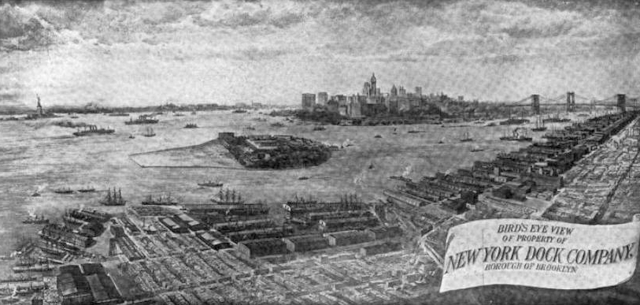
The Atlantic Basin, built by the Atlantic Dock company, was finished 1847. This 40 acre basin provided a safe harbor for the sailing ships of the day. It could accommodate 130 squared rigged ships at one time.

The complex included 3 miles of wharf, 20 acres of warehouse storage, 9 large steam elevators for grain. The Atlantic Basin afforded a safer working environment for the off and on loading of the ships than the Manhattan side of the East River. The Hamilton Ferry gave quick access to the Custom House and Banks in Lower Manhattan. Brooklyn was part of the port of New York and had to report to the custom house in lower Manhattan.

In July 1855 a tornado hit New York causing substantial damage at the Atlantic Docks.

"The stores Nos. 58, 60, 62 and 68, across the Atlantic basin, occupied by our government, were stripped of their zinc roofing. The hoisting wheels in fornt of one or two of the sores were also blown away.

The boiler and machine shop of Henry Esler & Co. a short distance beyond the stores was blown down.

The door of the shop at the time was open, and the wind entered and filled the building. The air lifted the roof from the supports and it fell over the side of the boiler shop, carrying the latter with it to the ground.

Delaware State Reporter, July 20, 1855.

Several boats also sustained damage.

In 1863 two grain elevators at the Atlantic Docks burned during the Draft Riots. Many books written at the time and just after the war attribute the burning of the Atlantic Docks to the riots. Modern sources also list the burning of the docks to the riots. See Brooklyn in the Civil War However, The Brooklyn Eagle was less certain:

The fire occurred on the night of Wednesday the 15th of July, the third and last day of the riots in New York. Two grain elevators, a boat, the pier, a quantity of machinery, grain, etc. were destroyed. (BE)
The paper stated that the fire was the "deliberate act of incendiarism, but there is no evidence whatever to substantiate the assertion that there was a riot."

In 1880 a two alarm fire broke out at 8:30 A. M. at the Cereal Manufacturing Company's mills, Nos. 5 & 6 Atlantic Docks on August 1. The company manufactured breakfast cereal, flour and steam cooked oats. The building was "one of a long row or granite four story structures the majority of which are owned by the Atlantic Dock Company." It was believed that the fire originated in the drying room of the cereal mill. Police were called in to keep a large curious crowd at a distance. An additional tragedy occurred as an indirect result of the fire. An 11 year boy had climbed on the "rack" of the Hamilton Ferry to watch the fire. The ferry New York struck the rack knocking the boy off and he fell to his death. (NYT, Aug 2, 1880)

In the late 1800s the Atlantic Basin handled most of New Yorks grain trade - 157 million bushels in 1898. (Sea History 1979, National Maritime Historical Society)

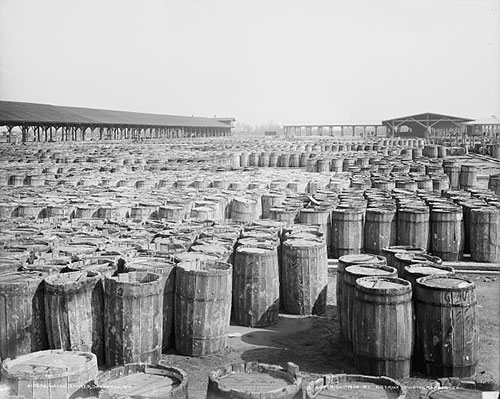
Atlantic Basin has nine "first class" steam elevators to transfer grain from canal boats into ocean-going vessels or to its warehouses during the 1870s. Each of these elevators could unload a canal boat in three hours, and a well built Atlantic Basin warehouse could store two million bushels at one time.

Sea History 1979, National Maritime Historical Society

In 1881 the warehouses in the Atlantic Docks held: sugar, molasses, provisions, flour, lumber, stone, cotton guano, grain, saltpeter, brimstone (sulfur), salt, iron, resin and turpentine.

Warehouse in the Atlantic Basin in 1886 included: Clinton Stores, Finley Stores, Atlantic Dock Company Stores, Franklin Stores, India Wharf Store, Strahnahan's Inspection Sotres, plus the Atlantic Flour Mills and an "oil Works".

Warehouse in the Atlantic Basin in 1890 included Commercial Wharf Stores, Clinton Wharf Stores, North Pier and Finley's Stores and South Pier and Finley's Stores (Brooklyn Daily Eagle Almanac 1890)

Grain elevators in the Atlantic Basin in 1890 included, Excelsior Elevator, Commercial Wharf, Elevators A and B, McCormack's Elevator, Laimbeer's Elevator and F. E. Pinto & Sons Elevator. Steamship lines in the Atlantic Basin in 1893 included:

  1. Antwerp Line to Antwerp, sailings irregular, Cargo, passengers and general
  2. Bordeaux Line to Bordeaux, sailings irregular, cargo, passengers and general
  3. Honduras and Central American line, to Jamaica, Nicaragua, Honduras Guatemala, sailings irregular, Cargo, passengers and general
  4. New York and Porto Rico Lines, to Porto Rico sailings irregular, Cargo, passengers and general
  5. Union Direct Hamburg Lines to Hamburg, semi monthly, Passengers, porcelain, general
In 1893 The Brooklyn Eagle Almanac described the Atlantic Basin thus:
The Atlantic Basin near Hamilton ferry, and opposite Governor's Island, is unique in that there is nothing in the United States that so much resembles the great docks of London and Liverpool. While it cannot compare with the massive granite structures on the Mersey and Thames, it excels them in one way: ships can enter at any tide, whereas the English docks are only accessible at high water, and are closed at other times by gates or caissons. The Atlantic Basin, covers forty acres, and is surrounded by brick and granite warehouses on three sides. These are 100 feet in depth, and three to five stories high. The basin contains four piers, three of which are covered, and are 700, 800 and 900 feet in length by 80 feet in width. South central pier, 900 feet long, is the largest in the port. In the basin are seven elevators, six of which are controlled by the New York Grain Warehousing Company, the seventh being owned by Pinto Bros. Atlantic Basin is the largest grain depot in the world. Its frontage line of basin and piers measures three miles. South central pier is leased by the Union Hamburg and the Nicaragua and Central American lines of steamships. Barber & Co. and T. Hogan Rons control east central pier; Funch & Edye's steamships dock at the south central pier, as do the lines to Bordeaux and Oporto. At west central pier many goods from the Indies are unloaded, especially plumbago and cocoanut oil. The entrance to the basin is 200 feet in width. North pier is much used by Italian barks. The basin has a uniformed police force of its own. The basin or dock is a monument to the energy and ability of J. S. T. Stranahan, who, in spite of his 84 years, still manages its business. It is a centre to which canal boats come laden with farm produce.

Brooklyn daily eagle almanac 1893

James Samuel Thomas Stranahan born April 25, 1808 moved to Brooklyn in 1844 and supervised the building of the Atlantic Docks.

Henry Esler & Co, Ship Engine and boiler makers

Esler and Company Boiler Factory was located near the south-western end of the Atlantic Basin. Henry Esler & Co. built steam engines and boilers. In 1862 they built the machinery for the steamer Shantung which was built for the "China coast trade"
She is about 1,000 tons burden, of a beautiful model, and fitted with an overhead beam engine, like that of our river boats. This engine was an object of great interest to a select party of engineers, editors and others who were invited, during the outward trip down the bay, to witness the operations of two different valve motions, with which it had been fitted, and which were arranged to be changed from one to the other, to show the effects of each. The engine has a cylinder fifty inches in diameter, with a stroke of ten feet. It was built by H. Esler & Co., Atlantic Dock Works, Brooklyn, and is a substantial and excellent piece of mechanism.

Scientific American, vol 6 1862

The cylinders of the engines on the Shantung had a diameter of 50 inches and the length of the stoke was 11 feet. (A stroke is the action of a piston travelling the full length of its locomotive cylinder or engine cylinder in one direction. Wikipedia). There were two boilers in the hold which did "not use blowers". Henry Esler & Company also build the machinery for a companion ships the Steamer Kiang-Tze, the Shan See and the Sze Chuen.

Henry Esler died in 1876 and was buried in Green-Wood Cemebery along with is wife Catherine L. (died 1878) and Mathilda (died 1883) and Gertrude A Eseler (died 1915).


A History of the City of Brooklyn by Henry R Stiles, 1870

The street on the left of the image is Hamilton Avenue. The small tower-like buildings inside the basin represent the grain elevators.

The Atlantic Basin is now the home of the Brooklyn Cruise Terminal.

In July 2010 Carolina Salguero wrote to inform me that the Atlantic Basin is currently about half of its former size. Originally the Basin went from the Buttermilk canal to "to the RR sidings below the Imlay St NY Dock buildings".


Atlantic Basin 1878, Old Brooklyn in Early Photographs William Lee Younger, Long Island Historical Society, 1978


Atlantic Basin, 1851
New York City Public Library, 1851, Gleasons Pictorial ID80070


Appleton's Journal, Saturday April 1, 1871, Scene at the Atlantic Docks Brooklyn

Grain Elevator

Pictorial History of Brooklyn, 1916.


Atlantic Basin, Laid Up for the Winter, 1873
New York City Public Library, ID800704D G91F172_035F


Atlantic Basin
New York City Public Library, Stereo Card, ID G91F172_035F


Atlantic Basin, 2007
Photo Maggie Land Blanck, 2007

This image was taken from one the cruise liners that now dock outside the basin. The original basin included the area that is now covered by the grey sheds with the blue doors.


Atlantic Basin, 2007
Photo Maggie Land Blanck, 2007


The Erie Basin

Erie Basin: Beard's Grain Elevator Elevator and Beard's Warehouse, Handren & Robbins Boston Dry docks, Townshend & Edgett's Provncial Dry Dorks, New York Balance Dry Dock Co. (Brooklyn Daily Eagle Almanac 1890)


Erie Basin and Gowanus Canal

Brooklyn Eagle Post Card, Series 72, No 428

The Erie Basin is on the south side of Red Hook

Postcard collection of Maggie Land Blanck


Print collection of Maggie Land Blanck

Theo. A. Crane's Sons Co., Brooklyn Floating Docks and Shipyard, Breakwater Gap, Erie Basin, 1905 Invoice

"Sufficient depth of water to haul at any stage of tide.

First-class facilities for repairing Yachts, Steamers, Steamboats and Sailing Vessels.

Particular attention to building Railroad-Car Floats, Tugboats, Barges, Etc.

Saw-Mill, Machine, and Blacksmith Shop, and Floating Derrick for handling Propeller Wheels"

Theo. A Crane's Sons company

" The shipbuilding and repair business conducted under the corporate name of Theo. A. Crane's sons Company in Erie Basin is the outgrowth of a business established by the late Theo A Crane more than half a century ago. The founder of the business was born in Newark, N. J., but came with his parents to Brooklyn, when he was a child, and was educated in schools there.
During the Civil War he worked at the shipbuilding yard of Devine Brutus in Brooklyn. In 1867 he established his own yard first at 16th street and later at 26th Street. He bought the yard in the Erie Basin from G. H. Ferris.

Theodore Crane died in 1891 and his sons Edward and Alfred continued the business. Edward died in 1899 of typhoid fever. Alfred continued in sole control until the business was incorporated in 1901.

Other Dry docks in the Erie Basin in 1920 were the The Robins Dry Dock and Repair Company and Ira S. Bushey and Sons, Inc.

America's maritime progress,1920, By George Weiss, J. W. Leonard


The Gowanus Canal

In 1890 Grain Elevators in the Gowanus Canal included: Bowne's Elevator (Brooklyn Daily Eagle Almanac 1890)


Collection of Maggie Land Blanck

Gowanus Improvement Triborough Bridge Authority, November 1, 1941, Robert Moses, Chairman

The Gowanus improvement included an elevated highway above 3rd Avenue from Owl's Head Park to Hicks Street and the widening of Hicks Street from Hamilton Avenue to Atlantic Avenue.

This image shows the construction of the part of the elevated highway across the Gowanus canal. Looking west there are the playing fields and pool of the Red Hook Recreational Area. Also seen are the Red Hook Houses, a high-rise public housing project build in 1938 for the local dockworkers and their families. See Red Hook Park


Living Conditions

Air Pollution

November 17, 1899.

As requested by Mr. Hammond, I started at 8:30 a. m. for Broadway, Williamsburgh. I saw thick black smoke in large clouds coming out from the chimneys of these establishments: Francis E. Frith, wood and coal, 118 Classon avenue; Johnson Bros., lumber, 45 Classon avenue; S. Tuttles' Son & Co., wood and coal, 596-614 Kent avenue; Brooklyn Cooperage Co., 142 Kent avenue; Chas. Pratt Mfg. Co., Ryerson avenue near Kent avenue; Havemeyer & Elder Sugar Refining Co., Franklin avenue near Manhattan avenue; the roundhouse of the L. I. R. R. Co., Borden avenue, Long Island City; Standard Silica Cement Co., Long Island City; Chelsea Jute Mills, Manhattan avenue near Bridge; Edward C. Smith & Co., box manufacturing, 420434 Oakland avenue; Thos. Morgan, Manhattan avenue; Oil Seed Pressing Co., Bedford avenue; Cheseborough Mfg. Co., Richard and Seabring streets, South Brooklyn; Casy's Rosin Works, Richard and Delavan streets, South Brooklyn; Ph. H. Gills, metal works, Richard and Bowne streets. I had only about one hour to go over the South Brooklyn section between Hamilton avenue and Erie basin. This territory has all to be walked over, and is quite large. I saw lots of black smoke emanating from chimneys at a distance, but did not have time left to locate them. Twenty more violators can be easily found in this district.

Looking from Kent avenue towards the East River I saw lots of tug boats; thick black smoke coming out from their funnels. From the Brooklyn side I saw a good many Manhattan violators.

November 18, 1899.

As instructed by Mr. Hammond, I went to-day through South Brooklyn; covering the district between Atlantic avenue, Third avenue, Fort Hamilton and the river, and found the following violators of the Smoke Nuisance Law: Roebuck's Planing Mills, 417 Hamilton avenue; John A. Casey, oil, etc., corner Richard and Commerce streets; Spery & Beale, mattresses, 141 King street; D. J. McXeal, Columbia Engineering Works, William near Van Brunt streets; Pioneer Iron Works, William near Van Brunt street; J. Hartley, machines, (59 Delavan street; Progress Machine Works, Delavrfn between Richard and Van Brunt streets; Henry R. Worthingtou, machines, Rapelye, corner Van Brunt street; W. H. Mairs & Co., wall papers, Sackett street corner Van Brunt street.

These factories are, except the first named one, amidst a thickly populated district, some factories in this district ostensiblv burn hard coal.

Documents of the Assembly of the State of New York, Volume 31 By New York (State). Legislature. Assembly, 1900 Boiler Makers Columbai Iron Works, William and Imlay) (Trows Business Directory 1899) 1901 Columbia Engineering Works at Williams and Imlay (Blue Book of American Shipping, 1901)

Noise

Odor

"The foul stenches of the manure factories are greatly intensified by the sewer gas emanations of Gowanus CanalÑthe receptahe of tlie Bond Street seiver. Into it is poured the sewage of a large area of the densest portion of the city; and here, in the midst of the foul emanations which poison the air of the region, thousands of workingmen in the coal-yards, barges and lumber-yards have to earn their daily bread. Thousands more have their homes in the immediate vicinity, for the neighborhood is fast filling up, notwithstanding its foulness, because men here find work, and because here houses are cheap at the time of May moving; and many who avail themselves of their cheapness, sadly experience the reason of it on the first setting in of hot weather."

The Sanitarian, Volume 5 By Medico-legal Society, 1877


Population of Ward 12 and 6 in 1880 to 1892

12th Ward:

  • 1880 Federal census - 22,201
  • 1890 Police Count - 28, 041
  • 1890 Federal Census - 27, 368
  • 1892 State Census - 31, 734

6th Ward:
  • 1880 Federal Census - 35,187
  • 1890 Police Count - 40,558
  • 1890 Federal census - 37,693
  • 1892 State Census -48,939

Brooklyn Eagle almanac 1893.


Some Red Hook Streets Images

206 Richard Street, Red Hook, Brooklyn, 2003

Maria Kettler, the daughter of Fritz Kettler and Hannah Peters was born at this address in 1886

Photo Maggie Blanck


189 Conover Street, Red Hook, Brooklyn, 2003

Christian Petermann, the son of Johann Petermann and Sophia Steuer, was born at this address in 1883

Photo Maggie Blanck


Sullivan Street - Richards Street 1931

74-82 Sullivan Street, north side, between Richards and Van Brunt, June 25, 1931.

New York City Public Library, Sperr, Percy Loomis, 1890-1964 -- Photographer, 365056


Norwegian and German Churches in "Red Hook", Brooklyn

In the 1893 and 1898 directories for Brooklyn there were three listings for Norwegian churches in Red Hook.

  • The Norwegian Seaman's Chruch at Van Brunt and William Street, Jacob Bo, pastor.

    This building still exists and is being used as a residence at 111 Pioneer Street (formerly Williams Street)

    This was the Norwegian Seamen's church. The Norwegian Seaman's Church mainly catered to seamen but also ministered to the immigrant community. The church moved to 33 First Place (Corner of Clinton and Henry) in 1928. It is currently a condo.

    See images of both of these buildings below.

  • The Norwegian Lutheran Church of Our Savior, Henry Street near 4th Place. A public school is now on this site.

  • St. Paul's Lutheran Church, on Henry near 3rd Place, John Huppenbauer, pastor. This is also listed as a German congregation. It is now a Hispanic Social Center. See image below.

Norwegian Seamen's Church, 111 Pioneer Street (formerly William Street), Brooklyn

Photo Maggie Blanck

The Norwegian Seamen's Mission in New York was established in 1864 by the Scandinavian seamen's mission in Bergen, Norway. The purpose was to preach to Scandinavian sailors in foreign ports.

In 1878 the Seamen's Mission in Bergen Norway appointed Ole Bugge Asperheim to establish a Seamen's church in New York. The first church was at 111 William (now Pioneer) Street in Red Hook, Brooklyn.

"The Norwegian Seamen's intended for Norwegian sailors who may be in port, was organized in July 1878, and met first corner of Van Brunt and President streets, purchased from the William street Methodists in 1879 for about $11,000. Connected with this church is a reading room. Pastor Rev. C. Hansteen."

Brooklyn Eagle, Jul 31, 1887

"Consul Bors secured a suitable building on William Street, supplied furniture and an organ and presented a picture, "The Crucifixion" an oil painting by an Italian artist."

Brooklyn Eagle April 5, 1891

In February 1890 the Scandinavian Seamen's Mission celebrated its 10th anniversary at the Brooklyn YMCA. Rev. K. K. Sarheim said that 25,000 Scandinavian sailors came to the port of New York every year.
"The objects of the mission are to give spiritual aid to these many wanderers and provide interventions against the many evils besetting strangers in this city and New York. Missionaries visit the vessels as they arrive and depart and furnish the sailors with good reading matter. In addition, the hospitals and jails are visited, while in the evenings of the week gospel meeting (sic) are held in the church on William street. A free reading room is also an adjunct, while the Sailor's Temperance Home, on Hamilton avenue is a recent institution. Regarding the latter, 2,590 boarders were entertained during 1889, and additional facilities will be necessary during the present year. The only places where the missionaries have been refused admittance are the boarding houses, which may be classed as the worst hinderance to the work of the mission."

February 19, 1890

Another speaker was the Rev. C. S. Everson of Our Saviour Norwegian church on Henry Street.

By 1891 Scandinavians made up 25 to 30 percent of sailors in America waters:

"More than twenty thousand Scandinavians sailors come yearly to the port of New York. Between 25 and 30 per cent of the sailors on American vessels are Scandinavians; the entire deep water fleet, schooners, yachts, navy and coastal steamers and government vessels are, as to their crew before the mast, manned chiefly with Scandinavians."

Brooklyn Eagle April 5, 1891.

111 William (Pioneer) Street was the home of the Seamen's church for 50 years. In July 2009 Lars Nilsen informed me of the location of this church. It is currently used as a residence.

In August 2010 Linda Shoesmith wrote to say that her great grandfather Borre Haugvalstad received correspondence at the church in the 1890s. Borre Haugvalstad was from the Haugvalstad (Haugvaldstad) farm which Linda believes is on the island of Rennoysoy near Stavanger.

The pastors of the Norwegian Seamen's (Brooklyn Sjømannskirke): Ole Bugge Asperheim 1878-80, Andres Mortensen 1880-85, Carsten Hansteen 1885-89, Kristen Saarheim 1889- (Lutheraneren, Volumes 37-38)

  1. Ole Asperheim (1846-)

    Pastor of the Norwegian Seamen's church from 1878 to 1880.

    Ole Asperhejen, age 26 years, born 7 jul 1846, father, Ole Halvorsen, married on 13 apr 1872 in Oslo, Akershus, Norway to Sofie Petrine Larsen Age 21 years born 4 sep 1851 father Karl Larsen.

    Ole Asperheim age 26 pastor arrived in New York Harbor on July 1, 1872 on the St. Olaf from Bergen, Norway.

    In 1880 Ole Asperheim, age 35, clergyman, born Norway was listed at 562½ Clinton street. Listed with him was his wife, Sophia, age 28, born Norway, August son age 5, born Wisconsin, Alfred son age 3 born Wisconsin, Sophia daughter age 6 months, born New York, Brig Larson mother in law age 60, born Norway, Christine Hanson age 20 servant, born Denmark and Sopus Hanson son age 4 born Wisconsin. %62 Clinton Street is just north of Hamilton Ave.

    I do not know how long Ole Aspeheim stayed at the church.

  2. Andres Mortensen

    Pastor of the Norwegian Seamen's church from 1880 to 1885.

  3. Carsten Hansteen

    Pastor of the Norwegian Seamen's church from 1885 to 1889.

    (Rev.) Carsten Hansteen Location 1: 117 William Year: 1888, 1889 City: Brooklyn State: NY (Brooklyn, New York Directories, 1888-1890)

  4. Kristen Saarheim

    Pastor of the Norwegian Seamen's church from 1889 to ??.

    Brooklyn Directory: (Rev.) K. Saarheim (Sarheim) Location 1: 441 4th avenue Location 2: 117 William Occupation: treas. Year: 1888, 1889 City: Brooklyn State: NY

    (Rev.) Kristen K. Saarheim Location 2: 132 Carroll Year: 1889, 1890 City: Brooklyn State: NY

    By 1891 the Rev. Kr K Saarheim was in charge of the mission.

  5. Jacob (Jakob) Bo (1863-)

    Jacob Bo age 31, pastor Norwegian arrived in NYC May 19, 1894 on the Venetia from Christiansand steerage.

    He was listed at 117 William street in 1900: born April 1863, age 37 married 9 years, born Norway, immigrated 1894 alien, clergyman, no family was listed with him.

    In 1902 the Rev. Jacob Bo, minister of the Norwegian Lutheran Seamen's Church, 111 William street, returned to Norway to receive a "royal appointment at to an important parish in Norway near Kristiansand". He was replaced by the Rev. Tycho Castberg "late of Meidalen, near Frouddjan, Norway".

  6. Tycho Castberg

    "ROBBED A CHRUCH SAFE

    Brooklyn Burglars Took $1,200 and Left $60 Behind

    The Rev. Tucho Castberg, pastor of the Norwegian Seamen's Church, in William's Street, Brooklyn, reported to the police of the Hamilton Avenue Station, that borough, yesterday that thieves had entered the church and stolen $1,200 from a safe in the study. The pastor said that the church had been entered sometime during the night and early morning.

    Capt. Murphy and one of his detectives went to the church and found the door of the safe open. It had not been forced apparently but unlocked. In a drawer from which the $1,200 had been taken the Captain found $60 in coins, left behind by the thieves. The burglars had gained entrance to the church by forcing a rear door opening into the reading room. The pastor discovered the robbery when he went to the church to do some writing in his study. No trace of the thieves has been found.

    New York Times March 23, 1904

    Tycho Castberg was listed in the 1908 Brooklyn Daily Eagle Almanac at 111 Pioneer street, Norwegian Seamen's

    SS Hellig Olav from Christiania 5 June 1908, arriving June 16, Castberg, Tycho age 36 parson, married, born Norway, non immigrant alien, from wife Mrs Castberg, Nordstrand, to New York to 111 Pioneer street, Brooklyn, five feet six inches, blue eyes born "Tr. lyem Norway

    1909 October 3, SS Cleveland, from Hamburg to New York, Castberg, Tycho age 37 clergyman, born Norway, Non immigrant alien, from Nordstrand Christiania Mrs Castberg wife, to 111 Pioneer street Brooklyn, 5 ft 8 inches, born Drontheim, Norway.

    Nova Scotia October 1928 Castberg, Tycho, age 56, married minister reverent, born Norway, US October 25, 1928, place of birth, Strinda, Norawy, last address Trondhjem Norway on the Stavangerf Jord from Oslo October 1928 from Oslo

  7. Later Pastors

    Later pastors included Jon Ekeland, Christen Bruun, V Vilhelmsen, Sv. Norborg, S. Brekke and Leif T Gulbrandsen. (Norwegians in New York, 1825-1925)

Photo Maggie Land Blanck, 2010

The vine covered facade is that of the much larger section of the Seamen's church which is not visible from the street.


NYPL:
"Clinton Street, at the N. W. corner of First Place, showing the Westminster Presbyterian Church organized on January 31, 1856. It was opened for services in a frame structure on this site in 1856. In 1867 this building was erected. In 1929 it had become the Norwegian's Sailor Church. 1922. Eugene L Armbruster Collection MAY BE REPRODUCED"
Photo Maggie Blanck, 2010

In 1928 the Norwegian Seamen's Church moved to the corner of Clinton Street and First Place in Brooklyn. This was the former home of the Westminster Presbyterian Church built in 1856. In 1983 the the Norwegian Seamen's church moved to Manhattan. The building, on the corner of Clinton and First place, is currently an apartment building. An 1886 map of the area show a Presbyterian Church at this address.


Norwegian Lutheran Church of Our Savior, Henry Street near 4th Place. (Vor Freiser Norsk Lutherske Kirke)

The Norwegian Lutheran Church of Our Savior was originally formed in Manhattan in 1866. At that time the largest percentage of the Norwegian population in New York was in that borough. Over time a large portion of the Norwegian population shifted to Brooklyn. The church of Our Saviour was located at 56 Monroe Street, Brooklyn in 1876.

A new church of Our Savior was built on Henry Street in 1885. Eventually the New York area Norwegian population shifted again, this time to the Bay Ridge section of Brooklyn.

The present church of Our Saviour is at 414 80 Street Brooklyn, NY


NYPL Image ID 704851F Brooklyn Henry - Coles Streets (1928?) 608-642
"Henry Street, west side, between Coles and Rapelye Streets. A view of the Norwegian Lutheran Chruch, and to the right P. S. No. 142. No 608, partly visible at the extreme right is north of Rapelye Street. About 1928. Eugene L Armbruster Collection MAY BE REPRODUCED
NYPL Image ID:704852F Brooklyn, Henry Street - Rapelye (1930?)
Henry Street at the southwest corner of Rapelye Stree, showing Public School No. 142. The view south on the west side of Henry Street and shows also the Lutheran Church of Our Saviour. Board of Education of the City of New York early 1930s.

This 2010 photo shows the school much as it appeared in the 1930 photo. The yellow "x" indicates a post 1930 addition where the church once stood.

Red arrow indicates the location of the Norwegian Lutheran Church of Our Savior. Henry street runs through the center of the image. Rapelye street runs between Hicks and Henry between Third and Second.

The Brooklyn Daily Eagle almanac of 1921 lists the Norwegian Lutheran Church of Our Savior, 632-636 Henry Street, Brooklyn as established in 1866.

On his walking tour of Red Hook in August 2010 Lars Nilsen, Historian, noted that the church was originally located on Monroe Street and is presently in Bay Ridge.

Our Saviour was not listed in the 1874-75 Directory for Brooklyn under Lutheran Churches.

"Church of Our Saviour (Norwegian) 56 Monroe Street, Rev S. O. Juul" Lutheran, New York as it was and as it is: giving an account of the city from its ... By John Disturnell, 1876.

The building on Henry Street appears to have been erected in 1885.

The Evangelical Lutheran Church of St Matthew has the following reference to Our Savior Norwegian church on Henry Street.

" To Pastor Lauritz Larsen I am indebted for the following sketch of our Norwegian churches:

"I believe that the first Norwegian Lutheran Church in New York was organized by Lauritz Larsen, then Norwegian Professor in Theology at Concordia Seminary, St. Louis, who stopped here for a while on his way to and from Norway in the early sixties. The first resident pastor was Ole Juul, who came to New York in 1866 and labored here until 1876, when he was succeeded by Pastor Everson, who was actively engaged as pastor in New York and Brooklyn from 1873, until 1917, when failing health compelled him to retire.

The Lutherans of New York. Their Story and Their Problems Author: George Wenner, 1918 Release Date: January 8, 2005 [EBook #14638]

Ole Juul (1838-1903)

Ole Juul was born at Valders, Norway, September 10, 1838 the son of a farmer. He immigrated to the United States in 1860 when he attended Concordia College in St. Louis, Mo. After his ordination and two years in Dodgeville, Wisc. he was "called" to the new congregation of Our Savior's in New York city in 1866. He remained there for 10 years during which time he built the congregation to over 40 families and many young people. He served at Our Savior's church in Chicago from 1786 to 1893. He died in 1903. Information from History of Chicago, Volume 3 By Alfred Theodore Andreas, 1885 and The rise of Jonas Olsen: a Norwegian immigrant's saga By Johannes Benjamin Wist, Orm Overland

1881 Brooklyn Directory

LUTHERAN CHURCHES IN BROOKLYN IN 1881: Norwegian, 56 Monroe; Charles S Everson, Minister, 56 Monroe

Brooklyn Daily Eagle May 22, 1885

"BUILDING PERMIT GRANTED

The Building Department has granted a permit to the trustees of Our Saviour Norwegian Evangelical Church for the construction of a church and Sunday School building at 632-636 Henry Street. The building will be of brick, two stories high, and will cost ten thousand dollars.

Brooklyn Daily Eagle, Nov 30, 1885
SERVICES IS THREE LANGUAGES

DEDICATION OF ST MATTHEW EVANGELICAL LUTHERAN CHRUCH

St Matthrew's Evangelical Lutheran church on Henry street, between forth and fifth places was dedicated yesterday by services in three languages - Norwegian, German and English. The Norwegian service was in the morning, conducted by Rev. O. Juul, assisted by the Rev. H. A. Prus and O Hanstein, of the New York Sailors Mission. In the afternoon Rev. S Kyhl, of Castle Garden, conducted the service and preached the sermon in German., and in the evening the service and sermon were by Rev. B Korn, a young minister from Boston.

St Matthew's Evangelical Lutheran Chruch is the old New York Norwegian Church, which flourished greatly when New York's ship yards were active. Since their decline it has gone down by reasons of removals till now it has to move after the quarter part of its old congregation, who have settled in Brooklyn. The services henceforth will be conducted in English and Norwegian, probably Norwegian in the morning by the Rev. C. S. Everson. The services yesterday all drew very large attendance. The church cost $17,000, and the ground on which it stands coat $6,000. Two thousand dollars of this is yet unpaid.

Note: Despite some confusion about the church's name: "St Matthew" in this article versus "Our Saviour" and the slight difference of address: "between 4th and 5th place" instead of across from 4th or 3rd place as listed in other descriptions, this is clearly the Norwegian church of "Our Saviour". On the 1886 map of Wards 6 and 12 there is no listing for 5th place. The map shows "church" on the west side of Henry between third and forth places.

Brooklyn Daily Eagle 1891

The Ladies Aid Society of the Lutheran Church of Our Saviour on Henry Street at Third Place held a bazar for the benefit of the Norwegian deaconess home and hospital. February 1891 (Brooklyn Daily Eagle)

New York Times 1901

DIED - LARSON - On Saturday, July 20, Louis M Larson, for thirty-seven years a trusted and faithful employee of David Moffat & Co. Funeral services will be held on Tuesday afternoon at 2 o'clock at our Savior's Norwegian Lutheran Church Henry Street Brooklyn

New York Times July 23, 1901

L M Larsen, 154 Luquer Street was listed as the "Supt." of Our Savior Norwegian, Henry Street near Thrid Pl in The Metropolitan Church and Choir directory of New York and Brooklyn ... also listed were: Pastor Rev. C. S. Everson, 16 3d pl., Oraginst W. SeBastian, 9 Ferry St, New York, Sexton, N Boergesen, 632 Henry, 1888.

Louis Larson also had lived at 68 forth place as indicated by the 1890 City Directory

"Larsen Louis M. clerk, 5 Jacob, h 68 Fourth pl. B'klyn" 1890 Directory

New York Times 1920
THE REV. CHARLES SEVERIN EVERSON

The Rev. Charles Severin Everson, pastor Emeritus of the Norwegian Evangelical Lutheran Church of Our Saviour, 632 Henry Street, Brooklyn, of which he had been pastor from 1878 to 1918 and known as the oldest pastor in service of the Norwegian churches in the East, died on Tuesday at his residence adjoining the church. He was 73 years old. Mr Everson was born in Norway and came to this county in 1849, settling in the West. He attended Luther College in Iowa, and the Concordia Seminary in St. Louis, Mo., and his first call as pastor was to the Danish-Norwegian Lutheran Congregation of Our Saviour in Perth Amboy, N. J."

New York Times, 1926

"NORWEGIANS CELEBRATE

Lutherans Observe Sixtieth Anniversary of Brooklyn Church

Special services were held yesterday morning in the Norwegian Lutheran Church of Our Saviour, Henry Street near Third Place, Brooklyn in commemoration of the sixtieth anniversary of its founding. The Rev. Stener Turmo conducted the English service at 10 o'clock. He was the pastor of the church from 1905 to 1923.

The Norwegian service at 11 o'clock ws conducted by the present pastor, the Rev. Oscar Bakke. He reviewed the careers of the three former pastors of the church. The junior and senior choirs rendered special music. Services were also held at 4 and 8 P. M. The church is the oldest Norwegian Lutheran church on the Atlantic circuit."

November 29, 1926.

New York Times,January 28, 1928

"100-MILE GALE LASEHS CITY 42 HURT BY FLYING DEBRIS; SHIPS BATTERED ON CAOST"

..... The police roped off a space about the Norwegian Church of Our Saviour, at 632-633 Henry Street Brooklyn, because its 100-foot steeple was nodding and swaying dangerously as the wind shrieked past it."

.....

Andres Petersen

In August 2020 Charles Petersen sent a copy of a document relating to his great-great grandfather, Andres Petersen, and hand written by the Reverent Charles Sevrin Everson.

" In Memorium Andres Petersen

It having served almighty God in his wise providence to call away from this life our beloved brother, Andres Petersen.

We are mindful of his service to our church and people and mourn our loss. We sincerely sympathize with his children in their bereavement and pray that the God of all grace may console them and so guide them that they may meet their own father in the heavenly mansions.

The above resolution was authorized by Our Saviors Norwegian Evangelical Lutheran Church at its monthly meeting October 7, 1902. On behalf of the congregation.

Sec. (cannot read)

C S Everson (cannot read)"

The 1800 map of Brooklyn's wards 6 & 12 show what may be a school at the corner of Rapeleye and Henry. What could be 632-636 appears to be vacant lots.

A 1908 map of Brooklyn shows Public School 142 at the corner of Rapeleye streets and Henry with a vacant lot between the school and the church.

The west side of the block of Henry Street south of Rapeleye street is now the home P. S. 146 (PreK to 5th) at 610 Henry Street

Our Saviour's Lutheran Church is presently located at 414 80 Street Brooklyn, NY 11209, 718-745-0020, oslc414@aol.com Rev. Craig A. Miller, Pastor


St Paul's Lutheran Church, Henry Street


Photo Maggie Blanck, 2009

St. Paul's German Lutheran Church, Henry Street between 2nd Place and 3rd Place, erected in 1876.

St Paul's Henry Street and Third place, dates to 1872. The first meeting was held in a hall in Columbia street, near Woodhull. Present building erected in 1876; and, including ground cost $15,000. This church has had in succession for pastors, Rev. Robert Neumann, and since 1878 Rev. John Huppenbauer.

Brooklyn Eagle Jul 31, 1887

New York Times, March 11, 1922

" THE REV JOHN HUPPENBAUER

The Rev. John Huppenbauer, for the last forty four years pastor of St. Paul's German Lutheran Church in Brooklyn died on Thursday at his residence, 11 Third Place Brooklyn, in his 70th year. Mr Huppenbauer was born in Germany and was educated in Switzerland. Soon after his arrival in this country he was ordained in the Zion Lutheran Church in Brooklyn. He married in St. Paul's Church forty year ago to Caroline Hammel, who survives him, with four sons and a daughter."


New York Public Library, circa 1930, Sperr, Percy Loomis, 1890-1964 -- Photographer

St. Paul's Lutheran Church

"619 Henry Street, east side, between 2nd and 3rd Place, as seen from Rapelye Street, showing St Paul's Evangelical Lutheran Church erected in 1876. February 21, 1930, P. L. Sperr"

First Place Methodist Chruch, 1st Place and Henry Streets

History of the City of Brooklyn, Henry R. Stiles, 1870

First Place Methodist Episcopal Church, 1st Place and Henry

The church was built in 1854 on lots "on Henry Street, corner of Summit, being seventy-four feet deep" with a parsonage "on the rear of the lots facing Summit". The church was of brick with brown stone trim. There was a Sunday school in the basement. Since the lots faced First Place the church was named the "First Place M. E. Church".


Baptist Church at 3rd Place and Clinton

New York Public Library Image ID: 703691F, circa 1930, Sperr, Percy Loomis, 1890-1964 -- Photographer

Corner of 3rd Place and Clinton Street. Identified in 1886 map as a Baptist Church.

Tabernacle Baptist Church, Hicks, corner of Rapelyea street, originated with a few members of the Strong Place Baptist Church, who, on February 8th, 1852, formed a mission Sunday school, in a small hall (afterwards called Mission Hall), over a stable in Hamilton avenue, midway between Union and President streets. There were present, at the first meeting, one female and three male teachers, with one female and ten male scholars; and, at the second session, four male and two female teachers, with twenty male and five female scholars. These early teachers were J. V. Harriott, Dwight Spencer and Dr. A. C. Burke; and (ladies) E. Burke and E. Rosling. The school rapidly increased, and in the winter of 1854-5, the labors of William James, a student of the ministry, were secured, and his labors as a colporteur missionary, were greatly blessed and followed by a revival among the scholars, their parents and their friends. In the fall of 1855, at the request of the teachers, a missionary, the Rev. Henry Brownley, was appointed by the church, to labor continually in this field, which was extended so as to include Gowanus, at which a minion school was also established, from which, in 1858, the Greenwood Baptist Church was formed. The first mission school also enjoyed another revival, and being increased to two hundred and fifty scholars, removed, in May, 1857, to a hall on Columbia street, near Summit, where in two years, its numbers were doubled, and a new necessity arose for larger accommodations. Lots were purchased on the corner of Hicks and Rapelyea streets, on which a building (fifty by one hundred, with suitable infant, library and conference rooms), was erected, capable of holding one thousand children. It was first occupied on the sabbath school anniversary, May, 1860, and dedicated on June 10th of the same year. In the winter of 1860-61, a sabbath evening preaching service was held; the Rev. Ira D. Clark selected as the school missionary; and a revival followed in which over forty souls were converted to God. In March, 1861, Mr. Clark left the school, and the propriety of a distinct church organization was discussed, which was finally secured, in the 26th of June, 1862, when the Strong Place Baptist Church granted letters of dismissal to fifty-five brethren and sisters, members of their body who were organized into a separate church under the name of the Tabernacle Baptist Church, Brooklyn. And on the 10th of July following, Messrs. Dwight Spencer, A. C. Burke and John F. Davis were chosen deacons, and in March, 1863, Theodore Shotwell was also made a deacon. Shortly after the formation of the church, the Rev. T. Edwin Brown, a graduate of Washington College, D. C., and a licentiate from the First Baptist church of Washington city, was called to the pastorate; and, on the 13th of November, 1862, was publicly ordained, at which time, also, the church was formally recognized by its sister churches. During his ministry the congregation was largely increased, especially during the first eighteen months of his labors; in the spring of 1866 (in connection with the mission work of Rev. A. B. Earle); and again in connection with the week of prayer in 1868. Mr. Brown resigned the pastorate in 1869, and was succeeded by Rev. A. C. Osborn, D.D.

On November 10, 1867, several teachers of the sabbath school, with the cooperation of the church, established a mission Sunday school, in a store hired for the purpose, near the junction of Hamilton avenue and Court street; eighty-three scholars were gathered in on that day, their number gradually increased, and it is now a useful and successful institution.

The home sabbath school continues (1869) prosperous, having over one thousand one hundred on its rolls, with an average attendance of from five hundred to six hundred and fifty, and a library of two thousand volumes. Since the formation of the church in 1862, with fifty-five members, it has had a total membership of four hundred and sixty-one, of which three hundred and ninety-six remain at present. The contributions of the church for the past six years, for its own needs, benevolent and sabbath school purposes, has averaged $6,500 per annum. Lots have been purchased on the southwest corner of Second place and Clinton street (extending through to Third Place), on which it is proposed to erect a new house of worship.

Michael D. Cassidy Brooklyn, Churches


Pilgrim Chapel

Corner of Henry and DeGraw.

Started in 1845 as the Columbia Mission at the corner of Amity and Columbia streets. Later located on Warren between Hicks and Columbia. In 1878 when this building was opened it was called Pilgrim Chapel.

NYPL:
"480-492 Henry Street at the S. W. corner of Degraw street. To view shows a garage which in 1908 was known as Pilgrim Chapel (no denomination) and in 1916 as the Oriole Theatre, February 21, 1930, P. L. Sperr."
Now the home of Met Food.

See Pilgrim Chapel (Congregational) Henry Street, corner Degraw Street Brooklyn, N.Y. 11231


Other Churches

An 1886 map shows several other Churches in this area of Brooklyn.

  • "Church" at the corner of Hick and Rapelye street

    The building is no longer standing. There is an apartment building there now.

  • St Stephen's Roman Catholic Church, corner Summit and Hicks

    Still standing.

  • "Church" between Hicks and Henry on Carroll Street

  • St. Philips Episcopal, corner of Carroll and Clinton

    Still standing

  • "Epis Church" corner of Luquer and Clinton

  • "P E Chapel" between Conover and Van Brundt on Wolcott

  • Visitation R C on Richard between Tremont and Vernon

  • St Paul M E corner Sullivan and Richar


Hans S Christian Memorial Kindergarden in "Red Hook", Brooklyn

Photo Maggie Blanck

236 President Street - Hans S Christian Memorial Kindergarden

"built in memory of Hans Christian - a successful man who owned a Building Supply company on the Gowanus Canal and second street. He died in 1896"

Lars Nilsen

The Hans S. Christian Memorial Kindergarden was listed at 236 President Street in a May 25, 1899 Brooklyn Eagle article about the the kindergarden.

Hans Christian (c 1825-1894) and Elmira ______

Birth Circa 1825 Norway.

Farsund, Norway (Obit New York Times, December 27, 1894.)

Marriage: Elmira ______ , New York

Immigration:

Occupations: Seaman, Carman 1850 & 1860, lime and brick dealer, 1870, building materials 1880, DeGraw Street later Gowanus canal and Second Street.

Children:

  1. Henry circa 1849

    More: Listed in 1850 NOT listed 1860

  2. Harry L Christian (1856-1900) and Fannie Elizabeth Camp

    Birth: Brooklyn circa 1856

    Marriage: Fannie Elizabeth Camp

    Children:

    1. Robert
    2. Dorothea
    3. Mildred
    4. Helen

    More: Harry L Christian had a well publicized affair with Mrs. Lucy DeFreese. He went to live with Mrs. DeFreese and his wife and children lived separately near by.

    1900 Census: 76th near 5th Brooklyn, Christian, Fannie E born May 1871 widow, age 29, Robert son born July 1895, Dorothea daughter May 1892, Mildred daughter October 1894, Helen daughter October 1897 one servant

    1910 Census: On 4th Street Brooklyn

    Death:

    Harry L Christian senior partner of the firm Christian & Clark, dealers in mason's materials on Second Street, died Saturday after a brief illness, at his home. Eighty-eighth street, corner of Fort Hamilton avenue. Mr Christian was born in Brooklyn forty-four years ago and succeeded his father, Henry S Christian, in business after his death four years ago.

    Brooklyn Eagle Jan 9, 1900

    Survived by his wife and four children. He left money to the Hans Christian Deaconess Home in President Street (founded by his mother in honor of his father), and the Norwegian Hospital.

    Buried Greenwood Cemetery

  3. Ada B. circa 1858

    More: Listed in 1856 NOT listed 1870

  4. Washington I, circa 1860

    More: Listed in 1856 NOT listed 1870

1850 Census: Western Division of 1st ward, New York, Christian, Hans, age 26, carman, born Norway, Elmira age 19, Henry 4 months, both born New York, Andrew age 12, born Norway.

1860 Census: 148 _ 6th Ward, Brooklyn, Christian Hans "S", age 35, carman, $2,800, $150, born Norway, Almira E age 27, Henry _ age 4, Ada B age 2, Washington I, 5 months, Julia Rogers servant

1870 Census: 356 ____ Brooklyn 6th Ward, Christian, Hans D, age 45, lime and brick dealer, born Norway, Elmira E age 36, keeping house, $10,000, $5,000, born New York, Harry L 14 attending school, Stuart, Agnes age 26

1880 Census: 251 President Street, Christian, Hans, age 55, building materials, Elmira wife, age 47, Harry age 24, mining broker, ____ Ama servant, age 31

Death of Hans Christian:

"Suddenly, December 26, 1894, age 70 years

Relatives, friends, members of Nassau Lodger, No. 536, F and A. M. Clinton Commandery and Building Material Exchange are invited to attend the funeral services at his late residence, 251 President st evening at 8 o'clock

Brooklyn Eagle December 28, 1894 "Hans S Christian was a well known man in Methodist circles, and his death, which occurred December 26, 1894, was a sad loss to the community. He was for many years president of the board of trustees of the First Place M. E. Church......

Mr. Christian was an intelligent man and gave liberally to all philanthropic work. He was a well known builder and dealer in builders' materials, and left a large property, all to his widow, who is a very careful manager. Mr Christian was for nearly twenty years or more the superintendent of the First place M. E. Sunday School and was connected with the management of the Sunday School union. His death was sudden. He had been at Wednesday evening prayer meeting, and on his way home dropped dead."

Brooklyn Eagle, June 26, 1896

Hans S Christian age 70 died of heart failure. He had braved a severe winter storm to attended a prayer meeting. Returning home he "fell to the sidewalk and became unconscious". He was carried to a livery stable nearby and died almost immediately. (Obit New York Times, December 27, 1894.)

Death of Elmira Christian: age 67, Mar 28, 1899 #5295, Kings

"Christian, - Mrs. Elmira E Christian, widow of Hans S. Christian, on Tuesday morning, 28th inst. 251 President Street, Brooklyn (New York Times)

Scandinavian Sailor's Home

The Scandinavian sailor's temperance home was located at 32 - 34 Hamilton Street in 1890. It was headed by Captain C Ullenass. In 1890 the home accommodated 90 men. During 1890 this institution served 1,754 Norwegians, 450 Swedes, and 108 Danes. A small fee was charged for those who could afford it. Destitute and shipwrecked sailors were taken in at no charge.

The home later moved to 172 Carroll Street where it was located in 1894.

The building at 172 Carroll is now the Guido Funeral Home.

Photo Maggie Land Blanck, 2010

Norwegian Institutions in Red Hook/ Carroll Gardens

  1. Norwegian American Seamen's Association Sanctorium Hall Cor Court and Union Street (1897)

  2. Norwegian Women's Association Hjordis 62 Carroll Street (1897)

  3. Norwegian Scandia, I. O. G. T. Brooklyn

  4. South Brooklyn Norwegian Democratic Club Union and Court Streets (1897)

  5. Nordmaendens Sangforening 1 Brooklyn - Norsemen's Singing Society - 123 Smith Street organized 1890 (1897)


Norwegian Immigrants at Castle Garden

New York City Public Library, Harper's weekly : a journal of civilization., ID: 800777


Collection of Maggie Land Blanck

Gowanus Improvement, Triborough Bridge Authority, November 1, 1941, Robert Moses, Chairman

1. Governor's Island. 2. Atlantic Basis. 3. The New York Dock Company warehouses on Imlay Street. 4. The Red Hook Houses. 5. Columbia Street, 6. Erie Basin. 7. Coffey Park


Bethesda Mission

22 Woodhall Street, Brooklyn

Run by the Norwegian Lutheran Inner Mission the Bethesda Mission at 22 Woodhull was a food and lodging "station for needy men" (Directory of social agencies of New York By Charity Organization Society of the City of New York, 1922)

Thanks to Lars Nilsen for pointing out this building which was built in 1905 and dedicated in 1906.

Photo 2010, Maggie Land Blanck


Schools

A 1886 map of the area shows two public school (No 30 on Wolcott Street and No 27 on Nelson near Hicks Street) and a Roman Catholic school on Verona street west of Richards.

Photo 2010, Maggie Land Blanck

Public 27 School, Nelson Street near Hicks (later 27 Huntington Street)

PS 27 opened in January 1861. It was enlarged in 1890 and again in 1936.

Miss Agnes Y Humphrey was the principal of Public School No 27 on Nelson near Hicks starting in 1865. By 1872 she was running "one of the best managed and most flourishing schools in the city" with an average daily attendance of 1,200 children.

In 1872 Miss Humphrey was the principal when a "reunion of scholars" took place on December 7, 1872

No. 27, under the excellent management of Miss Humphrey, is in a flourishing condition and boasts among its scholars some of the most intelligent and precocious in the city."

Saturday December 7, 1872, Brooklyn Eagle

She was still a principal in 1889, although I am not sure she was still at No. 27.

Floating Baths

"Free Floating Baths, Foot of Conover Street"

Brooklyn Eagle Post Card, Series 38, No. 224

Red Hook

Postcard collection of Maggie Land Blanck


Maps

Collection of Maggie Land Blanck

1907 map showing the Red Hook Section of Brooklyn

Key:

  1. The Atlantic Docks
  2. The area where the Kettlers and Petermanns lived
  3. The Brooklyn Bridge
  4. Where I live now

Collection of Maggie Land Blanck

Early map showing the Red Hook Section of Brooklyn

Key:

  1. Ferris Street, Gertrude Kettler was born at 87 Ferris Street in 1889
  2. Conover Street, Christian Petermann was born at 189 Conover Street in 1883
  3. Richards Street, Maria Kettler was born at 206 Richards Street in 1886
  4. Where I live now in Carroll Gardens

Collection of Maggie Land Blanck

Early map showing the Red Hook Section of Brooklyn with Hamilton Avenue, and the Erie and Atlantic basins.


Numbers 3 through 9 Second Place

The houses at 3, 3A, 5, 7, 7A & 9 Second Place are architecturally diverse from the other houses on the block and in the neighborhood in general. They are all brick fronted townhouses with slate mansard roofs. The window detailing and other decorative elements of these houses indicate that they were build at the same time and designed by the same architect.

City-Data.com say the houses at 3, 3A, 5, 7, 7A and 9 Second Place were build in 1899. I believe that these houses predate 1899.

A 1880 map of Brooklyn shows what appears to be vacant lots at what is now 3 through 9 Second Place.

A 1886 map plus ads and articles in the Brooklyn Eagle indicate that these houses were in existence by at least 1886. In any event, they were definitely in existence before 1899.

  1. An article in the Brooklyn Eagle of October 19, 1885 notes that:
    "ground has been broken for the foundations of thirteen houses, which are to be built for Mrs. Philips on First Place, Second Place and Henry Place. They are to be all three story and high basement houses, with plain brown stone fronts. Four of them will be on First place, near Henry street, and their size will be 16x49. Three will be on Henry street, corner of First Place, each 14x45. The remaining six will be on Second Place, and their size is to be 15x44. All will be good comfortable, twelve room houses, and the parlor of all will be furnished in hard wood. It is understood that the contract for them has been given to Messrs. Morris & Selover, DeKalb avenue

    Brooklyn Eagle October 19, 1885

    Indeed, this may not be about the six houses (3, 3A,5,7, 7A & 9) on Second Place, but it indicates building in the area in 1885.

  2. A 1886 map of Brooklyn shows buildings at 3, 3A, 5, &, &A & 9 Second Place.

  3. An ad in the Brooklyn Eagle of 1886 offers 3 Second Place as a new building.

    To Let - House- To Small Private Family, 3 Second Place, near Henry St., new 3 story brick, cabinet trimmings, decorate if desired; open house, John O Hoyt, Jr, 10 Court Street.

    Brooklyn Eagle Thursday, September 30, 1886 Page: 3

    Note: 3 Second is a "3 story brick house". It's facade is almost identical to the facades of 3A, 5, 7, 7A and 9 Second Place. If 3 Second Place was being offered for rent as a new 3 story brick house in 1886, it is almost certain that the other houses were built at the same time.

  4. In September 1888 a lady's gold watch was lost by someone residing at 5 Second Place.

  5. 5 Second Place was offered "To Let" in September 1890 as "modern and very desirable".

  6. The Brooklyn Eagle of Saturday April 16, 1892 page 3 listed:
    TO LET- HOUSE -3A SECOND PLACE A three story, basement, fancy brick, 10 rooms, all improvements, $650: D. P Dahling & co, 189-191 Montague St.

    Note: 3A Second is a three story "fancy brick" house almost identical to 3, 5, 7, 7A and 9 Second Place.

  7. Brooklyn Eagle Saturday, February 24, 1894 Page: 6
    TO LET- HOUSE- 3A SECOND PLACE 3 story and basement, semi-Queen Anne, 9 rooms all improvements; possession May 1 D, P. Dahling and Co 189 Montague
    Queen Anne was a popular style in the US in the 1880 and 1890s. Queen Anne incorporated asymmetrical facades, decorative brickwork, textured wall surfaces and steeply pitched roofs. The present 3A Second Place is three stories plus a "garden level" (basement?) as described in the 1892 ad and I think it is save to call the present 3A Second semi Queen Anne as described in the 1894 ad.

  8. Ad for domestic help at 5 Second Place in 1894

  9. Ad for domestic help at 5 Second place in 1896

  10. A "nice large furnished room hot and cold running water, bath and furnace heat" was advertised in the Brooklyn Eagle by a "private family" at 7A Second Place in November 1897.

  11. Ads were place in the Brooklyn Eagle under GENERAL HOUSEWORK at 3A Second Place in October 1897 and July 1898

The 1880 Census does not list any buildings at 3 through 9 Second Place. There are listings in 1880 at #1 and #11, Second Place.

The 1890 census is burned so it cannot be checked.

I am trying to find the 3 through 9 Second Place in the 1892 Brooklyn census, but so far I have not come up with these addresses.

By 1920 the five houses between 3 and 9 Second Place were inhabited by Swedes and Norwegians:

  • 3 Norwegian family
  • 3 A the Gunderson boarding house Swedes and Norwegians,
  • 5 the Johnson boarding house Swedes and Norwegian
  • 7 Norwegian family
  • 7A The Knudson boading house - Swedes and Norwegians
  • 9 Not known
3 through 9 Second Place was in the 6th Ward - described in 1890 as:
"bounded by the East River, Atlantic av., Court st, Forth pl. Henry st., Coles st and Hamilton av.

3 Second Place

3 Second Place was listed as a new building in a 1886 ad in the Brooklyn Eagle. In 1900 the house was occupied by the Herzog family who were renters. By 1910 Lorenzo and Theresa Cianchetta owned the house. I did not find 3 Second Place listed in 1920. In 1930 the Lile family was at 3 Second Place.

1895 and 1896 Good roads ..., Volume 24 By League of American Wheelmen listed E. Herzog 3 Second Place

1900 Census, Herzog, Elij- Aug 1856 age 43, Poland, immigrated 1868, tailor Carrie wife July 1864, age 36, New York, parent born France, Isabelle daughter, Aug 1887 age 12, New York, 1 child 1 living, Cohen, Sophia, Apr 1846 Poland, widowed, 4 children 0 living, immigrated 1870 Abraus, Annie, servant, Feb 1877, age 23, Germany, immigrated 1890. Renting.

1910 Census, Manhattan, Eliz Hertzog 52, German, tailoring store, Carrie Hertzog 46 Zabelle Hertzog 21 Sophie Cohen 63

1930 Cathedral Parkway Manhattan - Elias Herzog 72, tailor, Carrie Herzog 65, born Germany, Gus Muller 49 Isabelle Muller 42 Richard Muller 11 Sophie Cohen 56

1910 Census - 3 Second Place, owned, Cianchetta, Theresa, head, age 31, married 13 years, 7 children 4 still living, born New York, parents born Italy, Mary daughter age 12, Margaret daughter age 11, Madaline age 9, Lawrence son 3, Manoppella, Joseph, "sister in law" age 36, Cecilia sister age 27 and Mario son age 6.

1930 Richmond, McLean Avenue, Lorenzo Cianchetta 63, own home value $1700, born Italy, manager restaurant, Teresa Cianchetta 50, Lorezo Cianchetta 23, Harold Meehan 31, son in law, Margaret Meehan 61, mother, born Irish Free State, Madeline Meehan 27, Wilfred Meehan 2, Helenita Meehan 5
1920 Census - Did not find

1930 Census - Lile, Lars head, rent $75, age 57, born Norway, immigrated1923 builder docks, Benoria wife age 56 married at 27 born Norway, immigrated 1928 Fredrik L son age 29 born Marquez S. Africa, immigrated 1927, insurance agent, Arthur son age 27 born Norway, immigrated 1922, carpenter house, Borglield daughter, age 26 born Norway, immigrated 1926, attendant beauty parlor Conrad D. son age 25 born Norway, immigrated 1925, builder boat, Magnhild daughter age 23 born Norway, immigrated 1928, attendant beauty parlor, Leif son age 21 born Norway, immigrated 1928, builder boats, Reidau son age 20 born Norway, immigrated 1928, builder boats, Bjorn son age 18,born Norway, immigrated 1928, clerk, cannot read, Thrend son age 16, born Norway, immigrated 1928, none, Dagmar daughter age 15 born Norway, immigrated 1928, none, Signe daughter age 10 born Norway immigrated 1928, none.

Cannot find anything else under "Lile".


3 A Second Place

3A Second Place was occupied as early as 1897. The widow Howell and her children lived at 3A from at least 1897 to 1900. By 1910 3A was a Norwegian run boarding house. In 1920 and 1930 the widow Gundersen, a Swede, was running a boarding house at 3A.

1897-1900, the Howell Family

From at least 1897 to at least 1900 Mary Bensen Howell and her children lived at 3A Second Place.

In 1870 the Howells were living in Brooklyn in Ward 19. David Howell was listed as a manufacturer of "masonic" goods. They had two servants. He was listed in city directories over the years as "masonicgds". The business addressed changed a bit but the home address was 86 Hewes street (which is off Bedford in Williamsburg)

I did not find them in the 1880 census.

1895 Brooklyn Directory: Howell, David B, clk, h 562 Henry

Death of David B Howell 1896: Howell, David B, 62 y, Feb. 21, 1896, 3212 Kings

David Howell age 62, born US, merchant, died at 109 Cumberland Street, Ward 20 Brooklyn, Causes of Death I. Exhaustion II. Senile ----grene, on the back top corner "562 Henry Street". 109 Cumberland street was the address of Cumberland Street Hospital

HOWELL, - In Brooklyn on Friday, February 21, David B Howell, in his 62nd year, son of the late David Howell of Whippany, N. J. Funeral services at his late residence, 562 Henry Street., Monday evening February 24, at 7:30. (New York Times, February 22, 1896)

1897 Brooklyn Directory:

Howell, Geoffrey, clk, h. 3a 2nd pl
Mary B, wid. David B. h 3A 2nd pl

1898: Graduates of Brooklyn Training School for Teachers June 30, 1898, Violet Howell, 3a Second Place

Proceedings By New York (N.Y.). Brooklyn Borough. School Board

1900: Renting at 3 A Second Place in the 1900 census Mary B Howell, widow born New York May 1842. She was listed as the mother of 6 children with six still living. Listed with her was her daughter Anita Ramos, born July 1869 widowed, no children, stenographer. Also listed where the Howell children: Jeffrey (August 1870 silk salesman), Eughene B son (April 1872, confidential ?????), Violet, (Dec 1874, school teacher, Linley daughter ( September 1881, school teacher) and Douglas (May 1884, stock clerk silk) and a servant, Ewina Hanson (September 1879, Norway). The children were all listed as born in New York.

During the period that the Howells lived at 3A Second Place the following ads were placed in the Brooklyn Eagle:

1897:

WANTED - TO DO GENERAL HOUSEWORK. A woman: references. Apply for two days at 3A Second Place.

Brooklyn Eagle Saturday, October 16, 1897 Page: 10

1898:

WANTED - TO DO GENERAL HOUSEWORK. A woman: references. Apply for two days at 3A Second Place.

Brooklyn Eagle Friday, June 17, 1898 Page: 10

1899:

WANTED - TO DO GENERAL HOUSEWORK. A woman: references. Apply for two days at 3A Second Place.

Brooklyn Eagle Wednesday, September 27, 1899 Page: 10

Brooklyn Eagle Thursday, October 12, 1899 Page: 12

1900:

WANTED - TO DO GENERAL HOUSEWORK A girl. Call for two days at 3A Second Place

Brooklyn Eagle Monday, September 10, 1900 Page: 9

Brooklyn Eagle Saturday, September 15, 1900 Page: 7 and Brooklyn Eagle Monday, September 24, 1900 Page: 9

1900:

WANTED TO DO GENERAL HOUSEWORK A Scandinavian and German girl. 3A Second place near Henry st. Brooklyn Eagle Saturday, March 23, 1901 Page: 10

1900:
WANTED TO DO GENERAL HOUSEWORK A girl. Call for two days at 3A Second Place

Brooklyn Eagle Tuesday, September 18, 1900 Page: 9

1901:
WANTED - TO DO GENERAL HOUSEWORK a girl; good bread and biscuit maker; references 3A Second Place.

Brooklyn Eagle Thursday, June 06, 1901 Page: 14

In May 1901 Eugene Benson Howell of Brooklyn married Laura Stanley Dickey of Newburg. Violet and Jeffery Howell were in the wedding party. Laura was "the daughter of City Treasure J. N. Dickey and niece of Judge William D . Dickey of Brooklyn and United States shipping Commissioner J. M. Dickey." (New York Times May 21, 1901)

By 1910 Mary B Howell was living in Yonkers and several of the Howell children were living in Syracuse, New York.

1910, the Kleiberg family

Things changed a lot at 3A between 1900 and 1910. Gone are the Howell family and in their place a Norwegian boarding house run Severt Kleiberg and his wife, Hansine .

In addition to Severt Kleiberg and his wife, Hansine and their two children there were11 boarders in the house when the census was taken in the summer of 1910.

  1. Kleiberg, Seivert ??., age 62, married 34 years, born Norway, immigrated 1892, caretaker, property, renting,
  2. Kleiberg, Hausen, Wife, 52, married 34 years, immigrated 1892, Norway, housekeeper for roomers, no of children 2 (or maybe 12), still living cannot read.
  3. Kleiberg, Selina, Daughter 16, born New York,
  4. Kleiberg, Harry, Son, 12 Single, New York
  5. Mallach, Charles, age 51, born Norway, a sailor on a lighter
  6. Olsen??, Thomas, age 23, born Norway, carpenter
  7. Osen, Otto, Lodger, 33, Single, Norway, immigrated 1904, carpenter house
  8. Abraham, Peder, Lodger, 24, Norway 1907, carpenter house
  9. Oger, Rayewald, Lodger 28, Norway 1902 or 07, cannot read (baker?), factory
  10. Bju--. Finga age 25, Norway,
  11. Beckke, Antone, Lodger, 28, Single Norway 1905 or 08, carpenter cannot read
  12. Malinzanll, Hans J, Lodger, 30, Married, Norway, 1897, carpenter
  13. Devins??, Otto D, Lodger, 48, Married, Norway, 1902
  14. Sampson, John M, lodger, 28, Widowed, Norway, 1904, longshoreman
  15. Larsen, Lars, lodger, 24, Married, Norway, immigrated 1903, sailor lighter

The Kleiberg family had clearly figured out how to support themselves by renting a house and taking in lodgers. All of their lodgers were Norwegian and most of them had immigrated in the early 1900s.

Notes on the Klieberg Family:

  • S. O. Kleiberg, age 44, immigrated on the Norge from Christiania to New York
  • 22 July 1892
  • Hansine, age 34, Anna, 22, Hans 10, and Carl 3, Kleiberg all born Norway immigrated on the Heka from Christiania to to New York on 22 October 1892.
  • 1900: The Kleberg family, Severt, 52, machinist, Hancene, 48, Hans, 18, Charles, 13, Selma 5, and Harry age 1, were at 899 4th ave in Brooklyn in 1900. Selma and Harry were born in NY. The rest were born in Norway & immigrated in 1892.
  • Hansine Kleiberg Birth Date: 15 Jan 1900 Birth Place: New York, New York Certificate Number: 1328 Hansine Kleiberg Age: 18 D Death Date: 3 Feb 1900 Death Place: New York, New York Certificate Number: 2220 Greenwood Cemetery: KLEIBERG HANSINE 1900-02-05 27263 135 KLEIBERG INFANT 1904-07-15 27263 135
  • Naturalization Papers: 1906, December, 7th, 211 Bay 35th Street, Brooklyn, Severt Olsen Kleiberg, occupation steward, born 2 September 1847, at Stavanger Norway, immigrated from Christiana, Norway 6th July 1892 to New York on the Norge, wife, Hansine Kleiberg, born Stavanger, Norway, five children, Anna 5 December 1871, Hans 27 April 1882, Charles 16 April 1887, Selma 21 November 1894, Harry 24 August 1898. 7 Dec 1906 Petition for Naturalization
  • Hans Kleiberg and his wife Harriett were living in Long Branch, N J by 1920. C. M. Kleiberg was in Manhattan.
  • U. S. Department of Veteran Affairs shows: Charles Martin Kleiberg Birth Date: 16 Apr 1886 Death Date: 5 Jul 1975 SSN: 060146030 Branch 1: ARMY Enlistment Date 1: 16 Apr 1917 Release Date 1: 5 Apr 1921
  • U. S. Department of Veteran Affairs shows: Harry Kleiberg Birth Date: 24 Aug 1898 Death Date: 30 Aug 1991 SSN: 158301238 Enlistment Date 1: 7 Sep 1918 Release Date 1: 22 Aug 1919
  • SSDI Charles Kleiberg BIRTH: 16 Apr 1887 DEATH: Jul 1975 - Miami, Miami-Dade, Florida, United States of America CIVIL: New York
  • Charles M. Kleiberg spent many years at sea.
  • SSDI: Harry Kleiberg BIRTH: 24 Aug 1898 DEATH: Aug 1991 - Neptune, Monmouth, New Jersey, United States of America CIVIL: New Jersey

The Gundersen Family, 1920 and 1930, Albert and Anne Gundersen

Anne Gundersen and her daughter were renting 3A Second place in 1920 and 1930. They were listed at that address in the censuses.

Birth of Albert Gundersen: Dec 1, 1869

Birth of Annie Christiansen Gundersen: Circa 1872, daughter of Peter Christiansen, Gothenburg, Sweden.

Marriage: Albert Gundersen, not listed New York City Grooms index.

Children:

  1. Lillie Gundersen, 25 Mar 1900, 6005, Births Reported in 1900. Borough of Brooklyn.

Immigration of Annie Christiansen: 1894 per later arrivals in US.

Immigration of Albert Gundersen: Circa March 1890

Addresses:

1902, 57 Woodhull Street
1907, 107 Summit Street, Brooklyn
1920, 3 A Second Place, Brooklyn
1930, 3 A Second Place, Brooklyn
1931, 3 A Second Place Brooklyn

1900 Census:

Naturalization of Albert Gundersen 1902: Gundersen, Albert, U. S. District Court Brooklyn, Nov 3, 1902, 57 Woodhull St. Brooklyn, New York, Longshoreman, Date of birth, Dec 1, 1869, Scandinavian, arrival New York March 1890, witness, John J Grady, 556 Hicks Street, salesman, Brooklyn, New York

1907: October 9, 1907, C F Tietgen, from Christianssand, Norway, Gundersen, Anne age 36, married, nationality, Norway, last permanent address, Mandel Norway, father Peter Christiansen, Brand- Gothenburg, last in US in 1894, husband Albert Gundersen, 107 Summit Street, Brooklyn, born Sweden, Gotheburg and Lilly Gundersen, US born, age 7, to New York, born Brooklyn

Death of Albert Gundersen, 1914: Gundersen, Albert, 44 y, Feb 9, 1914, 3121, Kings

Greenwood Cemetery: Gundersens in the same plot

  • GUNDERSEN ALBERT 1914-02-12 14888 16
  • GUNDERSEN ANNIE CHRISTINE 1931-08-16 14888 16
  • GUNDERSEN GEO. 1916-12-18 14888 16
  • GUNDERSEN GEORGE 1914-12-22 14888 16
  • GUNDERSEN HANNAH 1931-01-07 14888 16
  • GUNDERSEN HAROLD 1915-05-03 14888 16
  • GUNDERSEN HAROLD 1916-07-09 14888 16
  • GUNDERSEN HELEN S. 1930-07-30 14888 16
  • GUNDERSEN PAULINE 1920-09-15 14888 16
  • GUNDERSEN THORA MATHILDE 1937-04-08 14888 16

1910 Census:

1920 3 A Second Place:

  1. Gundersen, Anna, Self (Head), Female, 48 abt 1872, Widowed. Sweden 1890, no occupation
  2. Gundersen, Lillie, Daughter, 19, abt 1901, Single, New York, Norway, Sweden typist, office
  3. Hultbera, Fred, Roomer, 32 abt 1888, Single, Sweden, 1915, engineer, (?) boats
  4. Christesyn, Christ, Roomer, 33 abt 1887, Single, Norway 1906, none
  5. Andersen, Oskar, Roomer, 28 abt 1892, Single, Sweden 1904, Steward on ship
  6. Lorensen, Dan, Roomer 37 abt 1883, Single, Norway 1901, saloon, own store
  7. Andersen, Theodore, Roomer 42 abt 1878, Single, Norway 1903, labourer on dock
  8. Olsen, Christian, Self (Head) 34 abt 1886, Married, Norway 1896, steam engineer on ship
  9. Olsen, Anna, Wife 37 abt 1883, Married, Norway 1900, none
  10. Olsen, Adolf, Father 63 abt 1857, Married, Sweden 1895, carpenter house
  11. Olsen, Amelia, Mother 63 abt 1857, Married, Norway 1895, none
  12. Shine, Alice, Boarder 11 abt 1909, Single, New York Norway none
  13. Miller, John, Roomer 33 abt 1887, Married, New Jersey Ireland Ireland boil maker iron works
  14. Larson, Gus, Roomer 27 abt 1893, Single, Norway 1912, sailor
  15. Thompson, Nels, Roomer 25 abt 1895, Single, Norway 1912, sailor
  16. Sweden Sweden 1916, machinist
  17. Olsen, Harold, Roomer 26 abt 1894, Single, Norway 1916, rigger, shipyards
  18. Peterson, Morris, Roomer 26 abt 1894, Single, Denmark 1915, laborer, ship yards

1930, 3 A Second Place :

  1. Annie Gundersen, 58, rent $60, widow, born Sweden, immigrated 1892, no occupation
  2. Lillie Gundersen 29, born New York, father born Norway, mother born Sweden
  3. Fredric Peterson 32, Sweden, floor scraper building
  4. Oscar Anderson 36, Sweden, chef yacht
  5. Pontris Hollberg 45, Sweden, captian, yacht
  6. Hglmer Carlson 34, Sweden, floor scraper, building
  7. Martin Salvesen 50, married, Norway, carpenter, house
  8. John Salvesen 22, Norway, carpenter, house
  9. Eskel Salvesen 19, Norway, carpenter, house
  10. John Carlson 35, Sweden, floor scraper, building
  11. Harry Sutherland 27, married, Sweden, engineer, marine
  12. Werner Uinters 34, married, Sweden, boiler cleaner, docks
  13. Erling Anderson 32, Norway boiler cleaner docks
  14. James Roche 31, New York , 2nd officer, boat
  15. Oscar Falk 55, Sweden, machinist ship yards
  16. Berger Halland 39, Norway, boiler cleaner, docks
  17. John Lamay 27, Chicago, chauffeur truck.
  18. All listed a single except where noted. All listed as lodger except the Gundersens.

1931: Gundersen Annie, age 59, Husband's Cert. of Nat. by District Court New York, NY. Nov 3, 1902, no number, to 3A Second Place, Brooklyn, N. Y., Gundersen, Lillie, age 31 born October 21, 1900, Brooklyn, S. S. Drottingholm from Gothenburg, July 4, 1931 arriving New York July 13, 1931

Carl J Christiansen, 1906
HOW HIS COURSE HELPED

Carl J Christiansen, 3a Second Place, Brooklyn, N.Y., was employed on a boat as a carpenter, with no knowledge of navigation when he enrolled for the Coastwise Navigation course. Nine months later he was able to pass the examination for a position as mate, receiving an appointment as third mate on the S. S. "Mexico" Ward Line, with an increase in salary of 33⅓ per cent. He declares that this promotion is entirely due to his I.C. S course, without which he would still be a carpenter.

The mariners' handbook: a convenient reference book for navigators ... By International Correspondence Schools, Ernest Konrad Roden

Stanley Taikeff playwright born 1940 Stanley Taikeff Biography lived at 3A Second Place.
5 Second Place

1882 to 1889 Kate Holladay Claghorn, 5 Second Place, Brooklyn, N. Y. STUDENTS IN THE COLLEGIATE COURSE FOR WOMEN Annual register of the officers and students of Columbia College By Columbia College (Columbia University),

In 1888 a Brooklyn Eagle ad ran: "Lost between Columbia College New York and Second Place Brooklyn a lady's gold WATCH chain attached. Reward will be paid if delivered to owner 5 Second Place, Brooklyn."

Kate Holloday Claghorn was born in December 12, 1863 in Aurora Illinois the daughter of Charles, a school teacher, and Martha Claghorn. C. Claghorn ran a business college in Brooklyn. They were living in Brooklyn in 1880 and 1894 (81 Columbia Heights) and in Queens in 1900. She got a PhD from Yale and was a social reformer as well as the author of several books.
In 1899 the Brooklyn Eagle ran an ad for girl to do general house work at 5 Second Place. In 1901 the Brooklyn Eagle ran an ad for girl to do general housework for "a family of four" at 5 Second Place. This was most likely the Verity family which included parents, a daughter and an aunt.

1900 Census 5 Second Place, Verity, William, head Oct 1864 age 35, married 14 years, Emilie wife Aug 1864, age 35, 1 child, Phyllis daughter Apr 1890 age 10, Millette, Margaret, sister in law, September 1877 age 22,
1920 Montclair Ward 2, Essex, New Jersey, Emilie M Verity 40, widow, own means, Phyllis Verity 19, daughter, Augusta Peerce 19, servant

1910 Ceusus - 5 Second Place, rented, Eveleyn Mears 33, secretary insurance, Lilly Mears 29, forelady factory, Olive Mears 24, clerk factory, Marcey Mears 20, clerk factory all born New York, John Boredodall 56, boarder, president insurance, Lena Nabholz 48, servant

1920, Renting, Benbergsen, Oli age 61, immigrated 1895, nationalized 1903, born Norway, dock builder Elise, wife age 54,immigrated 1897, born Norway, Ester daughter age 18, Arthur son age 17,clerical ship company, George son age 15, clerical exporting house. Children born New York

1930 - Rent $75, Johnson Harold, head age 26, born Sweden, immigrated 1920 house painter, Jennie wife, age 24, born Norway, immigrated 1925, John son age 1 and a half, born New york, Nelson, Daniel, lodger, age 59, born Norway, immigrated 1890 builder dock, Moland, Sigwald, lodger, age 26, born Norway, immigrated 1924, carpenter house, A-ner, Andrew, lodger, 55 widow, born Norway, immigrated 1890 builder dock, Faircloth, Fredrick lodger, age 49, born New York, watchman building, Trigent, Thorwald lodger, born Norway, immigrated 1925, rigger shipyard, Anderson, Frederick lodger 28, born Norway, immigrated 1922, rigger shipyard, Nelson Siggurl loder age 31, born Norway, immigrated 1922 deckhand yacht.


7 Second Place

The Kick Family at 7 Second Place 1900 and 1910

1900 Census, Renting, Kick, Lousie head, female, widow, 7 children 6 living, Sept 1843, age 56, born France, immigrated 1856, Emile son Nov 1862 age 37 born New York, mfg dye, Albert W son July 1875, age 23, mfg dye Louise M daughter July 1877 age 23, born New York, Strong, Alice, servant, June 1877 age 23 Sweden

1905 - Death of Louise Kick - Kick, Louisa P, 61 y, Jan 1 1905, 311 Kings

1910 Census - 7 Second Place, rented, Louise M. Kick, age 32, born NY, parents born France, own income, Albert W. Kick, brother, age 34, born NY, parents born France, real estate, Rose Kick, sister in law age 28, born Ohio, and a lodger.

1880 Louisa Kick 39, Theopolus Kick 19, Emile Kick 17, Ernest Kick 15, Louis Kick 13, Eugene Kick 11, Albert Kick 5, Louisa Kick 4, Eliza Brandell 47, New York City, New York, New York
1920 Peterson, Nels, head age 45, immigrated 1905, naturalized 1914, Norway, labour on dock, Nellie, wife, age 38 immigrated 1905, Norway, Alfred, son age 12 born NY, Larson, Richard age 23 roomer, born Sweden immigrated 1916, fireman on shiop, Simontson R. roomer, age 57, born Norway, immigrated 1905, steward on ship.

1930 7 Second Place, Hanson, Peter, head Renting $75, age 28, carpenter house, immigrated 1921, Ellen wife, age 29, immigrated 1924, both born Norway, Thompson, Andrews lodger, age 43 married born Norway, carpenter house.


7A Second Place

PRIVATE HOUSE FOR SALE COMPLETELY FURNISHED, 7A SECOND PLACE BROOKLYN

FOR SALE - HOUSE - BARGAIN IN TWO STORY and basement brick house, ? rooms and bath; and improvements; good neighborhood; price $4,000, #1,?00 cash balance morgage

Brooklyn Daily Eagle, June 05, 1898

  1. The Burck Family, 1900

    In 1900 7 A Second Place was occupied by the Burck family: Philip, age 74, born Germany, immigrated 1848, carter, his wife Sarah, age 55, born Canada, Eva M., 31, telegraph op, Bertha, 28, telegraph op, Ebbinezer, 26, electrician, Carroll 24, Minister all born New York

    Notes on the Burck Family:

    • 1880 Census, 16th Street Brooklyn, Philip Burck 50, saloon keeper, Sarah R. Burck 36, Regina Burck 16, Eva M. Burck 14, Willie Burck 10, Ebenezer T. Burck 8, Carrol M. Burck 5, Sarah R. Burck 22, step daughter. (This must represent a second marriage for Philip. Sarah was too young to be the mother of Sarah)
    • Brooklyn Eagle Wednesday, February 24, 1892 Page: 5, Philip A. Burck son of Philip Burck in the 3-th year of his age Deid Tuesday February 23, 1892
    • The Rev. Carroll M. Burck's address given as 7a Second Place "until further notice" 1901, The Churchman
    • 1910, 55 Downing Street, Brooklyn, Philip Burck 85, Sarah R M Burck 65, Eva M Burck 42, Bertha M Burck 40,
    • Death: Burck Philipp 85 y Apr 29 1911 9187 Kings
    • Burck Carol M Jun 24 1903 Kings 5399 B620 Marriage Record
    • Carroll Mathew Burck born May 3, 1875 age 43, married Gertrue Mott Burck wife, clergyman Church of Ac----m-- Camden N J WWIDR
    • 1920: Carroll M Burck SPOUSE: Gertrude M Burck BIRTH: 1876 - New York RESIDENCE: 1910 - Precinct 7, Denver, Colorado, Julia F age 3
    • Greenwood Cemetery
      • BURCK GERTRUDE MOTT 1942-01-26 24497 142
      • BURCK CARROLL M. 1962-12-19 24497 142
  2. 1905, Year Brook American Society of Mechanical Engineers CALDWELL, John R. (Dec 2, 1903) chief Engr. Lideerwood Mfg Co anf for mail 7a Second Place Brooklyn, N. Y.

  3. Ellen O'Conner 1910

    1910 Census - 7A rented, Ellen O'Connor, head, age 64, widowed, born Ireland, immigrated 1868, at home, Charles son, age 27, operator wireless, Margaret daughter, age 30, at home, Gertrude, daughter, 21, stenographer office, Charles jr. grandson, John J Murphy, son in law, born Ireland, saloon keeper, Mary J Murphy daughter and John Conway boarder, policeman NYC, all children born NY

  4. Malachi O'Connor Location 2: 466 Hicks Occupation: porter Year: 1888, 1889 City: Brooklyn State: NY

    1900 Census, 532 Henry Street, Malachi O Connor 49, immigrated Ireland 1868 cement worker, Ellen O Connor 52, immigrated Ireland 1869 J Michael O Connor 24, shoe salesman, A Mary O Connor 25, saleswomen, Maggie O Connor 21, J Charles O Connor 19, cable operator, A Joseph O Connor 16, Messenger, Gertrude O Connor 12, at school

    Death of Malachi O'Connor: O'Connor, Molachi, 62 y, Jan 16, 1908, 1306 Kings

    1930: 85th street, Mary J Murphy 50, head own $18,000, widow, sales women department store, Margaret A Oconnor 45, sister, none, Gertrude A Oconnor 40, sister, cashier insurance co., all born NY parents born Irish Free State

  5. The Knudson Family at 7A Second Place 1920-1930

    In 1920 the house was occupied by Terkel Knudson and his family. The Knudsons lived at 7 Second Place in 1920 and 1930.

    Terkel (AKA Thomas) Knudson immigrated to the US on April 6, 1904 on the Teutonic from Liverpool. He was listed as a sailor age 43, married, headed to a friend at 93 Carroll Street, Brooklyn. He was followed on September 9, 1904 by his daughter Gunda age 18, servant from Grimstat, to father, Terkel Knudsen 93 Carroll Street, Brooklyn on the USS United States from Christerland. Then in September 5, 1905 his wife Elizabeth age 40, Jenny age 18 and Thora age 1 and 3/4 arrived in New York going to Terkel Knudson 137 President Street, Brooklyn.

    The family of Thomas Knudsen were at 7a Second Place in 1920 and 1930. In 1910 they were at 109 Carroll street: Thomas Knudsen, age 49, married at 26, waiter restaurant, immigrated 1903, wife Elizabeth, age 46, immigrated 1905, daughters Jenny age 23, waitress restaurant, immigrated 1905, Tarah age 7, immigrated 1905, plus a servant and a lodger

    1920, 7 A Second Place: Knudsen, Tom, 59, immigrated 1904, naturalized 1920, -----man, ship Elizabeth, 54 immigrated 1905, Jennie, 32, Thora, 16, all born Norway, daughters both immigrated 1905

    7A Second place, 1930: Knudsen Thomas head rent $60 age 69 widow, married at 24, born Norway, immigrated 1904, Jennie daughter age 43 widowed, married at age 34, born Norway, immigrated 1905, Tronvetz ?? Erling lodger age 20, born Norway, mail clerk seaman (word), immigrated 1922, Johansen, Mggton lodger 42, born Norway, fireman, hotel, immigrated, 1906, Thompson, Segrid lodger age 34, born Norway, labourer, lumber yard, immigrated 1926, Madren John lodger age 37??, born Denmark, carpenter, ship yard, immigrated 1925,

    Terkel and Elizabeth Knudson visited Norway in 1924. Terkel Knudsen age 64, watchman, immigrated 1904, and Elizabeth Knudsen, age 60 housewife, immigrated 1905, from brother "Thomas" Knudsen, Haaland, Mandal, both born Mandel, Norway, in US 25 years to daughter Jenny Giverholdt 7a 2nd Place Brooklyn December 23, 1924 on the Bergensfjord from Kristiania, Norway

    Terkel (Thomas) Knudsen died in 1930. His will was probated July 8, 1930.

    Kings - Knudsen, Terkel (June 7) Estate more than $5,000 to Gunda Knudson Reinertsen, daughter, South Ozone Park one-third, Jenny C Giverholt, daughter, 7A Second Place, one-third, and Thora E Petterson, daughter, executrix 826 59th St. one-third.


9 Second Place

1898 - Samuel S Marples died at 9 Second place.

OBITUARY Samuel S. Marples of the New York Produce Exchange died yesterday at 9 Second Place. Mr. Marples was 63 yeas old.......... He leaves a wife, four daughters and two sons. Brooklyn Eagle Friday, June 24, 1898 Page: 2 (Also listed in the New York Times)

Born in Liverpool, Lancashire, England on 19 May 1835 to David Marple and Ann Morris. Samuel Saunders married Jane Whitworth. Jane Marples died at her residence at 323 Clinton Street, Brooklyn age 86, July 1918.

1880 Census, Brooklyn, 63 1st place ???, Sam'l S. Marples 44, merchant, Jane Marples 46, wife, Agnes Marples 20, George Marples 16, Mary C. Marples 15, Ethel Marples 12, Edith Marples 10, Herbert Marples 8, Norah Coleman 35,servant, Delia Flaherty 22, servant

1900 "Wanted to mind baby and make herself useful a girl about 18; sleep home 9 Second Place" Brooklyn Eagle Thursday, September 27, 1900 Page: 9

1900 Census - Gardener, William A., July 1845, age 54, married 27, born New Jersey, father born Maine, mother born Ireland, R.R. cannot read, Emma wife, Jan, 1850, age 50 2 children 1 living, born New York, parents born Ireland, William B son Jan 1875 age 25, born New York, insurance clerk Watson, Mary, aunt, Feb 1840 age 59, born Ireland, immigrated 1855

John A Moran and family were at 9 Second Place from at least 1901 to 1918

  • 1901 The Real Estate Market - Second Place n. s. 108 feet e Henry st 17x133.5 Francis P. Finch, New Brunswick, N. J. to John A. Moran mort $3,000 $5,000. Brooklyn Eagle Tuesday, November 05, 1901 Page: 15

  • 1909 Passport application of John A Moran and his wife and Infant (3 years) - John A Moran born Natick Mass 29 November 1860 father deceased residence 9 2nd Place, Brooklyn, engineer, age 48, 5 ft 8 inches, blue eyes mustached, bearded, hair white-grey, March 4, 1909

  • 1910 census 9 Second Place, John Moran, born Massachusetts, engineer shipyards, owned the house at 9 Second Place. Moran, John A, Head, 47, abt 1863, Married, Massachusetts, Ireland, Ireland, Moran, Loura R, Wife, 47, abt 1863, Married, New Jersey, Massachusetts, New Jersey, Moran, Loura C, Daughter, 20, abt 1890, Single, Moran, George, Son, 18, abt 1892, Single, New York, Massachusetts New Jersey, Moran, John A, Son, 16, abt 1894, Single, New Jersey, Moran, Adele, Daughter, 15, abt 1895, Single, New Jersey, Moran, Bernard, Son, 4, abt 1906 Single

  • 1918 The Accessory and Garage Journal John Moran listed at 9 Second Place

  • 1920 Census Shore Cd, Brooklyn, Own, Moran, John A., manager ship yard, 58 Laura Moran 55 George Moran 27 Adele Moran 24 Bernard Moran 13

  • John A Moran was a manager of the Brooklyn Navy Yards. He built a three storied stucco "bungalow" on Shore Drive, Brooklyn.

  • 1900 John Moran 39, plumber, Laura Moran 36, Laura Moran 11, George F Moran 9, John A Moran 7, Lizzie Moran 6, Mary J Moran 4/12, Jersey City Ward 8, Hudson, New Jersey [Jersey City, Hudson, New Jersey]

1920 Not listed

1930 Not listed

The Neighbors

The Cornelius Zabriskie is a well-known financier who has lived in Brooklyn since 1882 and has been institutions in this city as a stockholder and director, pany and the People's Trust Company, in' both of holdings in other enterprises also are considerable the state of New Jersey, where his interests are extensive and commanding, he is recognized as one of the ablest and best living financiers. When Jersey City was on the verge of bankruptcy a few years ago, he took a leading part in the movement by which the crisis was averted and through his advice and earnest efforts Jersey City was placed upon the sound financial basis which it occupies at the present time. He is a director in the Hudson County National Bank of Jersey City, First National Bank of Hoboken, and the Bergen Turnpike Company of Bergen County, N. J. He had a good common school education and after leaving school studied the materia medica and qualified himself to be a druggist, which calling he followed nine years, in Jersey City. In 1863 he accepted a position with Terhune Brothers of Jersey City and soon he was placed in charge of their house furnishing department, being charged with both buying and selling. In this employment his talent for financial management became apparent and when, in 1871, his employers were burned out, he engaged in the banking business in a small way. His business grew steadily, and his transactions now amount to millions of dollars annually. He was born in that part of Bergen County, N. J. now known as Cherry Hill; his great-grandfather was a paymaster in the continental army and was conspicuous both for his bravery and for his able management of the funds intrusted to his care. He married Miss O. Addie Emerson, a daughter of the late Edward E. Emerson of Boston, and a near relative of Ralph Waldo Emerson; their home is at 15 Second place, Brooklyn . Mr. Zabriskie is a member of the Congregational Club and is well known and popular in social circles.

The Eagle and Brooklyn, Volume 2 edited by Henry Ward Beecher Howard, Arthur N. Jervis, 1893

Norwegians in Red Hook and what is now called Carroll Gardens

In the 1870s many Norwegians settled in Old South Brooklyn in order to be near the Red Hook Docks.

From 1870 to about 1910, Hamilton Avenue, Brooklyn, was in its full glory as a Norwegian thoroughfare, and there were both good and bad reasons for it. The Hamilton Ferry was in those days one of the main connections between Brooklyn and New York and in the nearby Erie Basin and Atlantic Basin there was always to be found a large number of Norwegian ships. Hamilton Avenue was filled with saloons and dives which made a specialty of catering to the generous and open-handed Norwegian sailors. And when the crews came off the ships in the evenings there was life and activity along the notorious Avenue. Many a fine young man has been fleeced of his hard-earned money and has come to grief, morally and physically, along this thoroughfare and its neighborhood. Some of these saloons had bedrooms upstairs, where the drunken sailors could be robbed of their money at leisure. In order to counteract the evil influences of the district, the Norwegian Seamen's Church and the Norwegian Sailors' Home were established nearby. Nowadays, however, Hamilton Avenue is merely a pale memory of its former self.

Norwegians in New York 1825-1925 by Andres Nilsen Rygg, 1941

The first Norwegian community which has an unbroken connection with the present one was located about 1830 in the area now bounded by the Brooklyn Bridge, the Manhattan Bridge, and the East River. At that time, along this section of Manhattan were located docks where ships from all parts of the world loaded and unloaded and here were also located the only large dry- docks in New York, capable of repairing large ocean-going vessels The Norwegians living in New York found the journey by horsecar and ferry tedious and time-consuming. They soon began to settle in Red Hook and the next Norwegian settlement developed in the area immediately adjacent to and north of Red Hook, where a small group of Norwegians settled in 1850. By 1870 the invasion of Brooklyn was gathering speed. A horsecar, traveling along South Street in Manhattan, took Norwegian ship workers to Whitehall. Here they boarded the Hamilton Ferry to Hamilton Avenue, Brooklyn. Between 1870 and 1910, Hamilton Avenue became the most Norwegian street in Brooklyn and New York. The colony developed to the north of Hamilton Avenue. The churches moved over from New York and new churches were established. In the Nineties, this section was one of large beautiful homes and tree-shaded streets. The section became better as one went north and became very exclusive at Brooklyn Heights where the grand old families lived.

Note: This paragraph appears to have been originally from a paper written in 1949 by Frank Hamilton Hankins but it also appears under other authors in the 1960s and later.

Norwegians lived almost exclusively in the densely-populated immigrant quarter within walking distance of the waterfront at Red Hook and Gowanus Bay. Many worked on board ships or at docks and warehouses in the bustling harbor where over a third of the colony's workmen found their livelihoods. On the thoroughfares just behind the Atlantic and Erie Ship Basins in Red Hook itinerant Norwegian seamen kicked up their heels in Brooklyn's sailortown, patronizing saloons with names like Tordenskjold, Grimstad, Viking with names like Tordenskjold, Grimstad, Viking

Essays on Norwegian-American literature and history Dorothy Burton Skardal, Oyvind Tveitereid Gulliksen, Ingeborg R. Kongslien - 1990


What Brought the Peters (Petersens), Petermanns and Kettles to Red Hook Brooklyn and What Did They Do There?

  1. The Peters (Petersens) were from Norway. The shipping industry was dying in Norway and booming in Brooklyn. I am assuming that the Peters came from some port city in Norway.

  2. Johann Berend Petermann had spent many years at sea. Both Johann and his wife, Sophie Steuer, came from maritime communities in Germany.

  3. Henry Kettler: I assume that Fritz also was familiar with maritime work and a port city. Ports in Ostfiesland (Germany) were Emden and Leer, both on the Ems River.

For many years Red Hook was a center for grain transportation. By the 1880s this had changed and many of the old grain warehouses were converted to general cargo warehouses. Red Hook remained a force as a shipping hub through the 1940s.

In 1886 the Atlantic Dock:

"several schooners with sugar from the South, as well as the Hamburg steamer, California, which after landing her 650 steerage passengers, is now loading grain for the return voyage . The weekly service for the Hamburg line to this point insures an air of business at this dock even in the dullest times. Here also are the canal boats which receive freight of the Erie canals."

Brooklyn Eagle Sunday, August 29, 1886 Page: 11

In 1892:
GENERAL SHIPPING NEWS

The little Norwegian steamship Albert arrived to discharge sugar in the Erie Basin.

Brooklyn Eagle Thursday, August 11, 1892 Page: 10


A Preservation Plan for Red Hook, Brooklyn Lots of good images and information on the history of Red Hook

History of the Isthmian Steamship Lines, Erie Basis, Red Hook Brooklyn includes an arial view of the Erie Basin Terminal and tons of other images and information


Port Side, Cultural Tourism

Downtown Brooklyn, Brooklyn Heights and the Brooklyn Bridge

Manhattan Entrance to Brooklyn Bridge, New York
Postcard collection of Maggie Land Blanck


Brooklyn Bridge, New York
Postcard collection of Maggie Land Blanck


Approach to Brooklyn Bridge, N. Y.

Postmarked 1910

Postcard collection of Maggie Land Blanck


Brooklyn Bridge, New York

Postmarked 1909

Postcard collection of Maggie Land Blanck


Brooklyn Bridge New York

Postmarked 1906

Postcard collection of Maggie Land Blanck


Brooklyn Bridge, New York

No postmark

Postcard collection of Maggie Land Blanck


Bird's Eye view of Brooklyn and City Hall

No date

Postcard collection of Maggie Land Blanck


Deutsches Lutherisches Emigranten Haus, State Street, New York
Generously shared by Bob April 2009

"Lutheran Emigrants' House Association (incorp. 1871) 26 State St. Maintains the EMIGRANT House, in which emigrants of any nationality, who will comply with the rules of the House, are boarded and lodged at nominal prices for those able to pay; others are cared for free until employment is found."

The New York Charities Directory by Charity Organization Society of the City of New York 1895


Borough Hall Station

Picture of first train run through tube which is 90 feet under bed of East River

No date

Postcard collection of Maggie Land Blanck


Print collection of Maggie Land Blanck

Clinton Street, 1874

Clinton Street runs between Brooklyn Heights and Red Hook


Print collection of Maggie Land Blanck

Brooklyn Heights with Harbor in background, 1874


Other Areas of Brooklyn


Wallabout Market, Brooklyn, N. Y.

No date

The Wallabout Market was near the Brooklyn Navy Yards

Postcard collection of Maggie Land Blanck


Print collection of Maggie Land Blanck

New York Bay, from Green Wood Cemetery, 1874


History of the Isthmian Steamship Lines, Erie Basis, Red Hook Brooklyn includes an arial view of the Erie Basin Terminal and tons of other images and information


Port Side, Cultural Tourism

Brooklyn Memories

If you have any suggestions, corrections, information, copies of documents, or photos that you would like to share with this page, please contact me at maggie@maggieblanck.com

HOME - FRITZ KETTLER - HANNA PETERS - JOHANN BEREND PETERMANN - Immigration

If you wish to use any of the images or information on this page please feel free to do so provided that you give proper acknowledgement to this web site and include the same acknowledgments that I have made to the provenience of the image or information. Thanks, Maggie

© Maggie Land Blanck - Page created 2004 - Latest update, January 2012